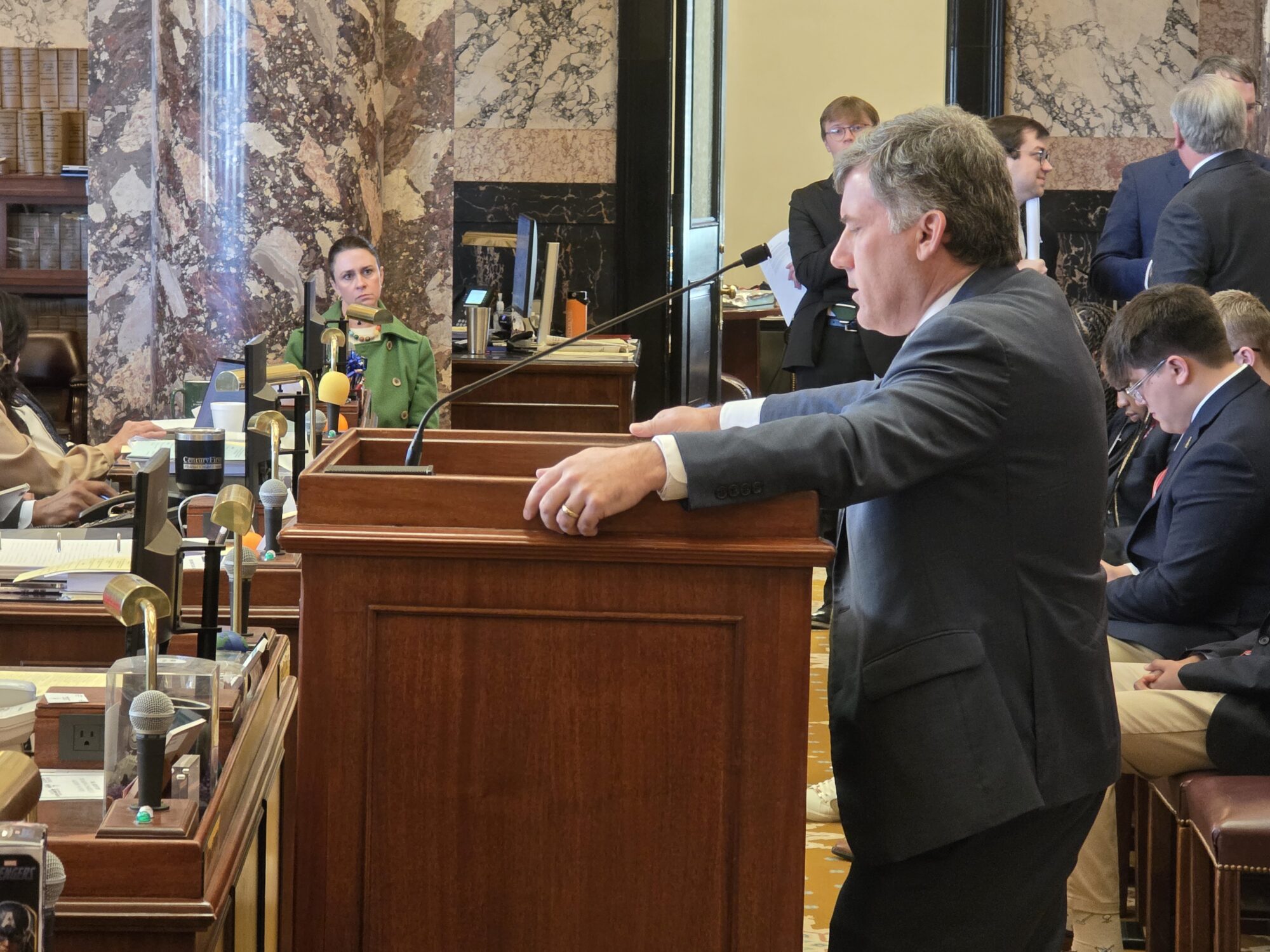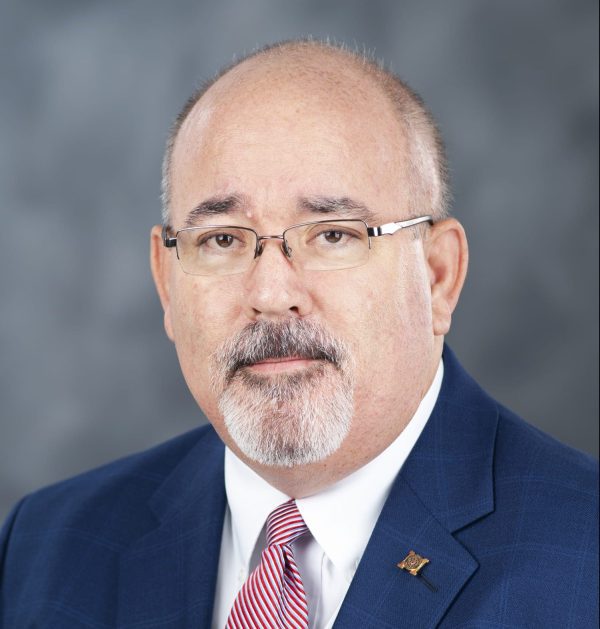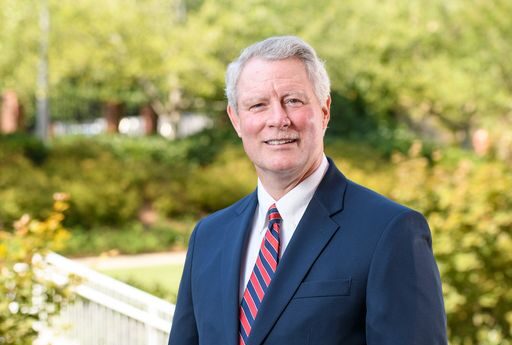
Chancellor Glenn Boyce, Ole Miss
Listen to the audio version of this article (generated by AI).
- After being fired following an incendiary post about Charlie Kirk’s death, former ole Miss employee Lauren Stokes argued her First Amendment rights were violated. U.S. District Judge Glen Davidson dismissed the claims Monday, setting up a potential 5th Circuit appeal.
A federal judge has dismissed former University of Mississippi employee Lauren Stokes’ First Amendment retaliation lawsuit against Chancellor Glenn Boyce, bringing an early end—at least for now—to one of the state’s most closely watched campus speech disputes.
In a March 16 opinion, U.S. District Judge Glen Davidson ruled that Stokes failed to show her constitutional rights were violated and that Boyce is entitled to qualified immunity. The court found the university had a “substantial interest in maintaining the efficient operation” of its departments and that the widespread disruption caused by Stokes’ social media post weighed against her claim.
The ruling turns on the same legal framework that has defined the case from the outset—the Supreme Court’s Pickering-Connick balancing test, which weighs a public employee’s speech rights against a government employer’s interest in workplace efficiency. As previously reported by Magnolia Tribune, Boyce’s defense emphasized that even Stokes’ own complaint described a viral backlash, threats, and operational strain that could justify university action.
Stokes, who worked as an executive assistant in the university’s development office, was fired on September 11, 2025—less than 24 hours after resharing an Instagram post that sharply criticized slain conservative activist Charlie Kirk. The post quickly drew national attention, millions of views, and intense backlash directed at both Stokes and the university.
According to court filings and prior reporting, Stokes deleted the post and issued an apology the same day, but by the following morning had been placed on administrative leave and then terminated before noon. She later alleged the university punished her for expressing a personal political viewpoint on a matter of public concern.
But the court concluded that—even assuming her speech touched on public issues—the scale of disruption tied to the post undermined her claim. Davidson also held that Stokes failed to demonstrate that any alleged constitutional violation was “clearly established,” shielding Boyce from liability in his individual capacity.
Stokes’ attorney has already indicated plans to appeal to the Fifth Circuit, arguing the ruling effectively allows a “heckler’s veto” over protected speech.
For now, however, the decision marks a significant win for the university and reinforces a key point raised early in the litigation by this humble writer, former lawyer and Holiday Inn stayer: in First Amendment cases involving public employees, speech rights are not absolute. They must be weighed against institutional disruption.