(Photo from Shutterstock)
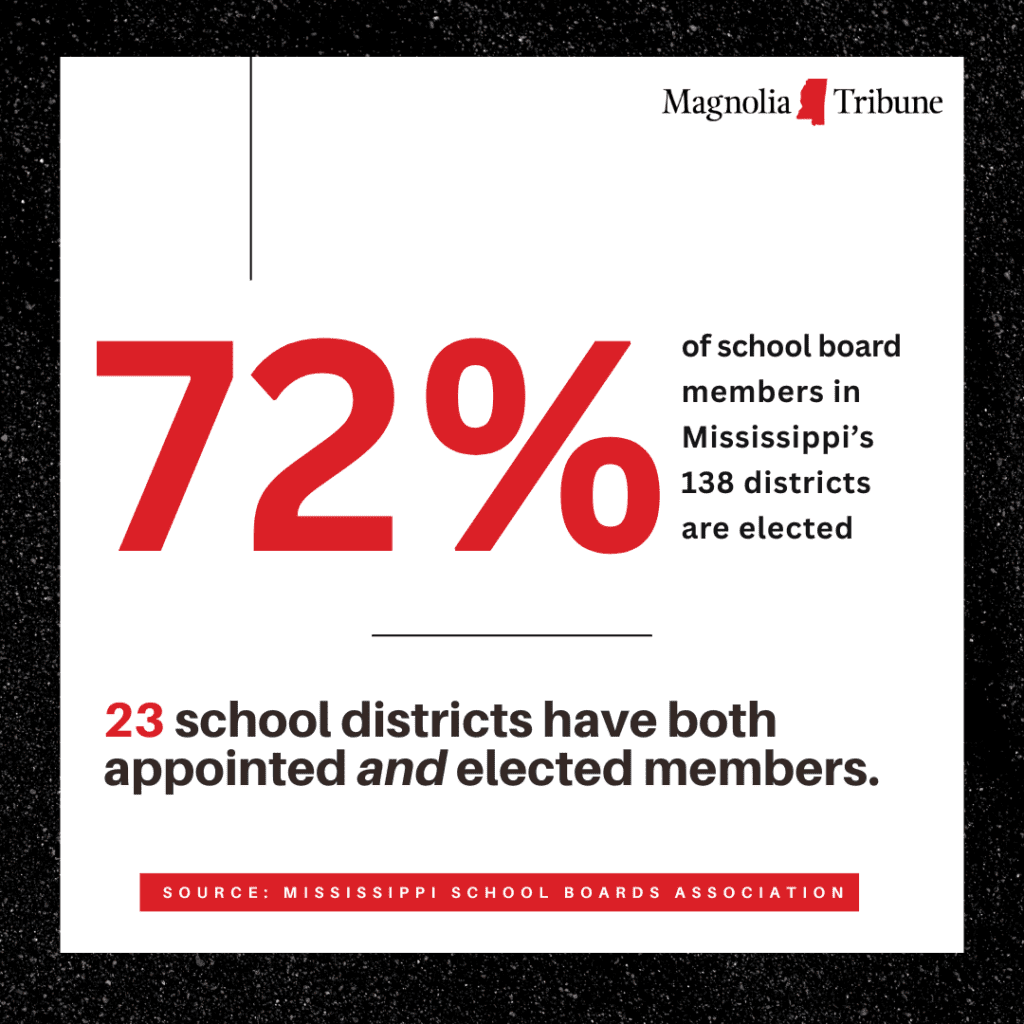
- According to the Mississippi School Boards Association, nearly 72% of school board members in the state’s 138 school districts are elected. 23 districts have both elected and appointed board members.
An effort was made during the 2026 legislative session to make all Mississippi school board seats elected, but the legislation failed to garner the support necessary to reach the governor’s desk. Another push to make the change is expected when lawmakers return in January.
READ MORE: Parents’ push for direct voice behind bill to make all Mississippi public school boards elected
There are 138 public school districts in Mississippi. Most are overseen by a five-member school board that directs the locally appointed superintendent on school policy, the district’s budget, personnel, and achievement goals, among other matters. Mississippi lawmakers required that all school superintendents be appointed in 2016. Nearly a third of superintendents were elected at the time.
Six districts are currently under state control through the Mississippi Department of Education as efforts are made to rectify longstanding financial, educational or other major deficiencies. These districts include Noxubee County, Holmes County, Humphreys County, Yazoo City, Okolona Separate School District and most recently, Wilkinson County.
When MDE assumes control of a district, it not only disbands the current school board and removes the sitting superintendent, but the agency also appoints an interim superintendent to oversee operations until deficiencies are rectified, at which time control is then returned to the local level.
“The Mississippi Department of Education values the role of local school board members, whether they are elected or appointed. Effective school board leaders are essential to the success of Mississippi school districts,” MDE said in a statement to Magnolia Tribune.
According to the Mississippi School Boards Association, nearly 72%, or 471 of the 659 school board members in the state’s 138 school districts are elected. The other 188 school board members are appointed within 46 districts across the state. Of those 46 districts, 23 utilize a hybrid model, where some members are appointed while others are elected on the same board.
The hybrid composition of school boards is common where school district boundaries have increased or where the district has served areas outside of its municipality’s boundaries.
Such is the case in the Pascagoula-Gautier School District where the former Pascagoula School District served the area of Gautier prior to it being its own municipality. When Gautier incorporated, it did not seek to split off and form its own school district, instead remaining in Pascagoula’s school boundaries.
Today, three members are appointed by the Pascagoula City Council and two members are elected from the Gautier area. The indirect voice on the east side of the Singing River has caused some in the community to push for the Pascagoula appointees to be elected like their Gautier counterparts.
Likewise, the Picayune Separate School District has two members who are elected to represent students that attend in the school district but reside outside of the city limits. The other three board members are city residents, appointed by the Picayune City Council.
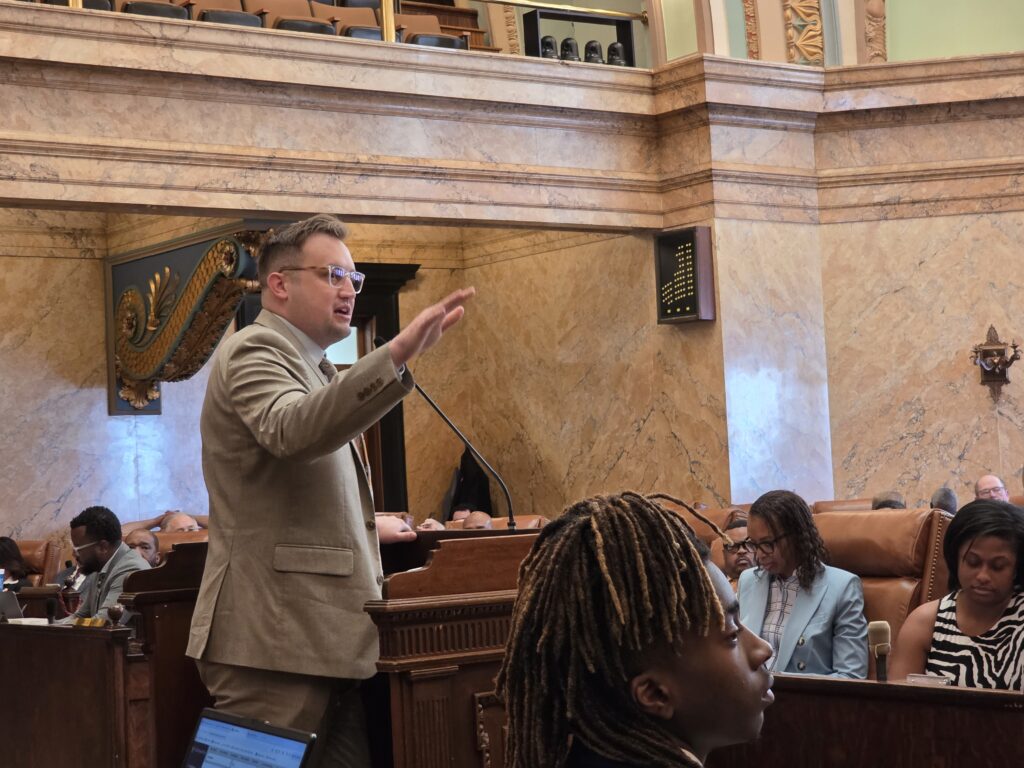
State Rep. Jansen Owen led the charge this legislative session to have all school board members across Mississippi elected, ensuring that the public had a direct voice in who oversees their school districts. However, his bill, HB 1292, died on the calendar in February.
Yet, Owen continued to fight for his local constituents who wanted the change. He told Magnolia Tribune prior to the end of the 2026 session that he shifted his focus and was able to include language from his initial bill into HB 1142, an unrelated measure that dealt with bench warrants. The language inserted into HB 1142 changed how representation was determined in one school district, the Poplarville School District.
Poplarville’s board members were all appointed. Now, they will all be elected by districts. The language included in HB 1142 ended up passing in both chambers of the Legislature and received the governor’s approval.
The legislation required that the Poplarville School District boundaries be divided into five districts as of July 1, with elections to be held to fill the seats in November. The Pearl River County Board of Supervisors has since drawn the five new districts within the Poplarville School District.
The current board members will serve in their role until January when the newly elected members are seated to serve. Two new members representing districts 2 and 4 will serve 2 years while those elected in districts 1, 3, and 5 will serve four years. Districts 2 and 4 will then hold another election in November 2028 to allow for staggered terms on the board.
“Over the past decades, my constituents vehemently, 99%, want this for their district, so I’m planning to give it to them,” Owen said just before the end of the 2026 session. “Even in a school district like Poplarville, Steephollow is different from Springhill, which is different from Crossroads, which is different from Gumpond. So, I wanted to make sure there’s representation for every little community within our school district.”
While the push to have all school board members elected statewide did not make it out of the 2026 legislative session, the matter is expected to be up for consideration next session.
“Statewide, I think that push is there, but I found out every district is different. Some people like the way they’re doing it,” Owen said.
However, he believes a statewide change to all elected school board members could soon become reality.
“I think at the end of the day before long, that will be the case,” Owen said.

Jeremy Pittari