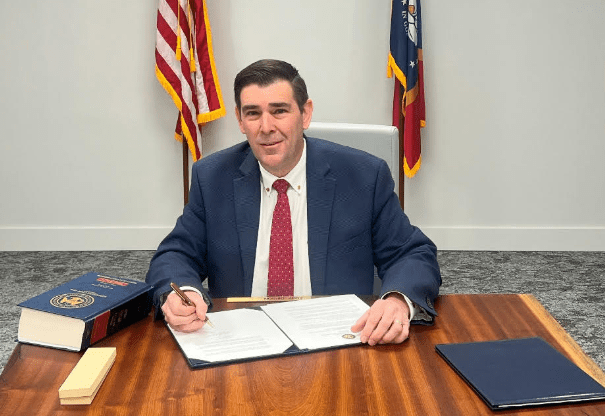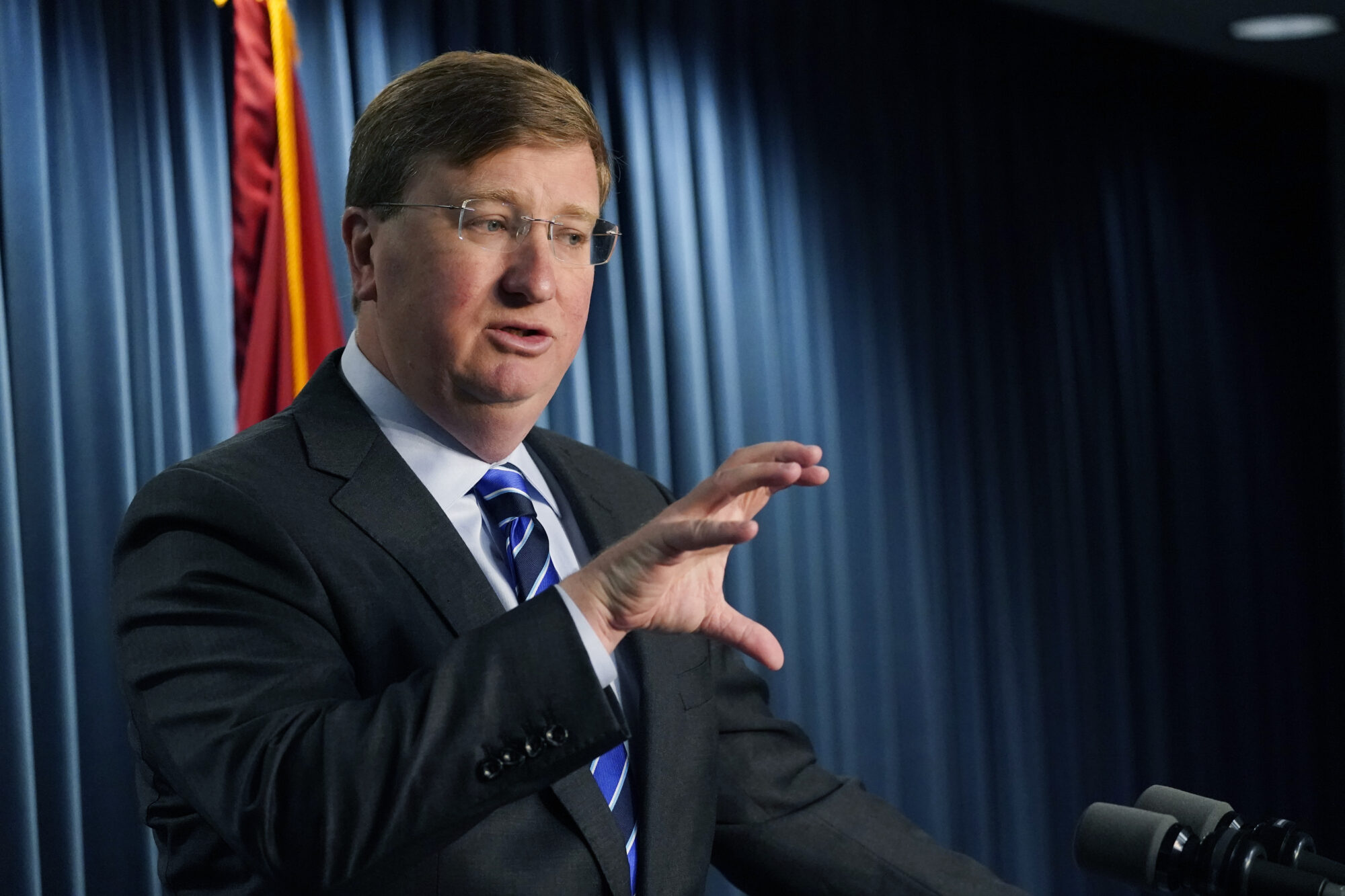
Mississippi Gov. Tate Reeves, April 28, 2022, in Jackson, Miss. (AP Photo/Rogelio V. Solis)
- The governor chose to line item veto three expenditures in question “due to a lack of vetting by the Advisory Council established by the Legislature in the 2025 session.”
Governor Tate Reeves (R) has vetoed three items in HB 1924, effectively ending Opioid Settlement funding from being provided to the certain organizations.
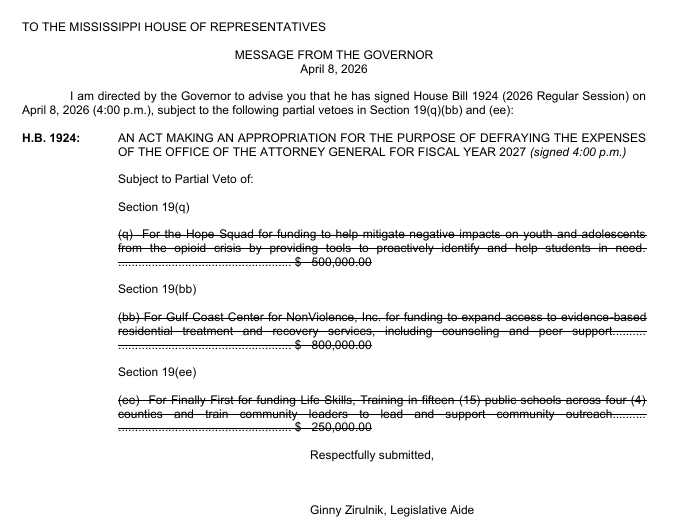
The programs affected include:
- Hope Squad – $500,000 – to identify students in need of assistance in relation to the opioid crisis
- Gulf Coast Center for Nonviolence – $800,000 – to expand evidence-based treatment and recovery services such as recovery and peer support services
- Finally First – $250,000 – to provide life skills training to 15 public schools within four counties.
Governor Reeves said the Legislature “wisely set up an Opioid Settlement Fund Advisory Council” last year, which included Chief Justice Mike Randolph, Attorney General Lynn Fitch (R), members of several executive agencies, and members of the public with expertise in substance use disorders. He said the council met multiple times “for hours and hours” to review more than 125 applications “and made well-reasoned decisions on how to best allocate these funds.”
“The Legislature took many of the recommendations from the council, and I approved those expenditures in HB 1924,” Reeves stated in a Facebook post Wednesday. “However, there were three expenditures that did not even merit an analysis in the final report of the council as sent to the Legislature.”
As such, Reeves chose to line item veto the three expenditures in question “due to a lack of vetting by the Advisory Council established by the Legislature in the 2025 session.”
“In total, while these three projects only represent $1.55 million of the $30+ million allocated, I believe it would be imprudent for me to approve this spending without any knowledge of what or who these entities are or the specific purpose and expertise that would warrant them receiving funds,” the governor said.
Governor Reeves added that he encourages those agencies to reapply for funding again this year.
“This is not a final determination that these three entities are not worthy of these funds, it is simply a recognition that they did not comply with the application process in current statute,” Reeves said.
When reached for comment on the vetoes, the Attorney General’s office said it is preparing for this year’s round of funding.
“The Attorney General’s Office is committed to doing everything we can to get the money out to where it is needed quickly and to assisting the Council as we move into the next round of funding,” the office stated in a written response.