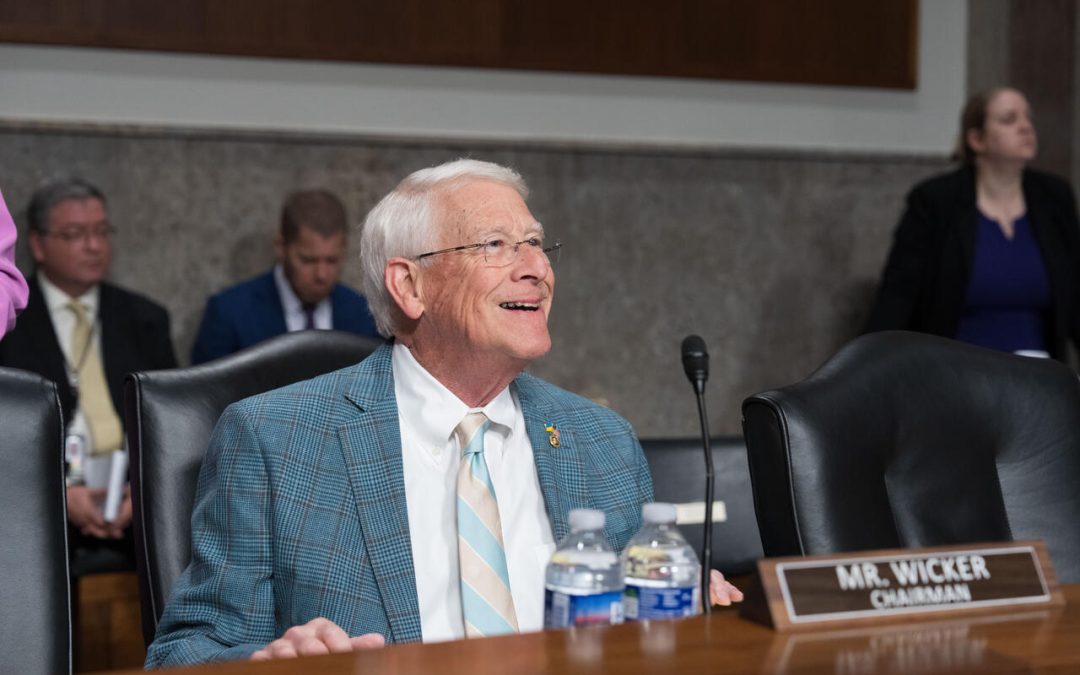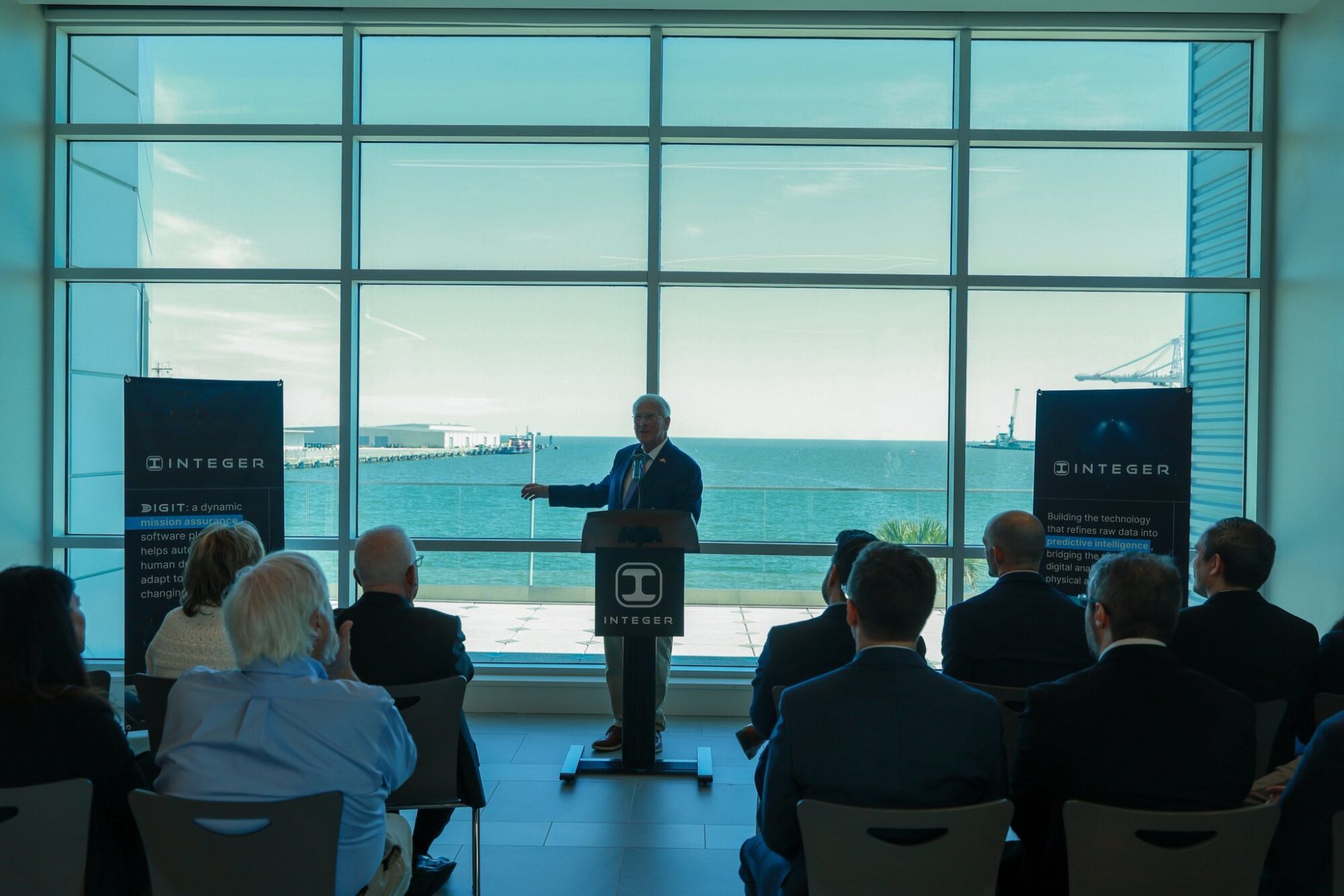
U.S. Senator Roger Wicker welcomes Integer Defense to Mississippi, April 7, 2026 (Photo from Wicker's Facebook)
- U.S. Senator Roger Wicker says Mississippi is on the cutting-edge of defense innovation and calls on his colleagues to invest in innovative defense manufacturers.
It has been an important two weeks for rebuilding the American military, and I witnessed it firsthand at several events across Mississippi. Each one showcased a different side of our state’s contributions to national security. Crucially, each one involved technology that did not exist until recently—a sure sign that Mississippi is on the cutting-edge of defense innovation.
Mississippi Works on the Cutting Edge
The first event was in Oxford, where The National Center for Narrative Intelligence hosted its annual cognitive warfare summit. The gathering drew an international audience to North Mississippi. Military officials, academic researchers, and representatives from private industry discussed how artificial intelligence and other novel tools can help us understand the propaganda operations of our adversaries.
The next day, I visited Firehawk Aerospace, a solid rocket motor manufacturing company that opened a new facility in Crawford, creating 100 jobs initially. New technologies are quickly changing the way our military operates, and the Mississippians working at Firehawk will help America keep up with those changes. They will make advanced types of solid rocket motors and propellant for munitions, which will cost less and be produced more quickly than older models.
Finally, I visited the coast, where Integer Technologies has opened a site in Gulfport. Integer develops software for unmanned systems—a crucial component of modern battlefields. Their Gulfport team will collaborate with researchers at the University of Southern Mississippi. Together, they will create maritime vessels that can pilot themselves both under and on the water, turning advanced research into real-world equipment for Americans serving in uniform.
These examples illustrate this point: our state is a vital part of America’s military modernization. Mississippi is what experts call a “multi-domain” state: leading in sea, air, cyber, and information warfare, spearheading munitions production and autonomous systems development. All the while, we are creating jobs and helping reindustrialize the heartland.
Rebuilding the American Arsenal
Those trends are set to continue, in part because of an announcement President Trump made at the beginning of April, with the release of his annual budget request. For several years, I have been calling for the United States to increase our investment in national defense. Because the dangers of the 21st century are too great for us to sit back, I enthusiastically welcomed the president’s request for a $1.5 trillion defense budget in the upcoming fiscal year.
The figure is admittedly eye-popping. It represents a 50 percent increase over this year’s defense investment. But the amount is both necessary and urgent, since we cannot deter our adversaries without rebuilding our military strength and industrial capacity.
In fact, though some Americans might assess that this budget is too costly, it would be far less expensive than war with China or Russia. China outpaces our shipbuilding efforts at a rate of 200 to one. Russia’s nuclear arsenal is bigger and more sophisticated than ours. North Korea is constantly working to threaten the homeland. Iran-backed Islamic terrorists are dead-set on endangering Americans, and narcotic traffickers work to pour deadly drugs into our communities.
Unfortunately, our defense industrial base is not ready to face these threats. Mississippi has been waking up to meet the moment, and we must continue to do so as we invite the rest of the country to join us. I look forward to implementing the president’s budget request this year in my role as the Chairman of the Senate Armed Services Committee. My colleagues and I need to invest in the innovative defense manufacturers emerging all over the country—especially, as I saw recently, across Mississippi.