Listen to the audio version of this article (generated by AI).
- The Declaration gave America its soul. The Constitution gave that soul a body capable of enduring. It’s worth defending.
When James Madison arrived in Philadelphia in the spring of 1787, the Revolution was over. Independence had been secured. The British had gone home.
Yet the nation the founders risked everything to create seemed to be coming apart almost as quickly as it had been born.
The problem was not the Declaration of Independence. It remained as revolutionary as the day Jefferson’s pen first scribed that all men are created equal and endowed by their Creator with certain unalienable rights.
The problem was what came after.
Between 1776 and 1787, America was not really one nation at all. It was thirteen sovereign states bound together by the Articles of Confederation — a loose alliance born from a deep fear of centralized power. That fear was understandable. The generation that fought George III had no desire to replace one distant tyrant with a more local one.
The Articles reflected that caution. Congress could ask states for money, but could not compel them to pay. It could recommend military action, but struggled to fund the nation’s common defense. States printed their own currencies, erected trade barriers against one another, and increasingly behaved less like countrymen than neighboring nations sharing a continent. These defects left a fledgling nation both vulnerable to foreign attack and poor.
The Declaration had proclaimed liberty.
The Articles struggled to preserve it.
Long before the Constitutional Convention of 1787, Madison immersed himself in history. He studied the rise and collapse of republic after republic, filling notebooks with observations from Greece, Rome, and every experiment in self-government he could find. Their failures shared a common thread. Some governments became too weak to govern. Others grew too powerful and oppressive.
America would have to find the sweet spot in between.
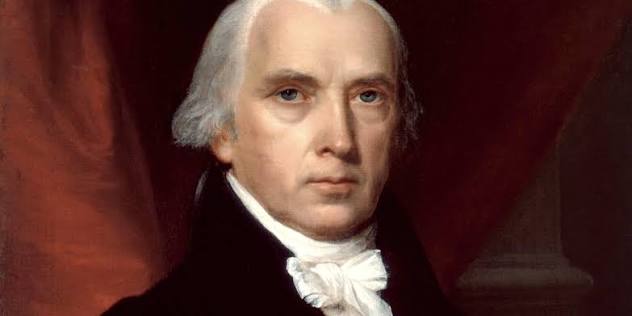
The Declaration spelled out the rights of man and the obligation of government to protect those rights. The Constitution aimed to answer a different question: How should government be organized to best protect and not threaten those rights?
Madison’s answer remains among the greatest insights into human nature in political history.
“If men were angels,” he wrote in Federalist No. 51, “no government would be necessary.”
Government is necessary precisely because human beings are imperfect. There must be law and order that restricts us from infringing on the rights of others.
“But if angels were to govern men,” he continued, “neither external nor internal controls on government would be necessary.”
In other words, government itself is composed of imperfect human beings. The same ambition, pride, and self-interest that make government necessary also make government dangerous.
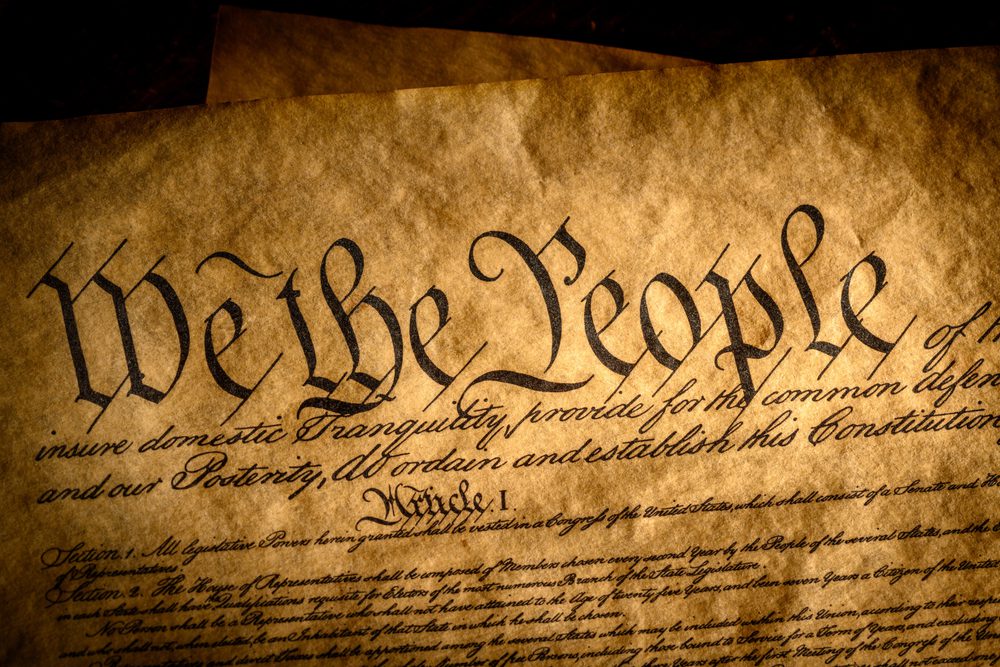
That paradox shaped every major feature of the Constitution. Power would be divided because no person or single institution could safely be trusted with all of it. Congress would make laws. Presidents would enforce them. Courts would interpret them.
Madison described this separation of powers by saying “ambition must be made to counteract ambition.” He understood the very human yearning for power and sought to create checks.
He also fundamentally understood that while some central government was essential to fund things like a military, that most power should reside closer to the people.
The Constitution was not the enshrinement of a national democracy, where 51 percent of the voting population could use the might of an all powerful government to impose their will. Quite the contrary. The Constitution was as much a description of what the federal government could not do as it was what it could do. It recognized that majorities can violate the rights of others just as easily as a king.
The federal government would receive limited, enumerated powers — national defense, foreign affairs, interstate commerce, currency, and a handful of other responsibilities that individual states simply could not perform alone. The Ninth and Tenth Amendments that round out the Bill of Rights reinforce that all other power resides with the people and the states.
The Constitution is not perfect. The founders themselves knew it wasn’t. Self-contained in the document is the right and process to change it. It initially contained compromises that later generations would rightly challenge and amend. Twenty-seven amendments testify that Americans have continued refining the machinery of self-government without abandoning the machine itself.
That may be its greatest achievement. Our Constitution has survived continuously longer than any other single governing document in the world. For nearly 240 years, Americans have argued bitterly over elections, policies, wars, presidents, and courts. Through it all, power has continued to change hands according to law rather than violence. That stability is so familiar we rarely stop to appreciate how extraordinarily rare it is.
Big political personalities and the cults that follow them have expanded power over time. But the document continues to serve as a measuring stick for exercises of government power. Its institutional existence is, itself, a check wielded by opposing partisan forces in a modern display of ambition counteracting ambition. We are better off for it.
John Adams once observed that ours is “a nation of laws, and not of men.” Madison built the framework that made those words mean something.
The Declaration gave America its soul. The Constitution gave that soul a body capable of enduring.
This is the second in a series on the American inheritance leading up to the 250th celebration of America’s birth as a nation. Like in December of 1776, we are not promised that the inheritance endures. It is fragile. It requires the courage and sacrifice of each new generation. Part I: An American Inheritance that nearly wasn’t