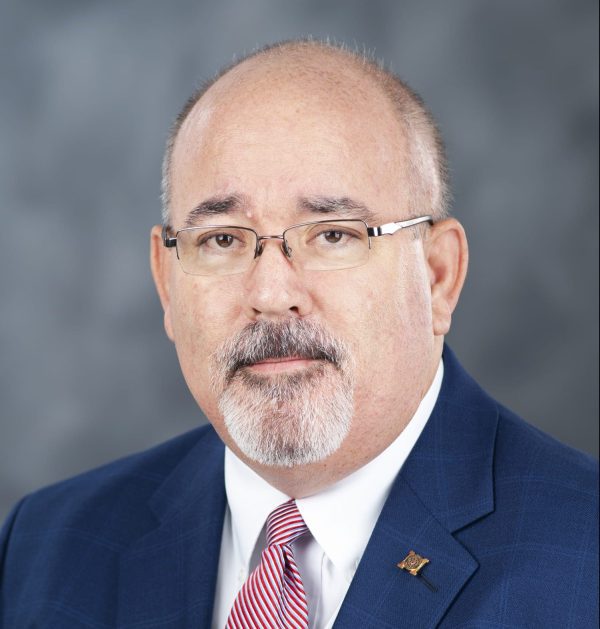
Sid Salter
- The new Wicker/Hyde-Smith pairing in these key strategic gatekeeping positions on defense authorization and defense appropriations puts Mississippi back in the kind of power position enjoyed by prior Mississippi congressional titans.
It is difficult to overstate the role seniority and mastery of the congressional committee system has played in keeping federal spending flowing in Mississippi. It’s never more visible than when it keeps Huntington Ingalls and other Mississippi shipbuilders and suppliers busy as some of the state’s largest employers.
Mississippi’s U.S. Sen. Roger Wicker has been a champion of American shipbuilding for many years. Last week, the political stars conveniently aligned to give him an able and powerful partner in that effort – one in his own state’s delegation.
With Wicker as chairman of the Senate Armed Services Committee and his Magnolia state colleague U.S. Sen. Cindy Hyde-Smith as the new chairman of the Senate Appropriations Committee’s Defense Appropriations Subcommittee, how much control does Mississippi have over defense contracting and weapons program funding in Congress?
The basic explanation is this: In Congress, a defense program must be authorized before it can be funded. Wicker, as chair of SASC, leads the Senate’s authorization of military policy, troop levels, and military procurement programs through the National Defense Authorization Act. Hyde-Smith, as chair of the Senate Appropriations Committee’s Defense Appropriations Subcommittee, approves the actual dollars provided for the authorized programs and weapons.
This reality gives Mississippi a “one-two punch” in directing defense spending to its home state when appropriate and rather outsized influence over the nation’s defense apparatus in several ways. Navy shipbuilding is a major way, but there are also unmanned aerial systems and aerospace technology.
Military base funding for installations like Columbus Air Force Base, Keesler, and Camp Shelby, and research grants for state universities are another.
No defense budget or supplemental package can clear the U.S. Senate without passing through their respective committees. If the Pentagon or the House take a position that threatens a weapons system or procurement program with Mississippi ties, Wicker and Hyde-Smith have the power to block, stall, or renegotiate legislation to protect Mississippi’s interests.
The new Wicker/Hyde-Smith pairing in these key strategic gatekeeping positions on defense authorization and defense appropriations puts Mississippi back in the kind of power position enjoyed by prior Mississippi congressional titans like the late U.S. Sens. John Stennis and Jim Eastland, the late U.S. Sen. Thad Cochran and former Sen. Trent Lott, and during one unbelievable period in the 1980s that Stennis and the late U.S. Rep. Jamie Whitten controlled the Appropriations Committees in both houses of Congress.
Hyde-Smith succeeded the late Florida U.S. Sen. Lindsey Graham in the post after Graham’s unexpected death from a cardiac episode. Hyde-Smith’s appointment repeats a familiar theme in Mississippi congressional representation: seniority and teamwork create jobs and opportunities for Mississippians.
For the better part of the last 65 years, Mississippi’s congressional delegation – in particular Mississippi’s U.S. senators – have used their seniority and deep knowledge of the congressional committee system’s defense authorization and appropriation processes to exercise extraordinary levels of control over defense spending and contracting that have directly benefited Mississippi taxpayers and defense contractors with operations in the state that provide high-quality jobs.
I am reminded of an example of how these alliances kept Mississippi workers employed – and then didn’t. In 2015, then U.S. Sen. Thad Cochran was chairman of the Senate Appropriations Committee and armed with the power to do so, he named himself chairman of the Defense Appropriations Subcommittee. That raised some eyebrows on Capitol Hill.
But Cochran had been the ranking Republican on the Defense Appropriations Subcommittee since 2008. No GOP senator knew more about the subcommittee’s work than he did.
By March 2018, weeks before he stepped down from the Senate citing health issues, Cochran inserted $1.2 billion in funding for two U.S. Coast Guard national security cutters, the USCGC Calhoun and the USCGC Friedman, to be built at Ingalls in Pascagoula. Ingalls built a total of 10 cutters in the program.
The Calhoun was built and commissioned in 2024. But with Cochran no longer chair of the Defense Appropriations Subcommittee, the Department of Homeland Security canceled the building of the Friedman after a contract dispute. That’s how transitory congressional clout can be.

Sid Salter