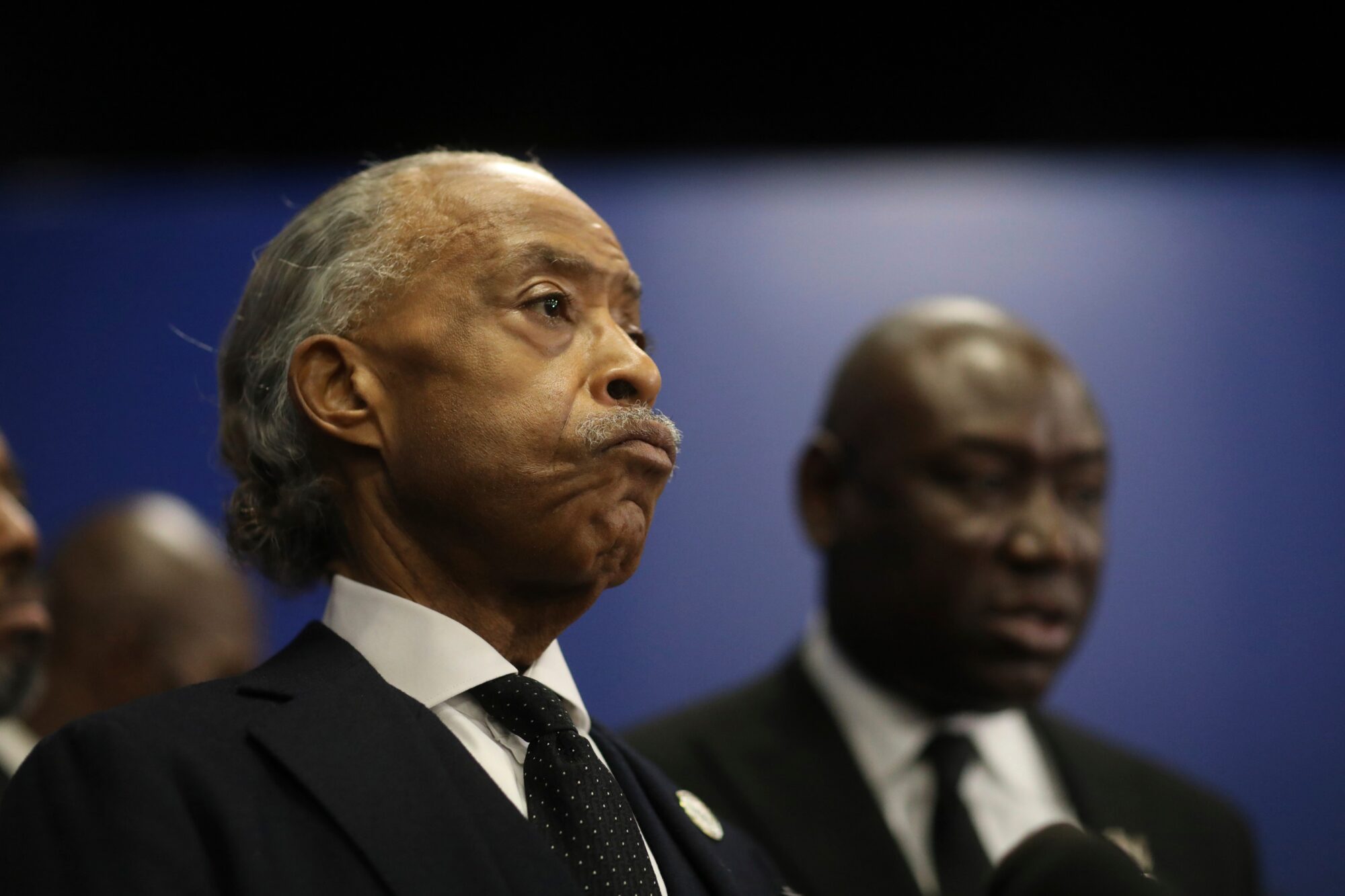
FILE - The Reverend Al Sharpton and attorney Ben Crump speak at the funeral for 14-year-old Valentina Orellana-Peraltaat the City of Refuge Church in Gardena, Calif., on Jan. 10, 2022. The family of a Mississippi 18-year-old who was found dead after a July 4 boat trip with friends to an island off the Gulf Coast is expected to call for greater transparency at a planned news conference Friday, July 10, 2026, with the Rev. Al Sharpton and noted civil rights attorney Ben Crump.(AP Photo/David Swanson, file)
Listen to the audio version of this article (generated by AI).
- The death of Nolan Wells is deeply tragic. Unchecked, racially-driven speculation has made it worse, threatening to tear apart a tight knit community.
I’ll say his name.
Nolan Wells ventured out to Horn Island on the Fourth of July and never returned home. His body was recovered near the shore of the popular barrier island two days later. His family and the Ocean Springs community that embraced Nolan are reeling and searching for answers. It’s a tragedy by any measure.
Anyone who has ever lost a young family member unexpectedly knows grieving is hard enough. There are always doubts and questions that swirl, some rationally and some less so. Doing it under a national spotlight, with national voices in your ear, is harder.
I haven’t written formally on the Nolan Wells’ story, in part, because I don’t actually know what happened.
Neither do you.
That hasn’t stopped rank speculation, a colossal rush to judgment, or the most cynical kind of grifting imaginable.
Investigations are slow. It takes time to interview witnesses, conduct forensics, perform autopsies and retrieve toxicology reports. The internet is lightning quick.
Social media sleuths took the tragedy and added conspiracy, mostly centered around the fact that Nolan, who was black, went out that day with white friends. Thousands of posts implied, or outright stated, that racial animus led to homicide, suggesting Nolan’s longtime friends were murderers. Others questioned why black parents would allow their children to be friends with white children. Much was made of Mississippi’s dark history on race.
Law enforcement officials could not keep up with the online charges. And when they did release statements indicating that they had not discovered any evidence of foul play, but the investigation was ongoing, it was quickly rejected by many. It took little time before attorney Ben Crump and Al Sharpton appeared on the scene, both stoking a narrative of race-based foul play.
At Nolan’s funeral on Monday, Sharpton, who had never met Nolan, preached about Cain and Abel — the first recorded murder in the Bible. He took the time to announce a $50,000 reward offer for information leading to the arrest and conviction of anyone involved in Wells’ death. The offer was purportedly matched by movie producer Tyler Perry, who reportedly also paid court Wells’ funeral expenses.
It’s a reward unlikely to be paid on conditions unlikely to be met. But Sharpton also announced that the bounty would be paid out of his non-profit, National Action Network. The non-profit has seen a spike in donations in the past when Sharpton involves himself in racially contentious cases.
At the celebration of Nolan Wells’ life, none of his teammates, friends, coaches or teachers spoke. Those in the audience instead heard a message and were confronted with a reward offer that seemingly presupposed that Nolan was murdered, or at a minimum, sprinkled water on the burgeoning idea.
No such evidence has been made publicly available.
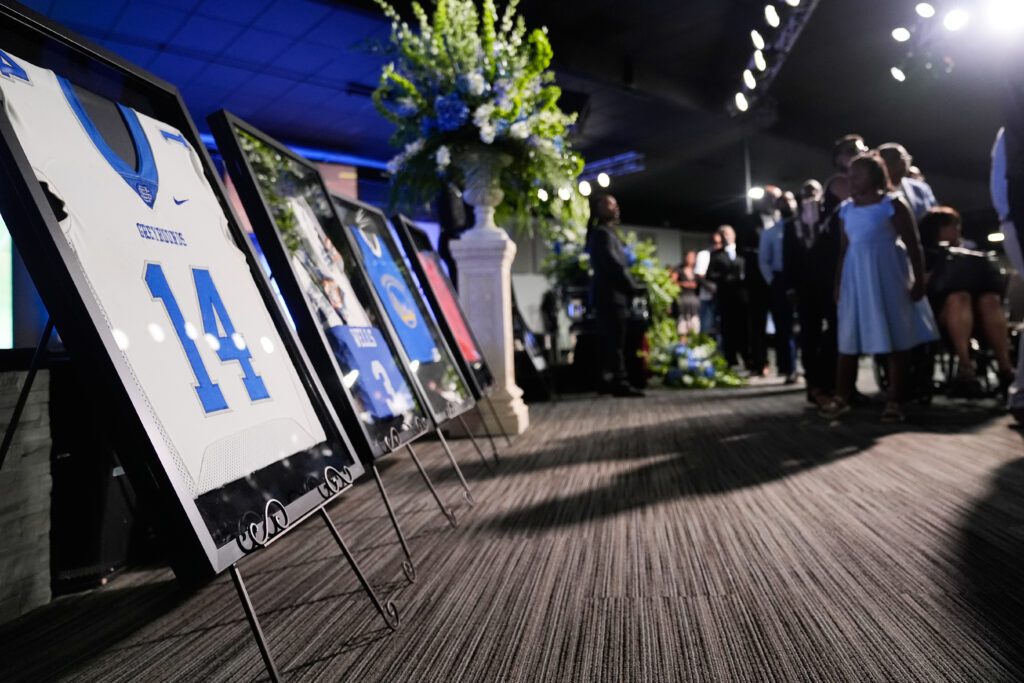
By all accounts, Nolan Wells was a good young man with a bright future. Fun, with an infectious smile. He had white friends. He had black friends.
As tragic as a young life interrupted is, it is also a tragedy that we’ve become a society of competing “teams,” conditioned to assume the worst about one another before a single fact has been established. There’s no indication Nolan thought that way.
Could Nolan Wells’ white friends have secretly harbored racist motives for years, waiting for the opportunity to murder him? It’s possible in the abstract. Almost anything is. Is it likely? Based on what we know today, no.
Is it possible he stayed behind on Horn Island after his friends left and suffered an accident in the water? Based on the publicly available facts, that appears to be a far more plausible explanation.
From early reports, Nolan was found face down off the shore of Horn Island, an area known for dangerous riptides that have led to several drowning deaths. Jackson County Coroner Bruce Lynd initially stated that there were “no immediate, obvious signs of foul play or trauma” on Wells’ body, but it was turned over to the State Medical Examiner for a full autopsy. They are waiting on the toxicology report, which unfortunately are notoriously slow and in a case like this leave an opening for conspiracy-minded individuals to cast doubt.
The point is not that either scenario — an accident or something more nefarious — is true or false. The point is that no one outside the investigation knows (and they may not even fully know).
Mississippi’s history matters. It would be foolish to pretend otherwise. There are real reasons why many black Mississippians carry deep, passed down skepticism toward law enforcement and the justice system. That skepticism was earned through generations of unequal treatment. And while things have improved dramatically from the Civil Rights era, incidents like the Goon Squad fallout in Rankin County keep much of that distrust alive.
But history is not evidence. The fact that white people have done bad things in the past is not proof that Nolan’s white friends killed him. The fact that law enforcement violated civil rights in the past is not proof that they are covering up a murder now.
Invoking our darkest chapters before the facts are known does not honor that history. It exploits it. It also ignores the fact that history is complicated.
There were 360,000 Union soldiers that died in the Civil War, predominantly white men. White abolitionists were active in our country before we ever declared independence. White lawmakers pushed the Thirteenth, Fourteenth and Fifteenth Amendment, as well as important Civil Rights legislation, like the Voting Rights Act. And white activists like Andrew Goodman and Michael Schwerner worked, and ultimately died, alongside black activists to try to secure the right to vote.
Let me be abundantly clear, I’m not trying to make white people the heroes of the black liberation story. I am, however, trying to make the point that even in the most racially tumultuous times, white people were not some homogenous group solely motivated by racial hatred. Just as with black citizens, we have our own thoughts and our own angels and demons. That was true then and it’s especially true now. There has, in fact, been a slow, grinding progress.
But before investigators have announced any formal conclusions, this tragedy has been transformed into a racial morality play. There remains no public evidence that race had anything to do with Nolan Wells’ death.
When Wells’ former high school offensive coordinator — a black man named Tracy Lampley — tried to make that point and take up for the racial harmony in Ocean Springs, he was lambasted online. Other black friends of Wells have found themselves as targets for debunking false claims made by Crump, including a persistent rumor that Wells was involved in an altercation on Horn Island. Tracestin Shepherd told Rolling Stone that a viral video making the rounds shows a fight he was in with a stranger who had commented on the way Shepherd was speaking to his girlfriend. Shepherd disputed Crump’s claim that Wells was part of the altercation or even in the video.
It’s almost like people who live in Ocean Springs, and who know the people involved, have a very different view of their community and what happened than the people who have attached themselves to Nolan’s family or are spreading unsubstantiated theories online.
I’ve seen people compare this case to Emmett Till or Medgar Evers, whose deaths were unmistakable acts of race-based murder more than 60 years ago. Those comparisons should not be made lightly. They certainly should not be made without evidence.
People like Al Sharpton have built careers around inserting themselves into moments like this. Their influence, fundraising, and relevance depend on convincing people that every tragedy fits a familiar racial narrative. They descend on grieving families and devastated communities long before the facts are established, encouraging conclusions that may or may not be true.
Ben Crump stepped into Demartravion “Trey” Reed death on Delta State’s campus last year, similarly launching an independent investigation after both the Bolivar County Coroner’s Office and the Mississippi State Medical Examiner’s Office ruled Reed’s death a suicide by hanging.
There, as here, there was wild speculation that was ultimately debunked. There, as here, there was an independent autopsy paid for by Colin Kaepernick. Crump demanded access to video footage which law enforcement characterized as not showing anything to suggests foul play. Neither the footage, nor the Kaepernick funded independent autopsy, have been released by Crump to date and any conversation around the case has gone quiet.
According to the Violence Policy Center, there were 449 known black homicide victims in Mississippi in 2024. Al Sharpton and Ben Crump showed up for none of them, to my knowledge. Tyler Perry didn’t pay for their funerals. There weren’t massive fundraising tallies.
Again, in the case of Nolan Wells, there is presently no publicly available evidence of foul play. It’s not unreasonable to wonder what makes those 449 known murders different from Wells’ death and what the discrepancy in attention, emotion and money says about the motive of people like Sharpton? Is it too “based” to wonder if the point is racial division?
Perhaps this investigation will ultimately prove Sharpton, Crump and other loud voices correct in their suspicions. Perhaps it won’t.
But responsible people don’t begin with the verdict and work backward.
If the evidence ultimately shows Nolan Wells was murdered, then those responsible should be prosecuted to the fullest extent of the law, and if race played a role, that fact should be confronted honestly and without hesitation.
If, however, the investigation finds there was no foul play, I suspect the people who inflamed passions and cast suspicion on innocent young men will quietly move on to the next cause, leaving others to live with the damage they’ve done.
Nolan Wells’ family deserves answers. I fault them not for seeking them.
His friends deserve due process and the presumption of innocence. I fault them not for taking serious death threats and other harassment from people arriving at presently unfounded conclusions.
Both things can be true at the same time.
Social media only makes matters worse. The algorithms don’t reward patience, nuance, or restraint. They reward outrage. Fear. Tribalism. The more emotionally charged the content, the more likely you’ll engage. The more you engage, the longer you stay. The longer you stay, the more money the platforms make.
Never forget that you’re the product.
The cost is measured in more than clicks. It’s measured in the erosion of trust, the collapse of constructive dialogue, and the steady unraveling of the social fabric that holds communities together.
Nolan Wells deserves better than to become a pawn in an agenda-driven circus.

Russ Latino