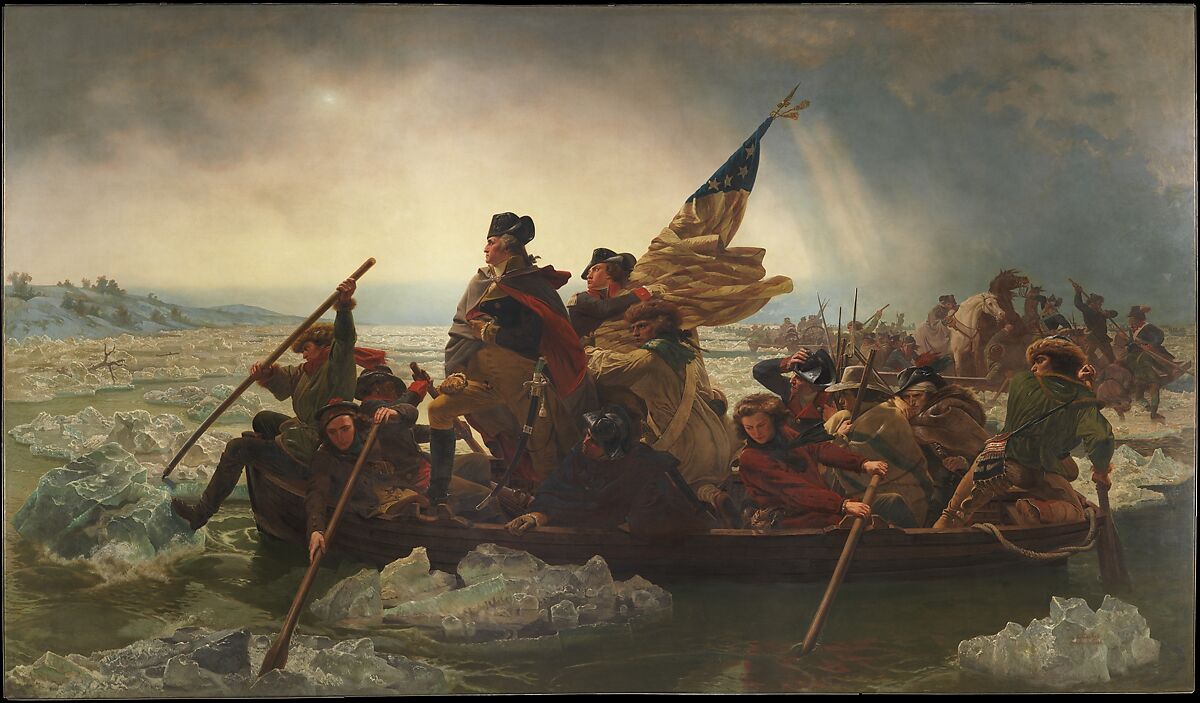
Washington Crossing the Delaware, Emanuel Leutze (1851), Public Domain
Listen to the audio version of this article (generated by AI).
- As we near America’s 250th birthday, it’s important to remember that the American inheritance was not inevitable. It required courage and sacrifice. It was fragile and uncertain. The same is true if we hope to preserve the promise for the next 250 years.
The American Revolution was dying.
George Washington’s army had been driven from New York. Defeat followed defeat. The British had pushed the Continental Army across New Jersey and toward Pennsylvania. Hundreds of soldiers had deserted. Thousands more were preparing to go home when their enlistments expired at the end of 1776. Members of Congress had fled Philadelphia. Loyalists openly predicted the rebellion would soon collapse.
Just months earlier, the Continental Congress had declared to the world that all men are created equal, that they are endowed by their Creator with certain unalienable rights, and that government exists to secure these rights, deriving its power from the consent of the governed. It was among the most audacious political statements ever written.
Now it appeared likely to become one of history’s shortest-lived experiments.
The army Washington commanded was battered, exhausted, poorly supplied, and shrinking by the day. Soldiers without shoes left bloody footprints in the snow as they retreated across New Jersey. By December, the cause of American independence rested on only a few thousand soldiers huddled along the banks of the Delaware River.
The dream of a free nation hung in the balance.
Washington understood the stakes. If the army dissolved, the Revolution likely died with it. The Declaration of Independence would become little more than a historical curiosity. Theirs would be another failed rebellion.
So he gambled.
On Christmas night, amid ice-choked waters and a winter storm, Washington led his army across the Delaware River and marched toward Trenton. The target was a Hessian garrison employed by the British Crown. The plan was risky. Failure could have ended the Revolution altogether.
Instead, Washington achieved one of the most consequential victories in American history.
The military significance of Trenton was modest, but it marked a strategic turning point.
The victory shocked the British and revived American morale. In the days that followed, enlistments grew. A discouraged people learned the cause of independence was not yet lost. A few days later, Washington followed the victory with another success at Princeton. Saratoga and Valley Forge followed.
When Americans look back on the founding generation, it is tempting to imagine inevitability. To see the founders in columns of marble. To imagine them emblazoned on coins or money.
After all, we know how the story ends. We know the framers would draft a Constitution. We know pioneers moved West and tycoons built industrial juggernauts. We know soldiers stepped off Higgins boats and won world wars. We know, 250 years later, that this nation we inherited became the most prosperous and influential republic in human history.
Washington knew none of that.
The men crossing the Delaware knew none of that.
The signers of the Declaration knew none of that.
They knew only that they were risking everything for an idea. The final line of the Declaration is familiar. The signers pledged to one another “our Lives, our Fortunes and our sacred Honor.”
Those were not poetic words. They were literal.
Had the Revolution failed, many of the men who signed the Declaration would have been executed. Their property would have been confiscated. Their names disgraced. Their families ruined. They understood exactly what they were risking.
History is littered with failed rebels whose names are forgotten. The difference between a founding father and a traitor is determined by who wins. They were a whisper away from a traitor’s fate in December of 1776.
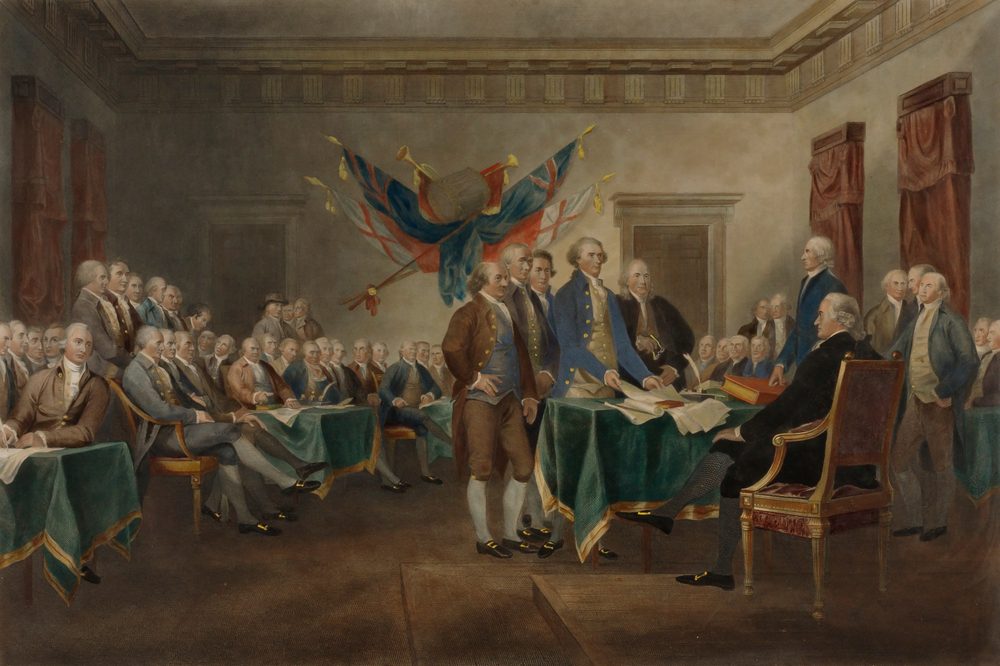
So why risk it? The answer lies in the revolutionary nature of the Declaration, itself. It’s easy enough all these years later to think of the Declaration as a dusty old document, a tattered antiquity. It’s more than that. It’s a recognition of man’s worth. It’s a promise to preserve for each of us the ability to chart our own course.
For most of human history, power flowed downward. Kings ruled because they inherited crowns. Emperors governed because they commanded armies. Rights, if they existed at all, were granted by rulers and could be taken away on a whim.
The Declaration turned that understanding upside down.
It asserted that rights do not come from government. They do not come from the crown. They do not even come from a majority vote.
They come from God.
Governments exist not to create rights, but to secure natural rights like life, liberty and property. These rights already belonged to every human being by virtue of their creation.
Today, those ideas are so familiar that it is difficult to appreciate how radical they were in 1776. The Declaration challenged not only British rule, but an understanding of political authority that had dominated much of human history.
The American founding was a declaration that human dignity precedes government, that liberty is not a gift from rulers, and that legitimate power rests in the people.
Those principles were not self-executing in 1776. They required sacrifice. They required imperfect men willing to risk everything for truths they believed were larger than themselves.
That is why the crossing of the Delaware remains such a powerful image nearly 250 years later.
It reminds us that the American experiment was never guaranteed. It is not guaranteed now.
It survived because a generation chose to keep it alive when failure seemed the more likely outcome.
Before there was a Constitution, before there was a Bill of Rights, before there was even a nation secure enough to know it would endure, there were cold men in small boats crossing a frozen river in defense of an idea.
The rest of American history followed because they made it to the other side.
This is the first in a series on the American inheritance leading up to the 250th celebration of America’s birth as a nation. Like in December of 1776, we are not promised that the inheritance endures. It is fragile. It requires the courage and sacrifice of each new generation.

Russ Latino