- “I, for the life of me, can’t figure out why this is difficult to understand,” said House Education Committee chairman state Rep. Rob Roberson.
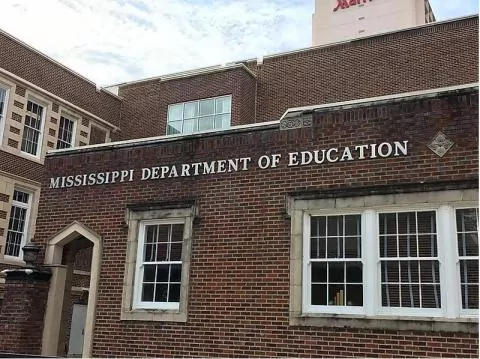
Prior to the start of the coming school year, the Mississippi Department of Education requested clarification from the Legislature on the pay raises set to take effect for some educators and school attendance officers.
In relation to the educators, the questions specifically focused on pay raises set for assistant teachers, special education teachers and charter school teachers.
During the 2026 legislative session, several bills were passed by the Mississippi Legislature and signed into law by Governor Tate Reeves (R) to ensure those pay increases take place. The bills provide not only a $2,000 increase to all educators across the state but also sets aside funds for all assistant teachers to receive the same amount of increase, ensuring their minimum salary is $19,000. Special education teachers are receiving an additional $2,000 over the general $2,000 teacher pay raise. School attendance officers are set to receive a pay bump of $5,000.
The question posed by MDE focused on whether assistant teachers already making the minimum annual salary of $19,000 annually qualified for the extra $2,000 raise, if existing school attendance officers would get the $5,000 raise, and if speech language pathologists qualified for the $2,000 stipend intended for special education teachers.
Assistant teachers
Mississippi’s assistant teachers are some of the lowest paid in the nation. Previous attempts to provide the assistants with a pay increase in 2022 were negated within some school districts when they reduced the base pay for assistant teachers, as reported by lawmakers during the 2026 session.
“Some of these school districts, for whatever reason, they don’t want to pay these assistant teachers more,” House Education Committee chairman state Rep. Rob Roberson (R) told Magnolia Tribune on Thursday.
In response to those reports, this year’s bill specifically states that any district not providing the supplements for assistant teachers would face financial penalties.
Now that the bill has passed, MDE was tasked with clarifying if assistant teachers already making the base pay of about $19,000 would get the $2,000 increase. Roberson speculates that the question was posed to MDE by some of the state’s school boards or superintendents.
“If a district already pays assistant teachers $19,000 prior to the effective date of the legislation, is a district legally required to increase those salaries by an additional $2,000 or is the district already compliant with the new statutory minimum salary requirement,” MDE’s letter requesting clarification queried.
“If you are an assistant teacher teaching in a classroom, we intended for them to get that pay increase,” Roberson said. “I, for the life of me, can’t figure out why this is difficult to understand.”
The Legislature’s response letter made it clear, stating, “For the school districts that are currently supplementing the state minimum salary scale, it is the intent of the Legislature to maintain those salary supplements, thereby providing a $2,000 increase to the current salary of each teacher or assistant teacher.”
Special education teachers
Provisions included in the legislation also included an additional $2,000 stipend to special education teachers working in a special education classroom.
A total of $14.6 million was set aside by the Legislature to cover these special education teacher supplements, which MDE estimates could cover raises for every one of those educators.
While MDE’s letter seeking clarification estimates that 4,088 special education teachers qualify for the $2,000 salary supplement, there was some question if that also includes an additional 211 speech language pathologists. MDE’s question specifically focused on speech language teachers whose only responsibility is to work with IDEA eligible students.
“Speech and language impairments may constitutive a primary disability category under IDEA, and those professionals provide direct educational and instructional services related to language development and communication access for students with disabilities,” MDE’s clarification request states.
MDE’s clarification request points out that state law restricts payment of two salary supplements to the same employee. In the Legislature’s response, it was made clear that speech language pathologists are not eligible to receive the supplement because they already receive a $6,000 supplement outlined in a separate state law.
“The Mississippi Officer of the Attorney General… concludes that the Mississippi Department of Education is prohibited from providing multiple salary supplements to each employee, regardless of whether the employee qualified for them,” the response letter states.
Charter school teachers
MDE also requested clarification on whether charter school teachers qualified for the $2,000 supplements. Their reason for seeking more information on the matter was that 25% of the teachers within charter schools can begin their career “exempt from state teacher licensure requirements.” However, those educators must achieve licensure through alternative routes within three years, at a minimum.
MDE cited the fact that charter school teachers are not “covered under the Education Employment Procedures Law,” and are not categorized under “state salary requirements.”
The Legislature’s response was that charter school teachers are eligible to receive the supplements.
“Charter school teachers must generally meet the same licensure requirements as teachers in a local school district,” the response letter explained.
School attendance officers
One of the other provisions included in this year’s pay raise measures sought to improve the pay scale for the state’s school attendance officers.
Lawmakers provided a $5,000 pay raise the attendance officers and revised the pay scale based on years of experience.
MDE sought clarification because the wording of the bill seemed to focus only on new hires, citing “…any newly hired school attendance officer,” will be paid according to the new salary scale, the bill states. That language prompted MDE to seek clarification whether existing personnel would also be paid the additional $5,000 and be compensated based on the new salary scale.
Clarification provided by the Legislature specifically states that the bill “intends for this salary increase to apply to current school attendance officers,” and as such they too should be placed on the new salary scale that increases compensation based on actual years of experience.
Letters shared between the Legislature and MDE are shown below.