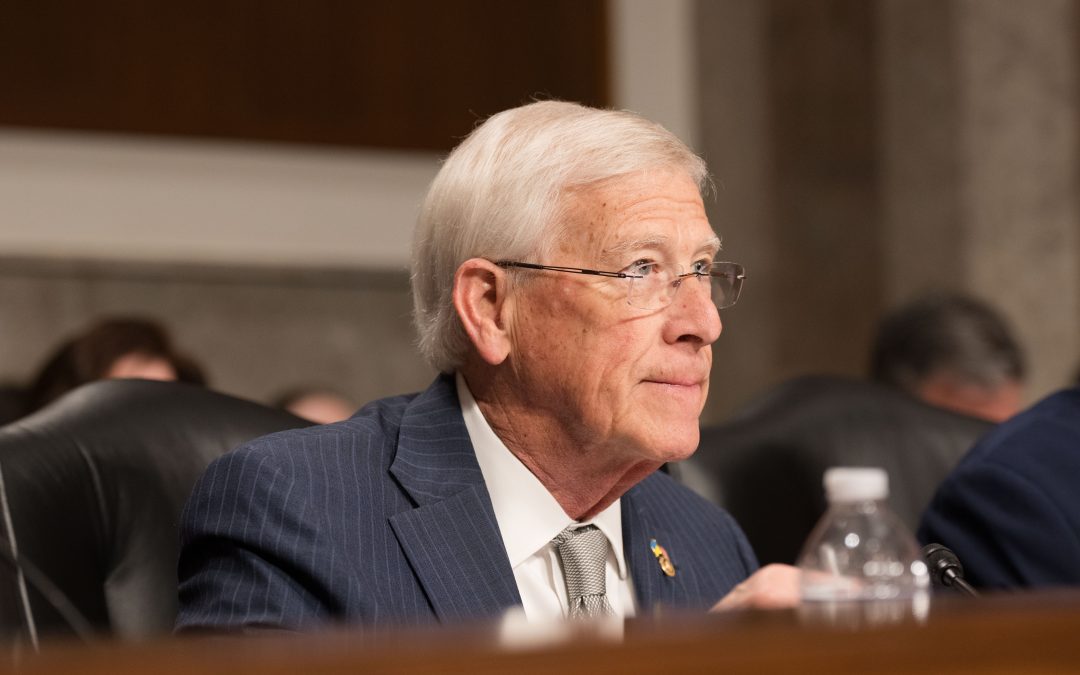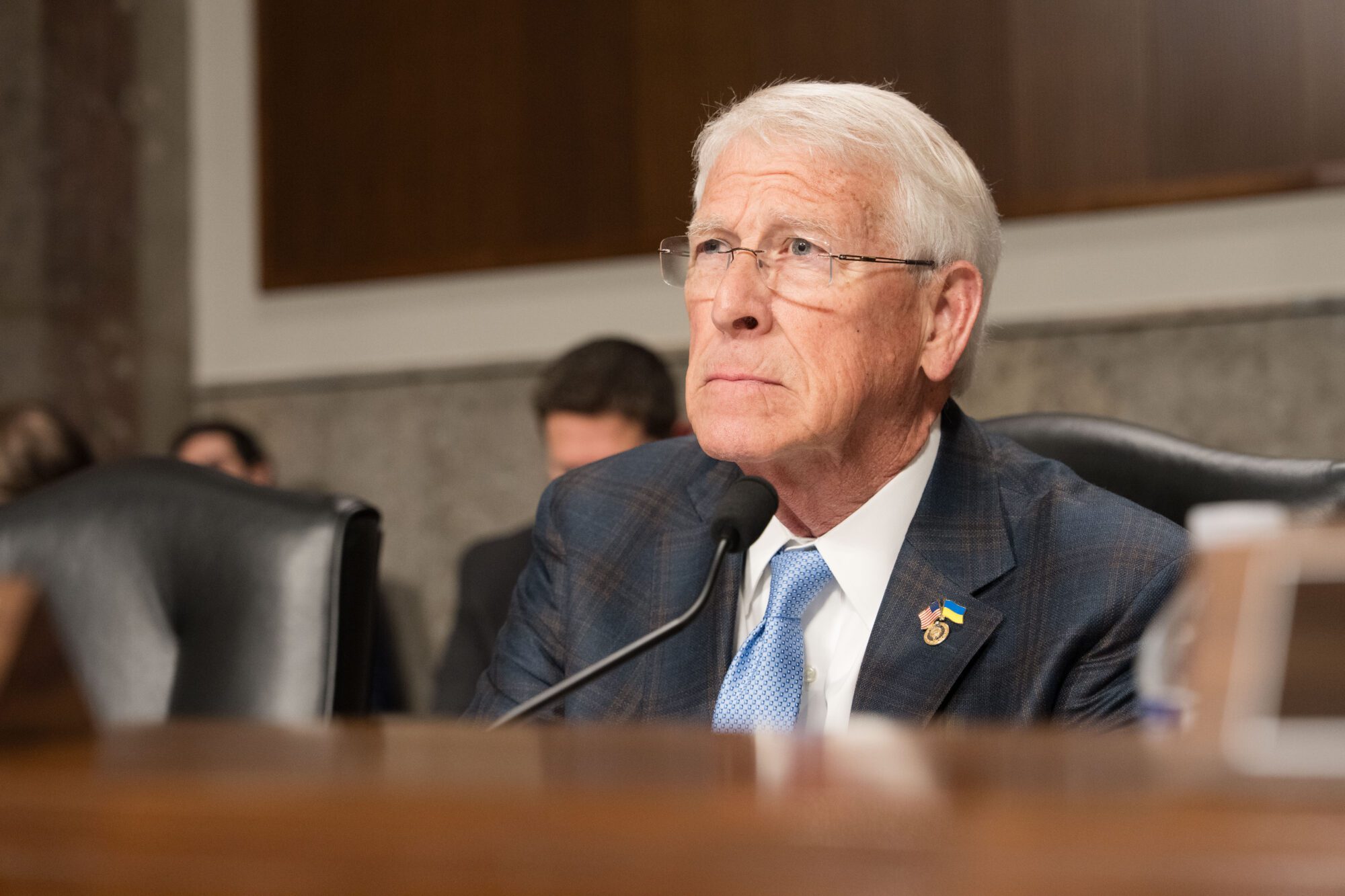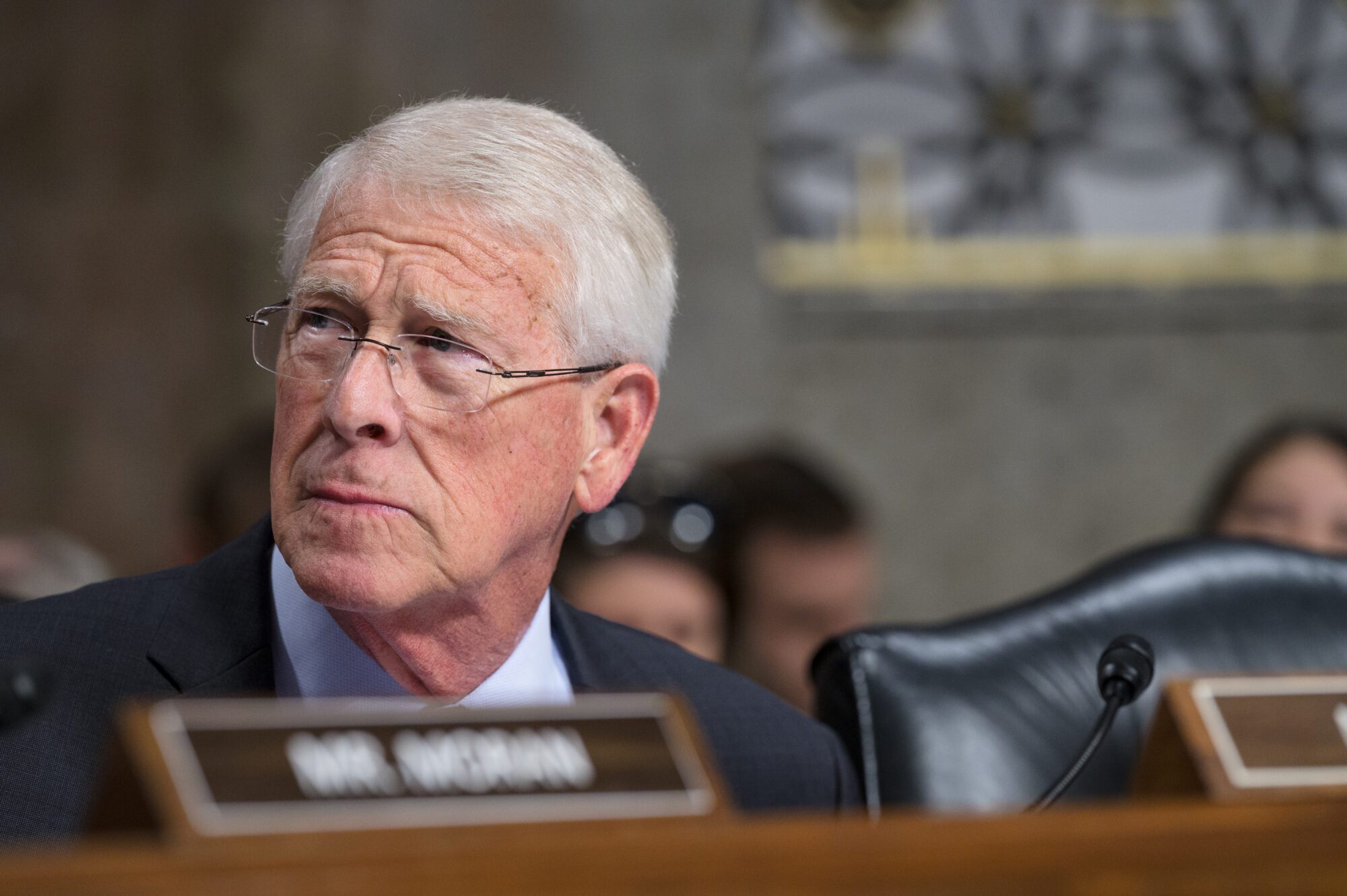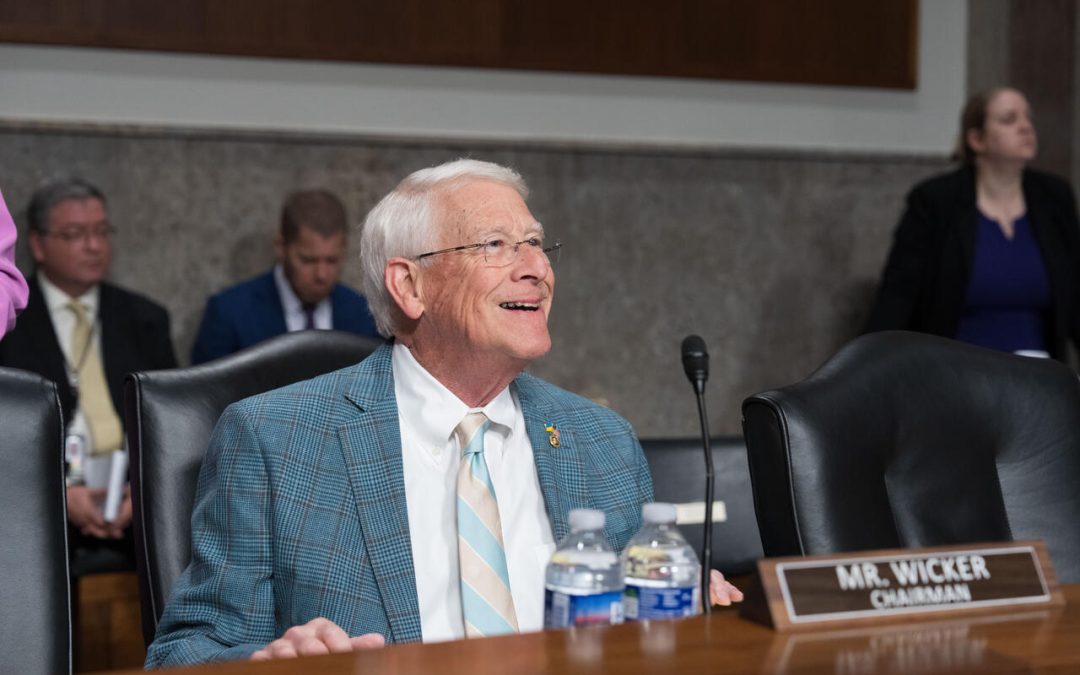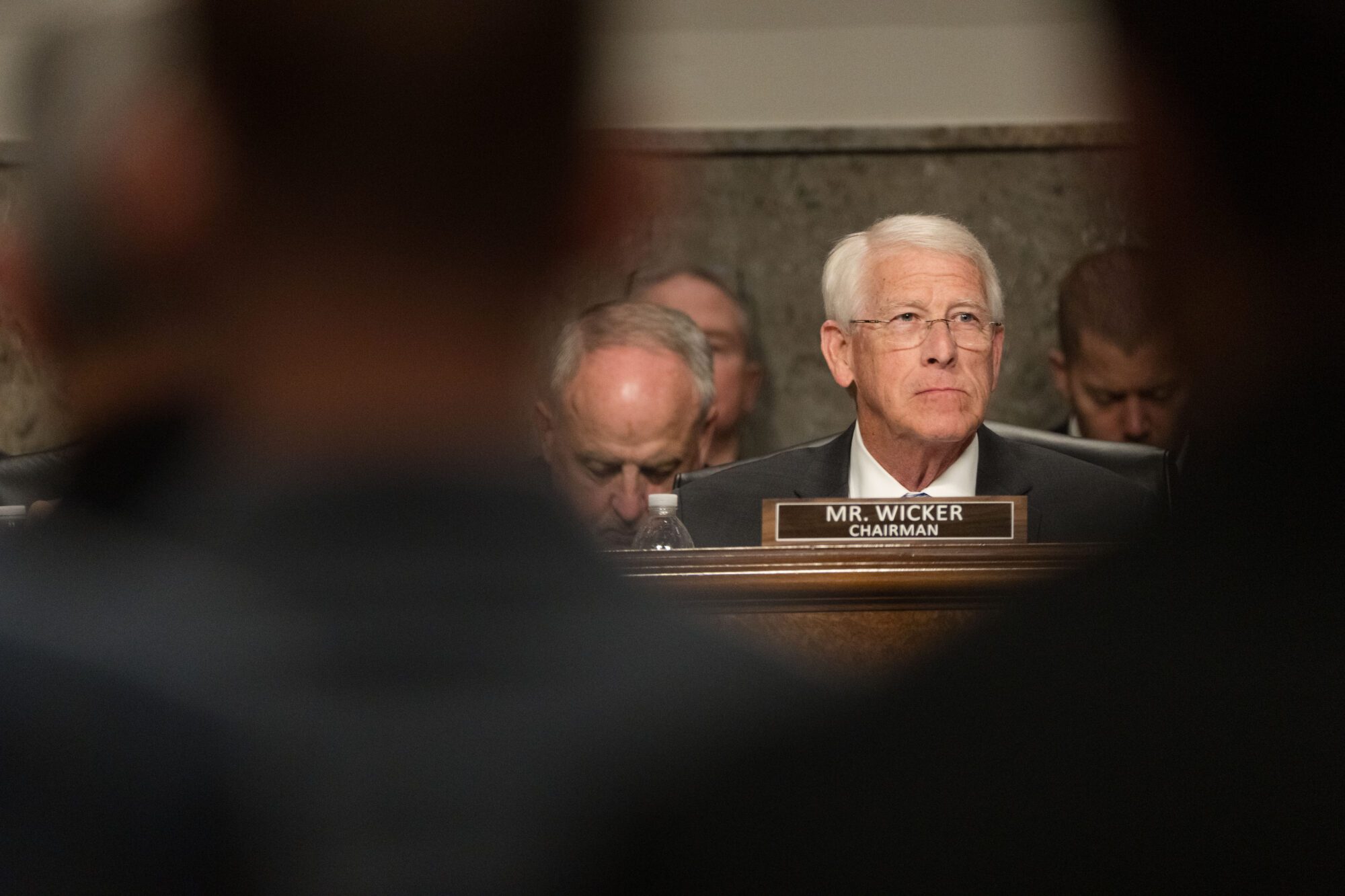
Senator Roger Wicker chairs the Armed Services Committee Hearings to examine the nominations of Bradley Hansell, of Virginia, to be Under Secretary for Intelligence and Security, Earl Matthews, of Virginia, to be General Counsel, and Dale Marks, of Florida, to be an Assistant Secretary, all of the Department of Defense, and Brandon Williams, of New York, to be Under Secretary of Energy for Nuclear Security, in Washington, DC on April 8, 2025. (Official U.S. Senate photo by David Rogowski)
- U.S. Senator Roger Wicker reviews the recently concluded term of the U.S. Supreme Court.
As June ended, so did another term at the U.S. Supreme Court. Since the 2025-2026 term began last October, the Court has considered questions impacting a wide range of issues—economics, immigration, gender, presidential authority, and more. The nine justices do not serve any political party, and neither Republicans nor Democrats agree with every decision. But conservatives should appreciate the outcomes of a few cases in particular.
Court Upholds Second Amendment
The Second Amendment was vindicated in a case called Wolford v. Lopez, in which the Court struck down a Hawaii law that unduly burdened law-abiding gun owners. A 2022 Supreme Court ruling (New York State Rifle & Pistol Association v. Bruen) had already reinforced the principle that Americans can carry handguns outside the home for self-defense.
Officials in Hawaii objected to the High Court’s ruling. They passed a law requiring gun owners to get express permission every time they brought a firearm onto private property, including publicly available places like parking lots and shopping centers. In doing so, they hoped to circumvent the justices’ orders.
The justices correctly found that the Aloha State was asking too much. In a 6-3 decision, the Court ruled that Hawaii cannot place a de facto ban on firearms in these everyday spaces. In other words, Hawaii could not put the onus on gun owners to enforce their Second Amendment rights.
Justices Protect Women’s Sports
A divided court struck down the Hawaii law, but all nine justices came together on another significant issue. The Court unanimously found that states could limit women’s sports teams to biological females without violating Title IX. That title is the section of federal law forbidding schools from discriminating on the basis of sex.
The Court heard arguments from two students—one from a West Virginia middle school and the other from an Idaho college. Both students were born male and wished to compete on women’s teams, but their states had passed laws to keep female student athletics to just those athletes born female. The Republican- and Democrat-appointed justices unanimously found that states could enforce their participation ban. Their ruling applies even if students had used puberty blockers or estrogen. It recognized the plain fact that biological males would have an unfair competitive advantage in women’s athletics.
Though the justices agreed that the state laws did not violate federal statute, they differed when asked about the Constitution’s Equal Protection clause. That landmark passage from the Fourteenth Amendment requires states to treat every person equally. The conservative majority of the Court wisely held that equality under the law does not mean that all persons, regardless of biological sex, are eligible for all sports teams.
Court Protects Founders’ Vision
These decisions are but a sample of the 67 cases the Court considered over the past nine months. As always, the justices’ job was to interpret both the Constitution and American statutes. Statistics from the term reveal a Court that takes that role seriously. Though more cases were decided along ideological lines this year than last year (9 percent jumped to 22.7 percent), 44 percent of decisions were unanimous. Even the justice who is in the minority the most often—Justice Ketanji Brown Jackson—was in the majority 67 percent of the time.
The vote breakdown reveals vigorous deliberation and thoughtful judicial interpretation. Justice Elana Kagan did not always vote with her two liberal colleagues, and the conservative justices did not always vote as a bloc. Many observers say this is a sign of a healthy Court—one governed by the law and precedent rather than political affiliation, as the Founders intended.

Roger Wicker