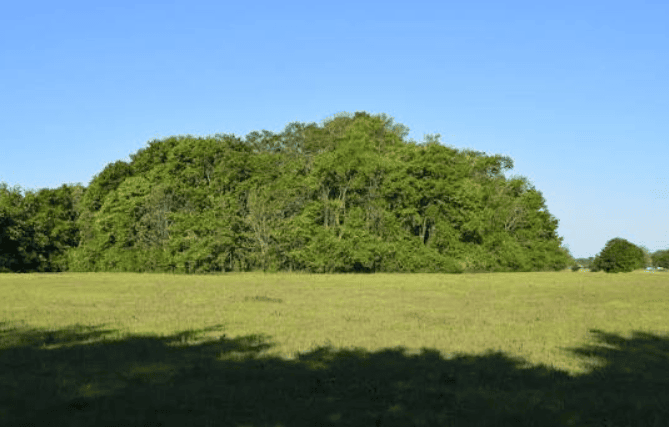
(Photo from MS Hills National Heritage Area)
- Hundreds of Native American mounds once stood across Northeast Mississippi. Mound building here stretched across roughly 18 centuries, beginning during the Woodland Period and continuing into the Mississippian Period.
Mississippi has a way of keeping its stories close.
Some are tucked inside old houses and courthouse squares. Some live in songs, recipes, and stories passed down through families. And some have been sitting quietly beneath the North Mississippi sun for more than 2,000 years.
Just south of New Albany, the Ingomar Mounds rise from the Union County countryside, remnants of a world that existed long before Mississippi had a name.
Two thousand years ago, long before Hernando de Soto wandered through this part of the country, long before state lines were drawn, cotton fields planted, or highways paved. Before the United States was even an idea, people were living, gathering, trading, and building right here.
And they left their mark on the land.
The Ingomar Mounds date to roughly 2,000 to 2,200 years ago, during the Middle Woodland Period, and are considered the oldest documented man-made site in Union County.
They are also part of a much larger story.
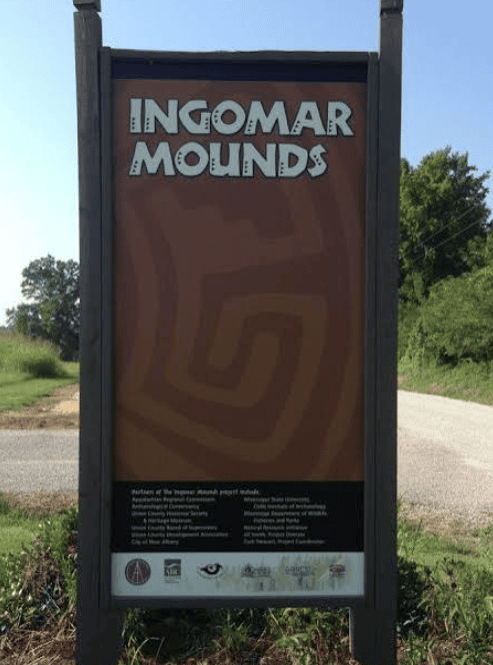
Hundreds of Native American mounds once stood across Northeast Mississippi. Mound building here stretched across roughly 18 centuries, beginning during the Woodland Period and continuing into the Mississippian Period. Different people built them at different times and for different purposes.
Some were rounded burial mounds. Others were broad and flat-topped, places used for ceremonies, gatherings, and other important parts of community life.
Ingomar was once an impressive complex of 14 documented mounds spread across approximately 70 acres.
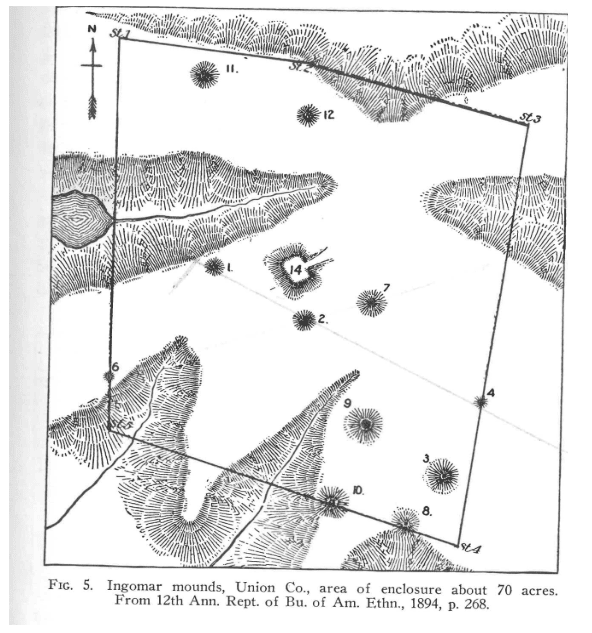
Try to picture that landscape 2,000 years ago.
No roads. No power lines. No New Albany a few miles away. Just earth and trees and people gathering at a place important enough that generations invested an extraordinary amount of labor into shaping the land itself.
Most of those mounds are gone now.
Some were looted. Others were plowed down as the land was converted to farmland. Development and time took their toll, too. By the late 1800s, much of what had stood for centuries was already disappearing.
One remarkable mound survived.
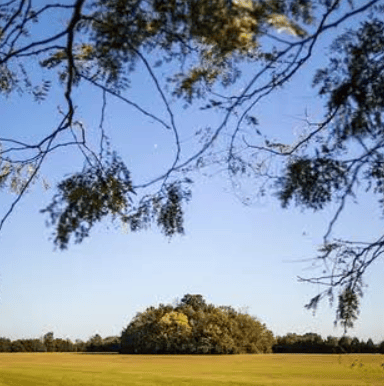
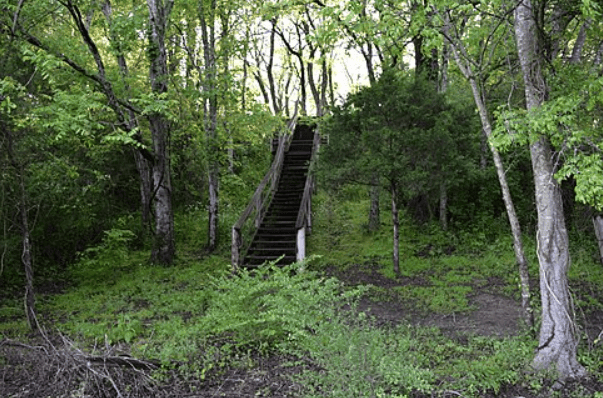
The large platform mound at Ingomar still rises approximately 30 feet above the surrounding land, making it one of the largest mounds of its type in the Southeast.
Standing near it puts those 30 feet into perspective.
Every bit of that earth had to be moved without a bulldozer, tractor, or dump truck. The mound was built by human hands, with soil carried and placed over time until an enormous structure rose from the Mississippi ground.
But perhaps one of the most fascinating parts of Ingomar’s story is what archaeologists found beneath that ground.
The people who gathered here were connected to a world much larger than Union County. Artifacts recovered from Ingomar included materials originating hundreds of miles away, evidence of extensive trade networks stretching across ancient North America.
People were coming and going. Goods were being exchanged. Ideas were traveling.
It makes ancient Mississippi feel a little less ancient somehow.
In the mid-1880s, the site caught the attention of Smithsonian archaeologists, who mapped the mound complex and excavated portions of it. Hundreds of objects were removed and added to the Smithsonian’s permanent collection.
More than a century later, some have returned to Union County on loan.
A selection is on display at the Union County Heritage Museum in New Albany, making a stop there an especially good addition to a visit. You can see pieces unearthed at Ingomar and then drive out to stand on the land where they were found.
Today, the Archaeological Conservancy owns and protects the mound property, preserving what remains for research, education, and future generations. Ingomar was designated a Mississippi Landmark in 2002.
And thankfully, this isn’t one of those historic places you can only admire from behind a fence.
The Ingomar Mounds Trail is an approximately 1.7-mile loop through the property, complete with interpretive signs explaining the history and natural surroundings. The preserve is also a Monarch butterfly way station and a geocaching site. It is open from dawn until dusk, and the Union County Heritage Museum offers information about tours and special events.
The land is also part of the ancestral homeland of the Chickasaw Nation, an important piece of a story that reaches far beyond what archaeologists have uncovered.
We sometimes talk about Mississippi history as though it began a few hundred years ago.
It didn’t.
People loved and lost here. They traveled, traded, and gathered here. They buried their dead here. They built something important enough to require an almost unimaginable amount of work, and more than 2,000 years later, part of it is still standing.
That’s the thing about Mississippi.
You can think you know a place. You can drive its highways and backroads for years.
Then one day, you turn off the road outside New Albany, walk a trail through the Union County countryside, and find yourself standing in front of 2,000 years of history.
Sometimes the past isn’t very far away at all.
Sometimes it’s right there in the dirt.

Meredith Biesinger