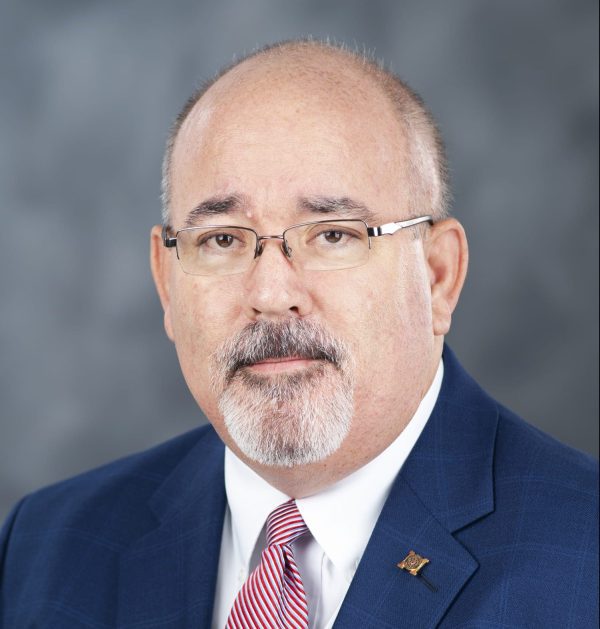
Shaun Yurtkuran
- If the goal is really to defend American values, treating an American with suspicion because of her religion seems like a strange way to do it.
My father is Muslim.
But that statement probably requires some explanation.
He was born and raised in Turkey, a country where being Muslim can sometimes mean something like being Baptist in Mississippi. It tells you something about your family and where you came from, but not necessarily where you were last Sunday morning. My father has never really practiced Islam.
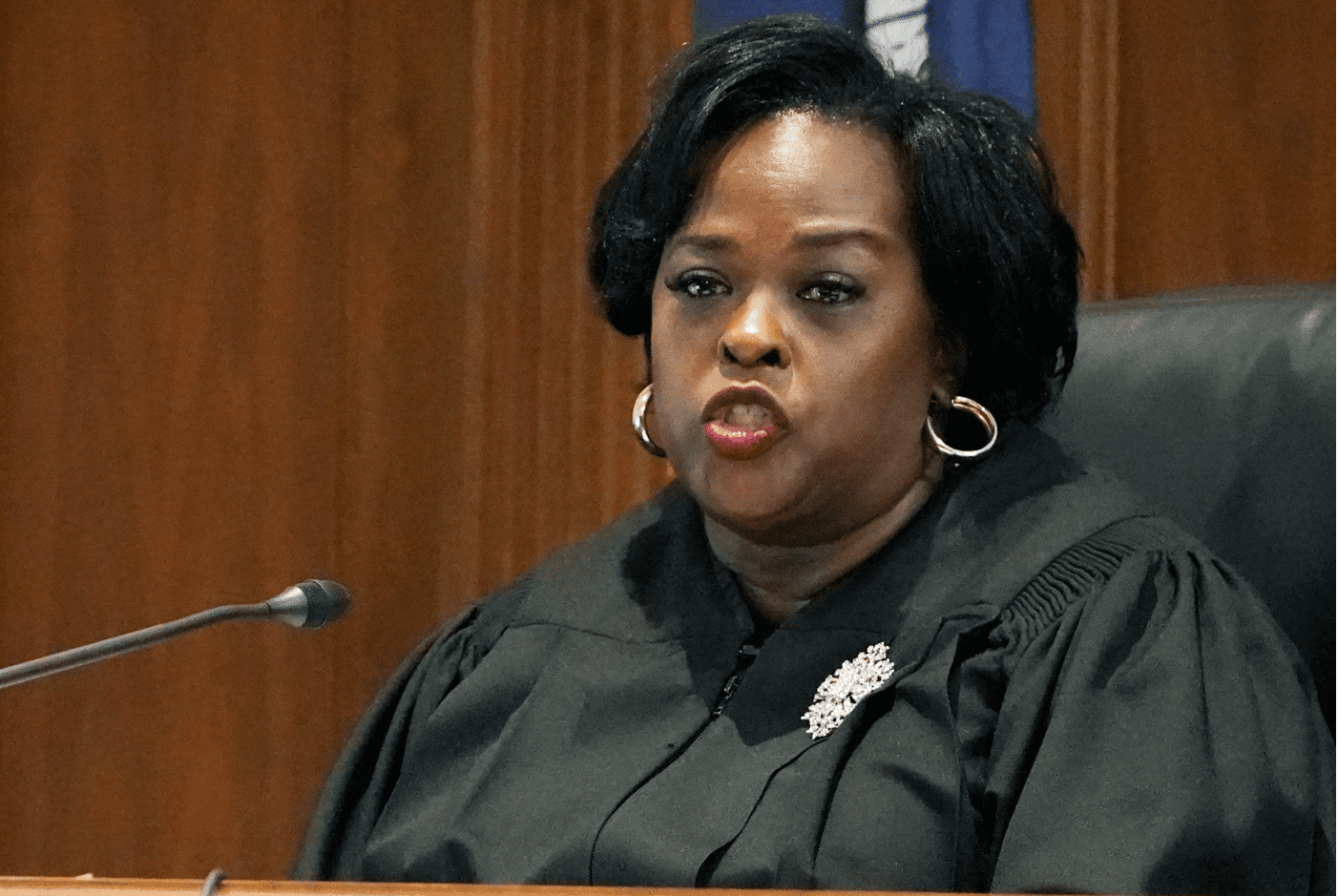
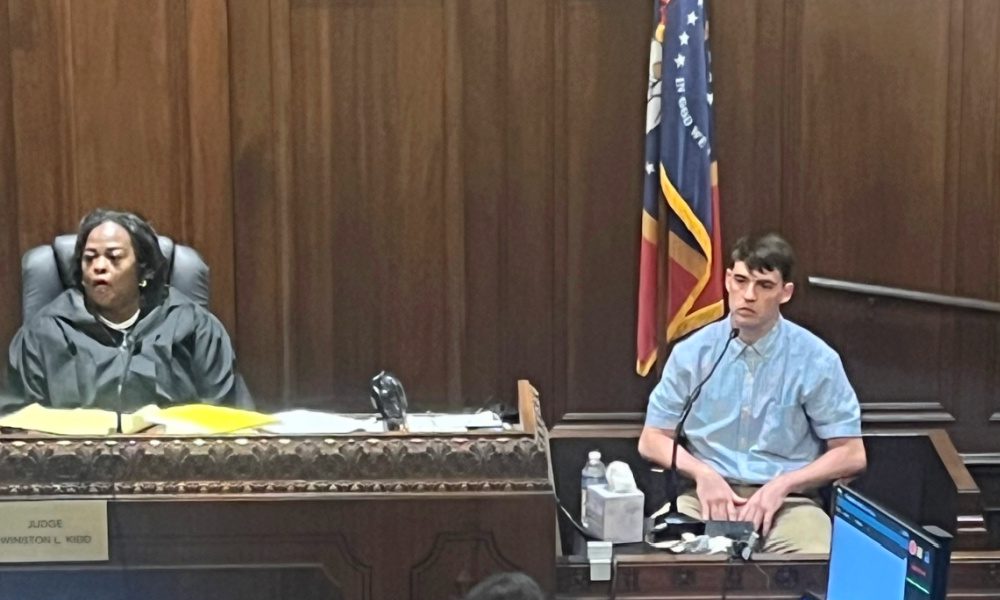
I have been thinking about that distinction a lot over the past several days as I have watched the controversy surrounding Assma Ali, a Mississippi lawyer who was recently appointed municipal judge in the small Delta town of Benoit.
Judge Ali is a native-born American. She graduated from law school in Mississippi, became a lawyer here and has now been appointed to serve as a judge here. She is also Muslim, and somehow that last fact has become the most important part of her résumé.
Almost immediately, social media filled with warnings about Sharia law, and politicians began joining the controversy. Before long, a Mississippi lawyer being appointed to a Mississippi judgeship was being discussed as though we had suddenly imported some foreign legal system into the Delta.
Watching all of this has made me think about my father, about the Mississippi that welcomed my family more than 30 years ago, and about what it means to defend American values.
My father immigrated to the United States in 1968 and landed in Miami with very little. He washed cars, sold concessions at the old Orange Bowl, worked at Burger King and took whatever odd jobs he could find while putting himself through college.
From almost the moment he arrived, being an American was enormously important to him. Long before he met my mother, he would put up a Christmas tree in his apartment every December. Not because Christmas had suddenly become part of his religious faith, but because, to him, it was part of being in America.
By the late 1970s, Dad had worked his way into a job as a stockbroker with Merrill Lynch. Then, in 1978, he married my mother, a Catholic woman, at his Merrill Lynch office Christmas party. And because apparently a Muslim immigrant marrying a Catholic at a Christmas party wasn’t quite enough religious diversity for one evening, they chose a rabbi to perform the ceremony.
A few months later, I came along, and 18 months after that, my sister did too. By this point, he had built the life so many immigrants dream about when they come to our shores.
If you want to understand the household my sister and I grew up in, there is another story about my father that probably explains it better than I can. This was Miami, and people would sometimes call his office at Merrill Lynch and immediately begin speaking to him in Spanish. My father would respond in Turkish.
After allowing the confused silence on the other end of the phone to linger for a moment, he would switch to English and say,
“Hey, this is America. We speak English here.”
That is my dad. He was proud of being Turkish but he was equally proud, and amazingly grateful, that he had become an American. He never taught me much about Islam, but he taught me an enormous amount about America. You worked hard, took responsibility for yourself, took care of your family, built something of your own and never took for granted the opportunities this country gave you. Those weren’t lessons he learned from a book. That’s been the story of his life.
Then, in 1993, my father came home one day and announced, “Hey, we’re moving to Mississippi.” To say my sister and I were less than thrilled would be an understatement. Mississippi might as well have been another country to two kids who had spent their entire lives in Miami.
My father, however, had fallen on difficult financial times in the years following the 1987 stock market crash. In his early 40s, he had to figure out how to start over.
My uncle was already in Mississippi, running a factory that manufactured pitch, a product used in the ballast of lighting. There was an opportunity there, although it wasn’t exactly the kind of opportunity my father had probably imagined when he first came to America. He was offered and took a job as the plant’s night watchman.
My father humbled himself. He packed up his family, left the city where he had built his American life and moved us to a place none of us knew. Then he took the job that was available because that was what he needed to do to take care of his family.
At 14 years old, I certainly didn’t understand that decision as an expression of American values. I just knew I didn’t want to leave Miami. Looking back more than 30 years later, I understand it differently. He didn’t remain the night watchman. A few years later, he and his brother took over the company.
That move also changed the course of my life. About a year after we arrived, my mother brought home an article about a case being prosecuted by the Hinds County District Attorney’s Office. Prosecutors were pursuing a murder that had happened more than 30 years earlier. The victim was Medgar Evers.
I was 15 years old. I read that article and became fascinated by the idea that lawyers could reach back three decades and use the law to try to right a wrong from the past. I knew then that I wanted to be a lawyer. Fourteen years later, I walked into that same Hinds County District Attorney’s Office as an assistant district attorney.
There is something about that progression that I have thought about often. My father brought me to Mississippi because his own American dream had hit hard times. He took a job as a night watchman because it was what he needed to do for his family. A year later, in this place I had wanted absolutely nothing to do with, I discovered what I wanted to do with the rest of my life.
Mississippi became my home, and Mississippi welcomed my family. That part matters to me now, especially as I watch what is happening with Judge Ali.
I don’t remember growing up here feeling as though Mississippi regarded us as outsiders. Quite the opposite. Over the years, Mississippi became ours. We are a small state. For better or worse, it sometimes seems like everybody knows everybody or at least knows somebody who knows somebody. There is an intimacy to Mississippi that is hard to explain to people who have never lived here, and it is one of the things I love most about it.
I have now spent most of my life here. I have prosecuted Mississippians and defended Mississippians. I have practiced law in courthouses all over this state. The place my 14-year-old self couldn’t imagine calling home became an inseparable part of who I am.
That is part of the reason the reaction to Judge Ali bothers me. My father was born in a Muslim country. He did come to America from somewhere else, and 25 years later he brought his family to Mississippi. Mississippi never demanded that we explain how Muslim he was before deciding whether we belonged here.
Judge Ali shouldn’t have to explain herself either. In fact, the legal part of this controversy is probably the least complicated part of the entire story. Judge Ali cannot replace the Mississippi Code with Sharia law because she is Muslim any more than a Baptist judge can replace it with the Bible because he is Christian. A Jewish judge cannot substitute Jewish religious law, and a Catholic judge cannot decide that canon law now governs the courtroom.
That’s not how our legal system works. A Mississippi judge exercises the authority given to her by law and is bound by the United States Constitution, the Mississippi Constitution, federal law and the laws passed by our Legislature. Her religion doesn’t create some additional source of judicial authority.
We don’t need to pass a new law prohibiting any of those things because our existing system of laws already does that. Sharia law has about as much independent legal authority in a Mississippi courtroom as the rules of Monopoly.
Of course, Judge Ali should be held accountable for what she does on the bench. If she gets the law wrong, criticize her decisions and appeal them. If she abuses her authority, hold her accountable. If she ever attempts to impose her personal religious beliefs on the people appearing before her instead of applying the law, then we have a problem. But I would say precisely the same thing about a Christian judge who attempted to impose his personal religious beliefs from the bench. The problem in either case isn’t the religion. The problem is a judge who isn’t following the law.
That’s why I keep coming back to the Mississippi that welcomed my family. My father came here as a Turkish immigrant with a Muslim name. I came here as a 14-year-old kid from Miami who didn’t particularly want to be here at all. Mississippi gave my father a place to start over, and it gave me the place where I discovered what I wanted to do with my life. Fourteen years after reading about the prosecution of Medgar Evers’ killer, I found myself working in the very office that had inspired me to become a lawyer.
That experience is part of the Mississippi I know. It is also why I don’t believe we have to choose between embracing our state, defending American values and respecting someone whose faith is different from our own. Those ideas aren’t in conflict. In fact, religious liberty doesn’t mean very much if it only protects the religions that happen to be popular where you live.
If the goal is really to defend American values, treating an American with suspicion because of her religion seems like a strange way to do it. The Constitution doesn’t need us to protect it from Judge Ali’s faith. It requires us to protect her right to have one.

Shaun Yurtkuran