- Several education-related bills that did not previously make it through the legislative process were included in a last-minute agreement between the House and Senate. See what’s included.
Through an omnibus conference report, the state House and Senate came to an agreement to establish stronger educational measures that ensure Mississippi’s children are versed in civics, financial literacy, reading, math and computer science.
The conference report for SB 2294 includes the language for several education-related bills that did not previously make it through the legislative process.
The package now heading the governor’s desk aims to establish the Mississippi Math Act, add civics to an existing course, and provide students with money management skills lawmakers say will benefit them for a lifetime. The conference report also maintains the original intent of State Senator Chris Johnson’s (R) bill to create the Mississippi Future Innovators Act.
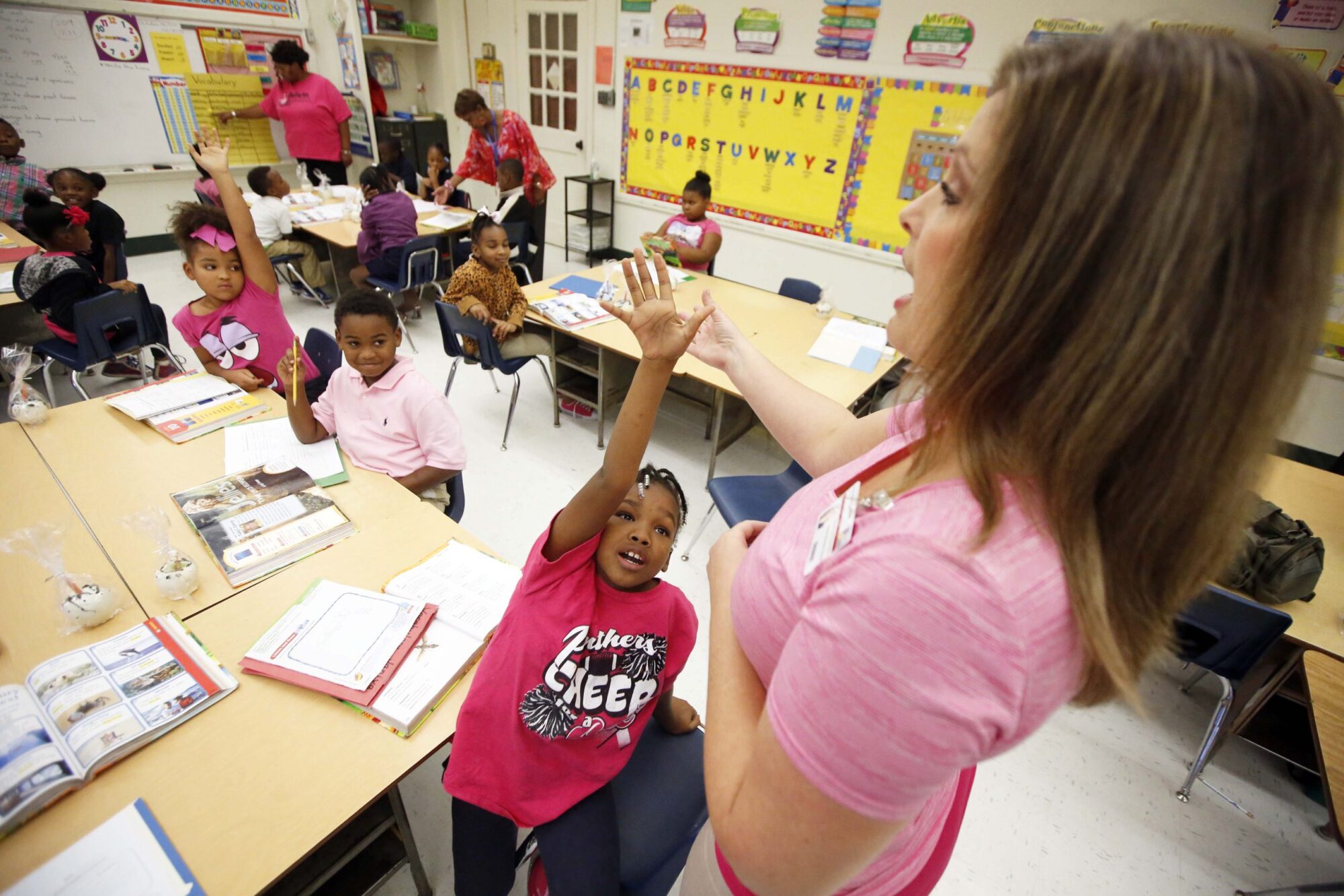
State Senator Nicole Boyd’s (R) “Moving Mathematics in Mississippi Program” was also included in the education package. Under that program, teachers will receive professional development in an effort to increase mathematics proficiency among the state’s public school students. Math coaching is to be established by the Mississippi Department of Education for teachers in grades 2 through 6 to ensure that a firm foundation of the subject matter is established while also providing intervention support for students in kindergarten, 1st grade, 7th grade and 8th grade. Annual reporting on the implementation of the math initiative will begin in the 2026-27 school year.
The conference report also includes a literacy intervention component which will start with students in the 4th grade and provide support into the 8th grade. A universal screening process will be used to develop individualized reading plans for student with deficiencies utilizing the science of reading and providing educators with job support and preparatory programs.
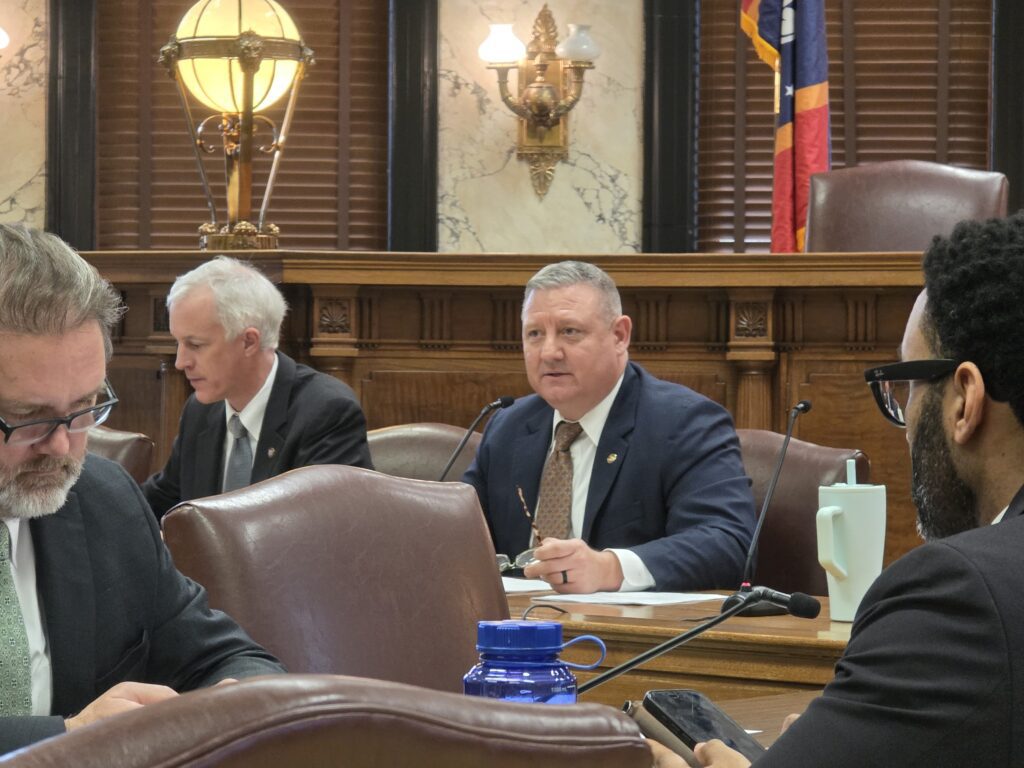
“As you remember, K to 3 were doing very well. However, between [grades] 4 to 8 our scores are dropping and our proficiency is declining,” Senate Education Chairman Dennis DeBar (R) explained to the chamber. “This will help, hopefully, raise those scores and literacy proficiency.”
Once a district identifies deficiencies of a student, parents must be notified within 10 days. Districts will also be required to employ at least one reading intervention specialist or a dyslexia therapist.
Beginning in the 2027-28 school year, students who still demonstrate deficiencies by the 8th grade will be enrolled in a remediation program as opposed to being held back a year, negating the 8th Grade Reading Gate.
“Feedback from the House and senators in this chamber showed the gate was something that was not desired. And so, basically, they’re going to allow them to progress. However, they will maintain, or will receive, intensive intervention to help them become proficient in literacy and reading.” DeBar said.
State Rep. Rob Roberson (R), chairman of the House Education Committee, said when a student is held back in the 8th grade, they are much more likely to drop out.
The education package also seeks to ensure that all public school students receive instruction in computer science and artificial intelligence. As part of the original intent of SB 2292, the bill will make computer science and artificial intelligence courses mandatory for students starting with the graduating class of 2029-30.
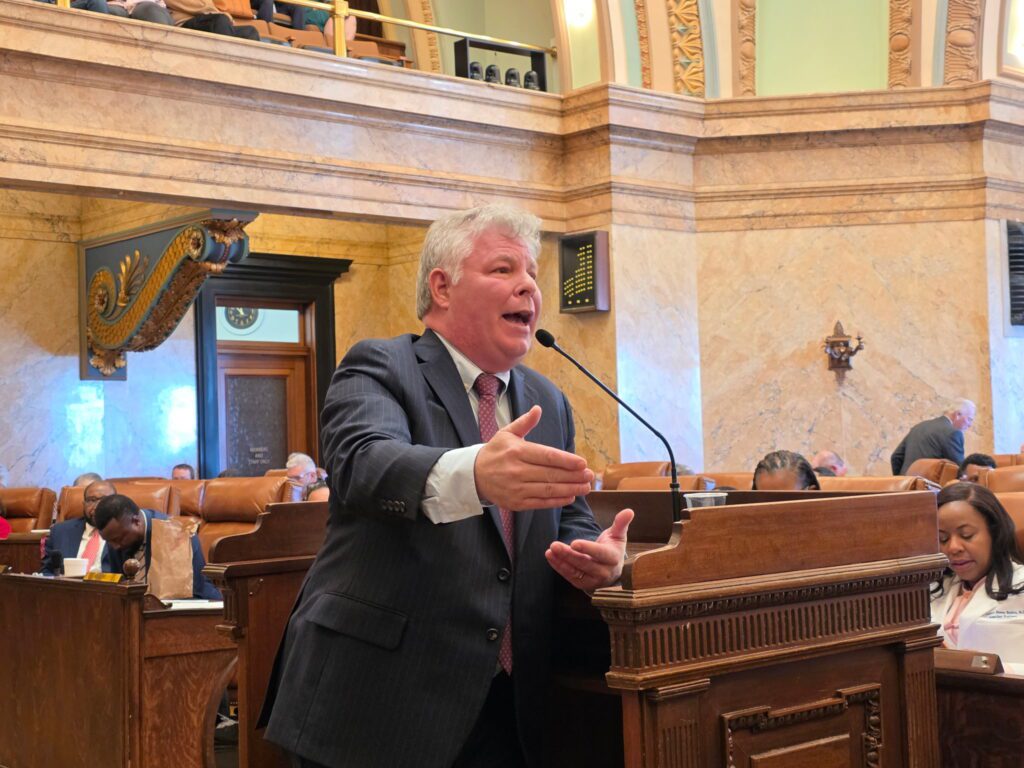
Starting with the graduating class of 2032, the package goes on to require that all public and charter high school students will be tasked with completing at least one half Carnegie unit of a financial literacy course, Senator DeBar told the Senate. That half unit can be obtained through a dedicated course or through another full unit course where half of the instruction time focuses on the aspects of budgeting, credit, debt, student loans and other financial matters before graduation. Rep. Roberson said the inclusion of the half Carnegie unit will not increase the credits needed for graduation.
Another provision within the bill is the return of civics in public education, previously included in a bill authored by State Senator Brice Wiggins (R). The requirement will go into effect with the 2027-28 school year. Upon implementation, districts and charter schools will provide instruction on the organization of government for the United States and Mississippi. Senator DeBar said the coursework should include an emphasis on federalism, the separation of powers, checks and balances, the Bill of Rights and “provide an appreciation of free speech and civil discourse.”
To avoid adding more Carnegie units to a student’s graduation requirements, the civics coursework will be included in any existing classes, such as U.S. History.
“We did not want to create more work or more classes for our students and teachers so we are incorporating that into a present course of study that is being taken by the student,” DeBar added.
The conference report passed unanimously out of both the House and Senate.