(Photo from Shutterstock)
- Mary Ann was born in Biloxi and grew up in Brandon, with loving but strict parents. Her childhood in Mississippi shaped her outlook on life.
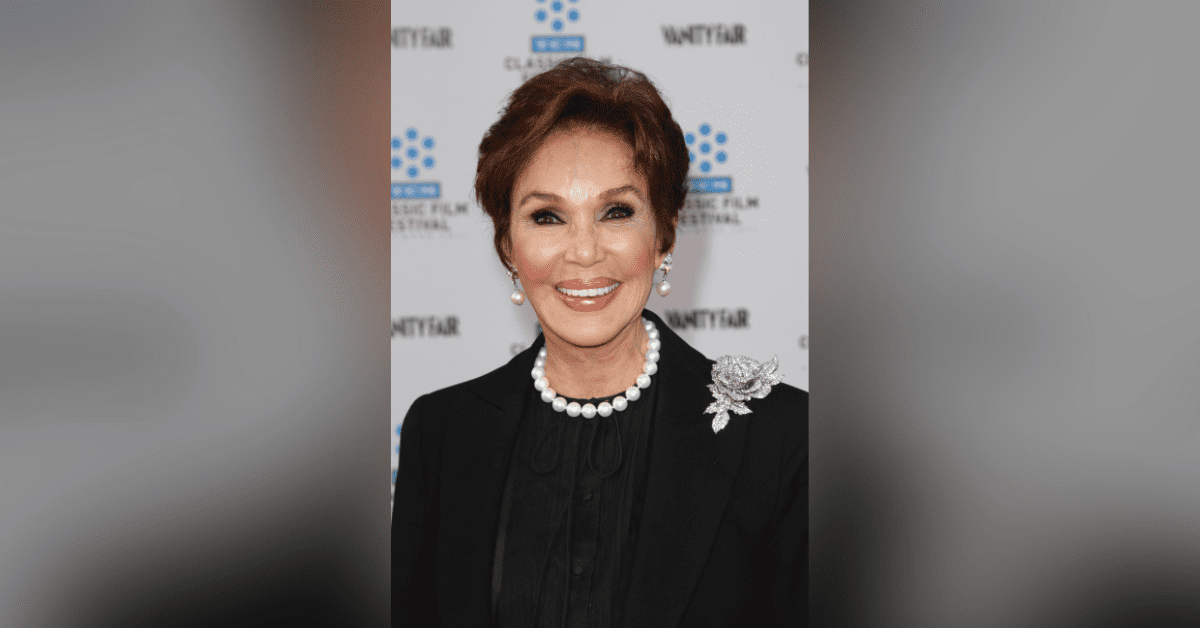
Mary Ann Mobley was Mississippi’s first Miss America, and 67 years later, we still cherish her as we consider her “ours.” From the outside, her life seemed like a fairytale—a small-town girl born in Biloxi who captivated the world with her million-dollar smile and her unapologetic values. During an era when the civil rights struggles and campus unrest shone a negative light on Mississippi, her authenticity was a beacon of optimism and stability.
Those closest to her recall a friend who, despite her accolades, never let fame change her. She was forever the same girl who walked the halls of Brandon High School in 1954. Her love for her hometown was deep, and she never missed an opportunity to return. This unwavering connection to the place that made her who she was grounded her throughout her life’s journey.
Mary Ann held fiercely to what she felt were non-negotiables—marriage fidelity, family, and faith. These unshakable principles became the foundation of her influence and shaped a legacy that touched the hearts of so many.
Donna Dye, wife of the late Lieutenant Governor Brad Dye, met Mary Ann in 1963. Donna found it memorable that Mary Ann, once one of her husband’s old girlfriends, traveled from Brandon to Coffeeville on a chilly December day to attend his wedding.
“That trip was the beginning of a close friendship that would grow over the years,” said Donna.
It certainly did. The two simply “clicked.” Both were small-town girls with similar upbringings, and they “connected” in a way best friends do.
How often does a wife entertain her husband’s ex-girlfriend’s wedding party in her home when she has a two-year-old and a one-month-old? When Mary Ann and Gary’s Hollywood friends came to Mississippi for their wedding in November 1967, the Dyes hosted them all.
At some point in the 1970s, the Dyes and the Collinses began celebrating their annual Thanksgivings, Christmases, and Easters together. “We grew beyond friends. We became family,” Donna says.
“When we first gathered at Thanksgiving,” Donna says, “the family included Mary Ann’s mother and grandmother, Brad’s mother, and my parents. We practiced what I have always considered a Southern concept: ‘the big table and the little table.’ We used to joke that someone at the big table would have to die before the child next in line could escape the little table and move up.”
Mary Ann grew up in Brandon, with loving but strict parents. Her childhood in Mississippi shaped her outlook on life. She often recalled how, as a freshman at Ole Miss, her sorority sisters lamented their 10:30 curfew. She marveled, since her own curfew at home had been 10:00. That extra 30 minutes at college felt like newfound freedom, leaving her thrilled and grateful.
In Mary Ann’s childhood, if the local Methodist Church opened its doors, her family was on the front pew. Sunday School, Methodist Youth Fellowship on Sunday nights, Wednesday prayer meeting, and choir practice, cultivated a deep faith that sustained her through a career in a culture that did not always share her values.
As a junior high student, Mary Ann’s mother insisted—despite protests—that she enter a Rankin County speech contest. Although hesitant, she delivered a three-minute presentation that won first place. Surprised and proud, she realized her voice had power. That small event inspired her fifty-year career, marking an important turning point.
From an early age, she took dance and singing lessons, excelling in both. Her versatility was on full display during her Miss America talent, where in the space of three minutes she showcased her operatic skill in “Un bel Di,” from Madame Butterfly, switched mid-performance to a jazz number, “There’ll Be Some Changes Made”, and ended with a mock striptease dance. The video remains on YouTube.
Mary Ann Mobley was more than a pretty face, although she was that in spades. Her soft Southern accent masked a sharp, astute mind. When she enrolled as a freshman at Ole Miss as the first Robert M. Carrier scholarship recipient, she declared pre-law as her major. Eventually, she switched to Speech and Drama, a shift that reflected her developing interests. Her extroverted personality, campus opportunities, and her Chi Omega sorority all pushed her toward beauty pageants and performing arts. Thus, these various influences led her to the Miss Mississippi Pageant of 1958, a title she captured.
Wide-eyed yet steadfast, she set out for the Miss America competition in September of that year. At the time, families couldn’t afford professional coaching or high-priced wardrobes, making her determination all the more significant. She landed in Atlantic City determined to do her best and make Brandon’s 2,500 citizens proud. Nerves and excitement collided, but there was no intimidation. She stood confident—unapologetically herself—and proud of it.
When all was said and done, Miss America 1959 was none other than Brandon, Mississippi’s Mary Ann Mobley.
With her $10,000 scholarship, Mary Ann completed college before moving to New York to study acting, speech, dance, and singing. Broadway was her goal.
Mary Ann made her Broadway debut in 1962 in the production Nowhere to Go but Up. The show closed after nine performances, but Mary Ann went on to lead roles in at least 25 more Broadway hits. She was voted into the Mississippi Musicians Hall of Fame in 2002 for her extensive musical performances.
While still in New York, Mary Ann’s rising star caught the attention of Hollywood. Metro-Goldwyn-Mayer signed her to a five-year contract. With this opportunity, she left the Big Apple behind and moved to Los Angeles, ready for the next milestone of her career.
It would seem that Mary Ann was immediately propelled to success by her title as Miss America. She once said, quite transparently, that being Miss America and having doors open so easily was both a blessing and a curse. Because she did not start at the bottom, where a person has the space to learn and grow with each role, she missed that important period in her development. The expectations of those employing her were enormous because of her title. She felt in many ways unprepared and had to learn on the fly. That was stressful.
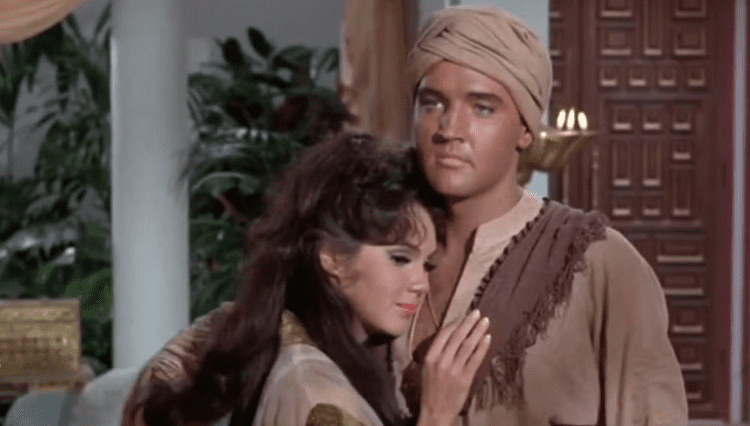
Her breakthrough came in 1965 with leading roles in Girl Happy and Harum Scarum alongside Elvis Presley. Her performances earned her the Golden Globe for New Star of the Year, shared in a three-way tie with Mia Farrow and Celia Kay.
Television role invitations multiplied. Mary Ann’s timing for comedic and dramatic roles showed her innate adaptability. Her quick wit and intellect made her in high demand as a panelist on game shows like the popular Password and many others. Because of this versatility, Mary Ann was a classic “it” girl.
She was 30 before she met the love of her life, fellow actor Gary Collins. They married in a traditional ceremony at her hometown Brandon Methodist Church in 1967. Her ex-boyfriend, Brad Dye, was a groomsman.
Mary Ann’s ambitions took second place to her role as a supportive wife and mother. She clung to her traditional roots and decided that she would not accept any role or engagement that took her away from her family for more than a week at a time.
She and Gary spent 40 devoted years together, committed to their daughter, Clancy, and giving their time to humanitarian causes. They appeared countless times, raising awareness and funds for everything from Hurricane Katrina aid to Breast Cancer Organizations, Child Abuse organizations, the March of Dimes, and so many more.

After 2000, they faced storms neither had foreseen as Gary battled a serious alcohol addiction. The pain of their brief separation became public, splashed across tabloids. Yet, love and loyalty guided their hearts back to one another. When Gary passed away in 2012, it was Mary Ann who was at his side, her presence a final act of unwavering love.
Mary Ann was diagnosed with Stage 3 Breast Cancer in 2009 and fought it valiantly for five years. She passed away on December 9, 2014, at her home in Beverly Hills. She is buried beside her beloved Gary in Ridgeland, Mississippi, at Parkway Memorial Cemetery, where she purchased an extra plot for a bench just so those she loved so much could come by and sit a spell.
One of the most beautiful tributes at Mary Ann’s memorial service was given by Donna Dye, who said she would put empathy and genuine caring at the top of her description of Mary Ann. “Her compassion for those experiencing tough times was palpable and legendary. Each of us gathered here today has known trying times to one degree or another. Don’t make the mistake of thinking that Mary Ann led a charmed life. Mary Ann’s empathy was rooted in the tough times she herself had experienced and struggled to overcome. Whoever originated the phrase “bed of roses” must have forgotten about thorns. Mary Ann struggled with Crohn’s Disease for 52 years; this most recent and final bout with cancer was her third. The last time I spoke with her, she was quite ill, but she was fighting. These diseases were among Mary Ann’s thorns of life, each of which was faced with grace, dignity, and strength.”
Mary Ann Mobley had to be the quintessential “Steel Magnolia.” Authenticity always ages well.

Marilyn Tinnin