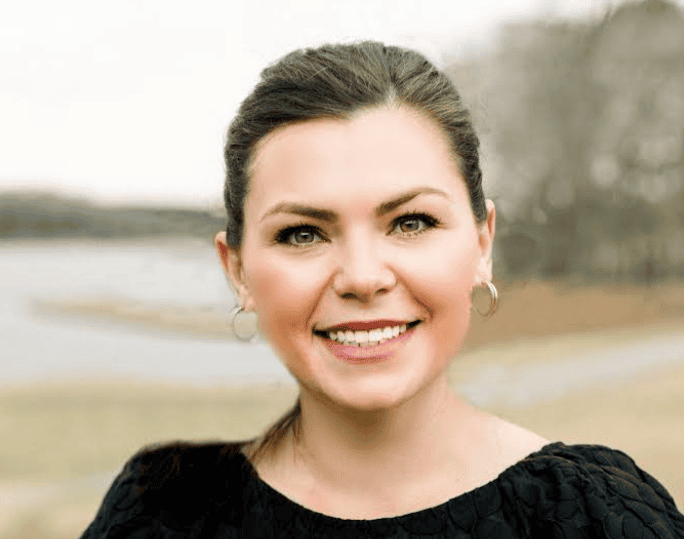
- Fennelly hopes the book will inspire readers to write their own truths.
Beth Ann Fennelly writes from the kitchen table, the classroom, and the fleeting moments in between. In her latest work, The Irish Goodbye—a collection of micro-memoirs—she examines the tension between what matters and what molds us. As her stories unfold, they disrupt the typical idea of the “ordinary,” allowing readers to reconsider what defines “memoir worthy.”
Redefining What’s Worth Writing About
“I think when we imagine the person who should be writing their memoirs, we imagine someone who is famous, someone who’s done something heroic, a president, or a world leader, or someone to whom something unimaginably tragic happened, like being trapped in a mine.”
Instead of seeking remarkable stories, Fennelly finds meaning in her daily life as a mom of three in a Mississippi town. She shows how ordinary moments can contain wonder, humor, and a celebration of life’s unanticipated surprises. This approach shapes readers’ engagement and allows them to see themselves in Fennelly’s stories and how she confronts those daunting emotions in her writing.
Writing Through Loss Without Losing Laughter
Fennelly’s work is a rebellion of sorts and an insistence on honesty in a culture that too often rewards performance rather than substance.
“We seem to be living in this false way,” she says, describing a world of curated images and polished narratives, where people present themselves as “the hero of our own stories in a way that falsifies them.”
Her response is that she doesn’t hold back.
“If I felt the desire to say something, I just said it,” she explains. Of course, she balances that openness with care because vulnerability is at its core. “We turn to memoir because we’re hungry for truth.”
The Irish Goodbye tackles deep, personal grief head-on, as if unavoidable. What makes the book remarkable is Fennelly’s willingness to confront loss and her refusal to be defined by it. By unveiling her sister’s unexpected death and her mother’s long, drawn-out illness and agonizing death, she illustrates how these threads run through her life and everything she does.
Nevertheless, Fennelly’s optimism and humor show that her main theme is not just about loss, but about the emotional range in ordinary life, the way laughter and sorrow mingle to create extraordinary resilience.
“So, the book does have all these various kinds of highs and lows.”
In that way, Fennelly says, “it reflects the way I believe life is. One isn’t always having long sunny stretches or long tragic stretches. They’re jumbled up together, frequently following each other in quick succession, just like in the book.”
The micro-memoir is less a constraint than a creative playground, Fennelly says.
“I’m basically a very greedy person. I want to do a little bit of everything.”
That includes poetry, fiction, and nonfiction distilled into a single, compact form. From poetry, she utilizes “extreme compression and lyrical power”; from fiction, she uses “an arc of narrative with a satisfactory journey”; and from nonfiction, “truth.”
She explains, “I use this micro memoir form to see how quickly I can get in and get out of an experience and reveal its fullness.”
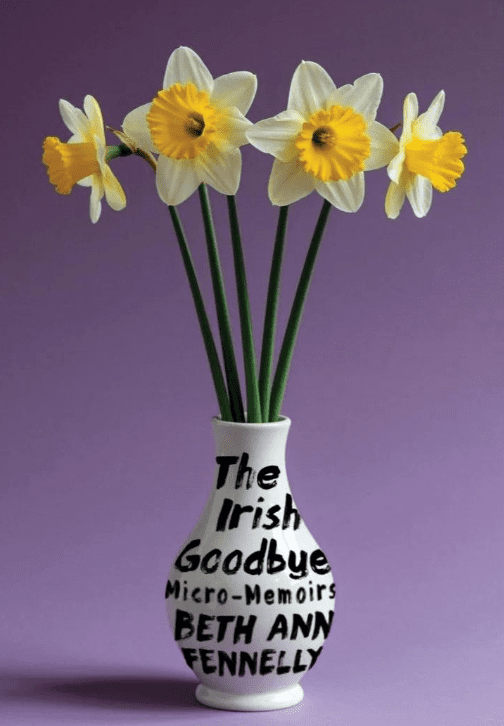
Fennelly shares how the book’s title, The Irish Goodbye, comes from a one-sentence piece in the book called “The Irish Goodbye,” in which she refers, through a metaphor, to her sister’s death. It reads: “How, without farewells, you slipped out the back door of the party of your life, oh, my sister.”
This, she says, points to her sister’s death as a theme running through the book. At the same time, Fennelly appreciates how, in a broader sense, the Irish goodbye signals something happening quickly—much like the micro-memoir form itself, which often concludes almost before it begins.
A Contradictory Landscape
The setting of Mississippi becomes a shaping force in Fennelly’s narratives, much as it has for many writers before her. Its influence permeates her stories, lending them a unique perspective.
“I think that place influences psychology, especially when you come from a place as unique and distinctive as Mississippi. It’s going to shape your worldview and your appreciation of language,” says Fennelly. “A defining thing about Mississippi is our tremendous literary output.”
Fennelly teaches a class on Mississippi literature at the University of Mississippi, and her passion for teaching it is a way to redress the fact that Mississippi kids are told to feel ashamed of Mississippi because of the statistics: the poorest state, the fattest state, and the state with the highest teenage pregnancy rate.
“You know, all these things might be true, but I also want them to realize we have the highest number of Pulitzer Prize-winning authors. I want to talk about why our stories are so rich, varied, and compelling.”
Yes, Mississippi is a state with a contentious history and a lot of visible scars.
“So, we need to tell our stories, work through our stories, not in spite of that fact but because of it. Living here, where literature is being created by some of our nation’s best writers around me, has definitely shaped my desire to be better.”
That outlook doesn’t mean Fennelly ignores the statistics. She resists the disparaging narratives connected to those statistics because, for her, challenges become fuel rather than obstacles.
Memoir: A Human Fingerprint
Fennelly describes memoir as a way to find meaning in an ordinary life—to create a unique testament to a person’s existence. The Irish Goodbye ultimately highlights the extraordinary fingerprint left by even the most everyday moments.
She teaches this form as well, because she believes that “we can educate our intelligence by slowing down and understanding our feelings and thinking about the stories that help shape us.”
Fennelly hopes the book will inspire readers to write their own truths.
“It’s one of the things I really have enjoyed,” she says, adding that many tell her they want to write. Even those who don’t consider themselves writers find gratification in creating a one-paragraph piece.
And for Beth Ann Fennelly, that’s the ultimate success. Not just readership. Participation.

Richelle Putnam