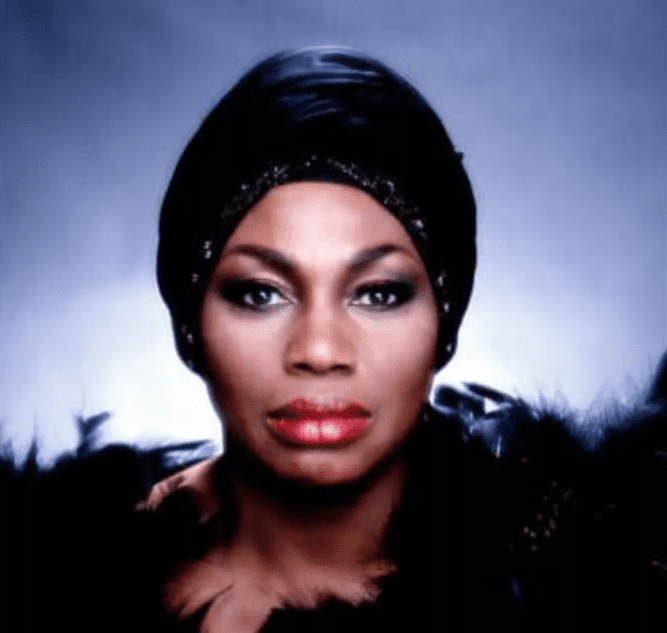
- The Laurel native remains a Metropolitan Opera legend. At 99, still resides in New York City, not too far from the stage where her fame and reputation were cemented.
Leontyne Price made her historic debut at the Metropolitan Opera in 1961 as Leonora in Verdi’s Il Trovatore. At 34, she had already gained a reputation as a leading American soprano, starring in major Broadway productions like Porgy and Bess, and performing recitals abroad at renowned opera houses. Her long-anticipated Met debut did not disappoint. The standing ovation by the approving audience lasted a full 42 minutes. Leontyne assured an interviewer once that she had the recording to prove it.
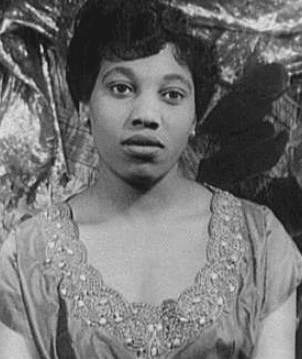
Born to James Anthony Price and Katherine Baker Price, a sawmill worker and a midwife in Laurel in 1927, she described her childhood in an interview with Robert Jacobsen in 1981 as “one of the happiest childhoods of anyone I could possibly imagine. It was full of love, a great deal of inspiration, discipline, community spirit, and extraordinary parents.”
Church and school were the center of social life in her small Southern town, and the adults in both of those institutions were almost as influential in Leontyne’s development as her parents were. Leontyne showed great interest in music from a very young age, taking her first piano lessons with a local pianist, Hattie McInnis, long before she was old enough to attend school. By the time she was 12, she was playing for worship services regularly at Saint Paul’s Methodist Church.
Her aunt, Evelina Greer, lived with Leontyne’s family and was a domestic worker in the home of a prominent Laurel family, the Alexander Chisolms. Leontyne and her younger brother, George, frequently accompanied their aunt to work and played with the Chisolms’ children. In an era often defined by racial strife, there was no racial barrier in these friendships — friendships that lasted a lifetime.
Long after Leontyne had achieved the recognition she deserved, the press wrote stories implying that the Chisolms were the principal reason Leontyne’s career reached such a pinnacle. Such stories were deeply offensive to both the Prices and the Chisolms. The two families’ friendship was built on respect and genuine affection. According to Leontyne, any other narrative was incorrect.
Mr. Chisolm, a banker, and his wife, Elizabeth, a trained pianist, were music lovers who recognized Leontyne’s talent. They gave her access to their record collection and introduced her to opera. Elizabeth encouraged Leontyne’s music, even taking her to Jackson at age nine to hear Marian Anderson, the famed contralto and first African American to sing at the Met. Inspired, Leontyne resolved to pursue a musical career, never doubting her purpose or ability.
Leontyne graduated from Oak Park Vocational High School in 1944 as salutatorian of her class. She was a well-rounded student involved in choral groups, band, and cheerleading, and she also earned extra money as a soloist at civic events and church celebrations.
When Leontyne enrolled at Wilberforce University in Ohio as a music education major, her primary instrument was the piano. Teaching piano lessons would be her “Plan B” if a performance career did not work out. She did study voice secondarily. Her teachers heard her lush, full voice with its dramatic richness and categorized her as a mezzo-soprano. In her sophomore year, right before the choir’s major annual concert, the principal Soprano soloist fell ill. Leontyne was asked to fill in for her. The feedback was overwhelming.
She has always looked back on that unexpected opportunity as “the moment of discovery of my voice.” Professors and classmates encouraged her to change her focus from piano to voice. By the end of her junior year, she had swept several notable collegiate singing competitions. Those same professors, along with the head of the Wilberforce University music department, insisted she apply to Juilliard.
Leontyne received a partial scholarship. Her parents were not able to help her financially because her younger brother was beginning college, and they could not afford to pay two tuition fees at the same time. Friends and administrators at Wilberforce rallied support for a Leontyne Price Fund, organizing a benefit concert featuring Leontyne Price and the notable bass-baritone Paul Robeson of “Ole Man River” fame.
The Chisolm family, too, covered a large portion of the remaining funds. Leontyne also contributed to her expenses by working side jobs and singing at various venues, particularly in Manhattan churches. Together with a host of supportive friends and fans who wanted to see this extraordinary talent succeed, they made her study at Juilliard happen.
Leontyne entered Juilliard in 1948 and began her studies with Florence Page Kimball, who became a lifelong friend and mentor. Kimball was also the instructor who recognized, as no teacher had before, that Leontyne’s “heavy molasses mezzo” should become a lyric-dramatic soprano. The strength of her voice in an extended range was too broad to be called a typical mezzo. It was Kimball who developed the take-your-breath-away quality of Leontyne’s voice in works of Verdi and Puccini.
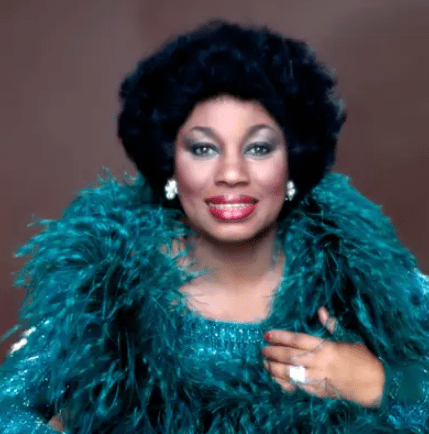
Invitations to perform exploded. Even in her home state of Mississippi, where strict segregation of the races ruled, word had spread among serious Classical music aficionados that Leontyne Price of Laurel was an incredible talent who was destined to be an international star.
On August 11, 1949, Jackson’s Clarion Ledger carried a telling story on page 8 headlined, “Laurel Vocalist Acclaimed in City.” The subtitle read, “Colored Singer Delights Jackson.”
The report repeatedly identified Leontyne as “a colored girl,” although the writer praised her talent and said unapologetically, “Many of Jackson’s most prominent citizens and music lovers made up the crowd which so completely overflowed the Heidelberg Hotel’s Victory room that a second concert was hastily planned and given for those who could not be seated at the first. The highly talented young girl, niece of a servant in the home of Alexander Field Chisolm, the prominent Laurel banker, was accompanied at the piano by Mrs. Chisolm. The Chisolm family has encouraged the education and development of Leontyne for the past eleven years. The varied program, enthusiastically applauded throughout, ranged from Beethoven to Gershwin, and was climaxed by a series of spirituals. Leontyne captured her audience with her complete lack of affectation, her deep sincerity that reached a fervent pitch, and her truly remarkable voice.”
Leontyne, at 99, still resides in New York City, not too far from the stage where her fame and reputation were cemented. Her last interview was around her 90th birthday in 2017, when she reflected on her career. Always gracious and generous, she shied away from politics and racial division in interviews. Her focus is always positive and inspirational. Among her many accolades and awards are the Presidential Medal of Freedom and 13 Grammy Awards.
When asked if she was nervous all those years ago as she stood in the wings waiting to appear for the first time at the Met, she replied that nerves came later. Her inner voices spoke of her responsibility as an artist, more than being a barrier-breaker. With a twinkle in her eye and a lilt in her voice, she compared that moment to being a thoroughbred waiting at the gate to let loose and run. She knew she had trained hard. She prayed, “Look, Jesus, you got me into this. I’m going out there, and you get me out.”
She added, “It worked. I went out there and did the best I could.”

Marilyn Tinnin