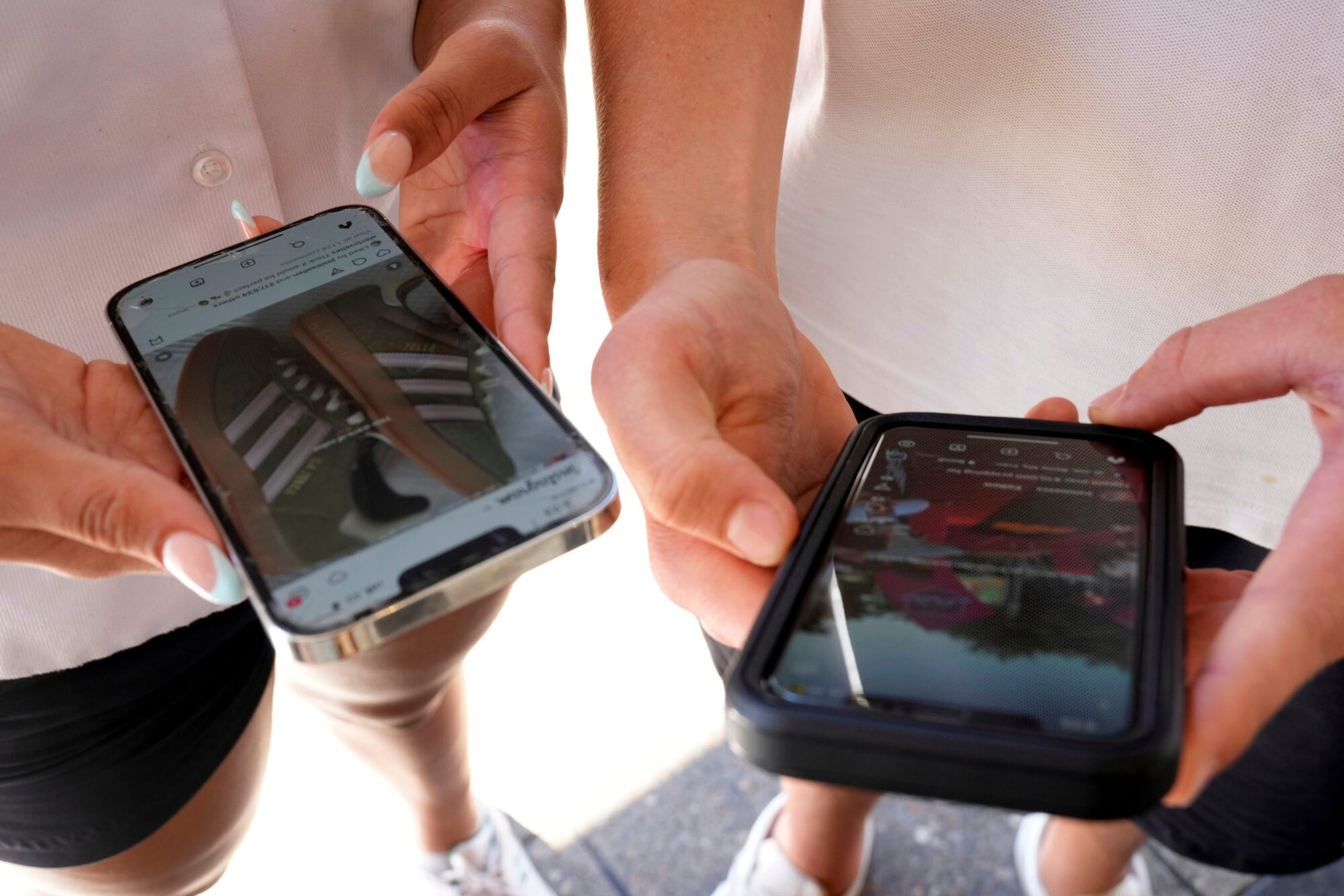
FILE - Young people use their phones to view social media in Sydney, Nov. 8, 2024. (AP Photo/Rick Rycroft, File)
- Efforts to restrict social media and cell phone use during class time are expected to return next session, with one lawmaker even considering a state tax on social media companies.
Bills that would have restricted the use of cell phones by public school students during instructional hours did not make it through the legislative process again this session.
Efforts to restrict the use of cell phones by students while in school have been a topic of discussion for several sessions, but legislative negotiations have thus far failed to come to an agreement.
Concerns over the use cell phones in school range from cheating on tests to causing classroom disruptions. But some legislators like State Rep. Samuel Creekmore (R), author of one of this session’s cell phone ban bills and chair of the House Public Health and Human Services Committee, are also worried greater consequences are possible.
“They’re not interacting with each other. They’re staying on their phone, they’re not engaging socially or even physically,” said Creekmore of the students.
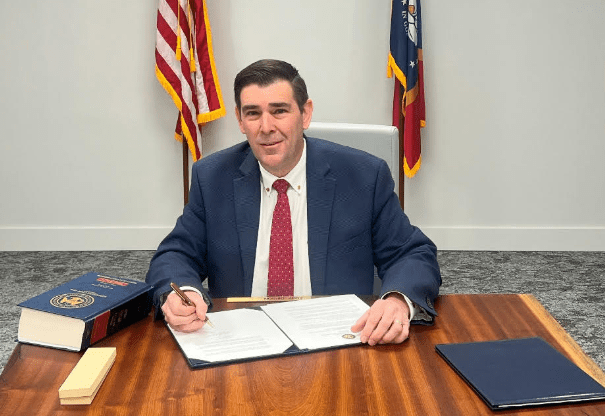
State Rep. Rob Roberson (R), Chair of the House Education Committee, agreed that the constant use of social media and cell phones are detrimental to the social wellbeing and mental health of today’s children.
“We’re going to have to figure out a solution to dealing with this,” Roberson said. “I wish that the local school districts would each come up with a solution that works for them. I hate to do a one-size-fits-all, because that’s not the case due to different circumstances within each district.”
Some of the opposition to implementing such a bill banning cell phones in schools has come from parents, who are concerned that cell phone bans will restrict communication with their children.
“In the long run, I think we are hurting our kids,” Roberson said, adding that before cell phones were widespread, children attended class with no parental contact without an issue.
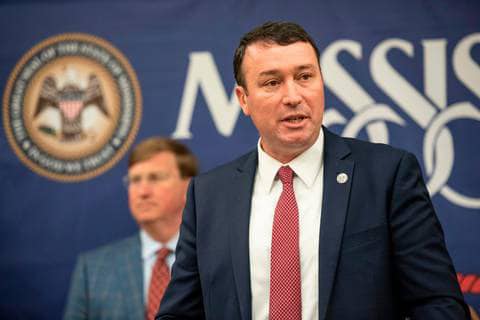
State Senator Dennis DeBar (R), author of one of the Senate bills to address the matter and chairman of the Senate Education Committee, was equally as disappointed that an agreement could not be reached on the issue during the 2026 session.
“Unfortunately a simple piece of legislation that nearly everyone thinks is necessary did not make it across the finish line,” DeBar told Magnolia Tribune. “However, with the transformative legislation that the Legislature passed this year, the session was still a major success for education. I will continue to work with Chairman [Rob] Roberson to get an agreement that can be passed next session.”
Among the bills DeBar touted that did pass this year were those that raised teacher pay, implemented math and literacy initiatives, and added financial literacy and civics to instructional time.
Legislation regarding cell phone use in schools introduced in both chambers set similar goals, mandating that all public schools, including state-run schools, establish cell phone policies to prevent the use and possession of cell phones by students during class.
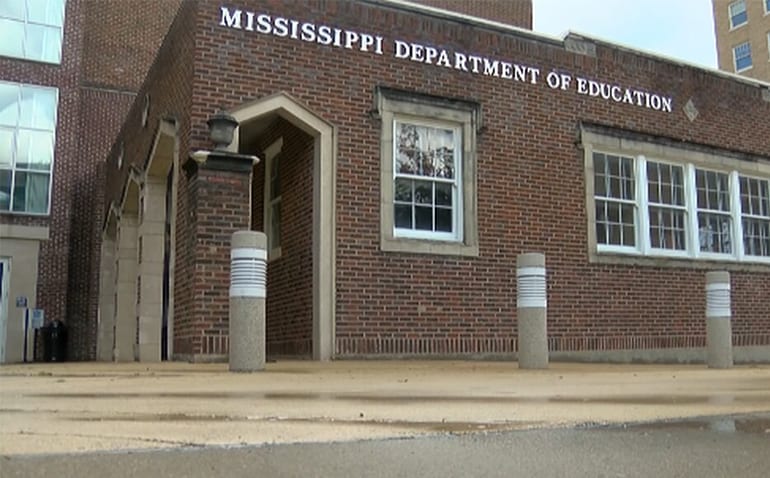
Penalties for non-compliance would have been financial, with the Mississippi Department of Education tasked with deducting a day’s worth of state funding for each day past the January 1, 2027, deadline to establish such a policy.
Suspension or expulsion of the student for violations of a district’s policy were intended to be used only as a last resort, with suspension or expulsion not being allowed as the result of “only a violation of the cell phone possession and use policy.”
Exceptions were also listed in the bills, such as “in the case of an emergency, or in response to a perceived threat of danger.”
Students could have also had a cell phone while on campus if a registered nurse, physician or surgeon determined that possession or use of the device was medically necessary, or if the use was a required aspect of a student’s individualized education program.
Rep. Creekmore plans to introduce legislation banning cell phone use in schools again next session but is considering the addition of a provision that would place a state tax on social media companies. Funds from that tax would be used to ensure the mental health of the state’s children.
“There’s tax that some states are considering that I’ve looked at, and I haven’t got it framed up yet, but if we could tax, say a Facebook, create some income for the state and direct it toward mental health, that’s what I’m looking at,” Creekmore told Magnolia Tribune.

Jeremy Pittari