- Faulkner seemed to relish Williams’ vulnerability and honesty—qualities he found refreshing. She was the only writer he ever took under his wing.
Southern author, Joan Williams, may not be a household name in the same way Eudora Welty and Flannery O’Conner are, but she is no less fascinating or interesting. Her body of work includes five novels, numerous short stories, and numerous impressive literary awards. Some remember her as a protégé of William Faulkner’s, perhaps the only writer he ever agreed to mentor.
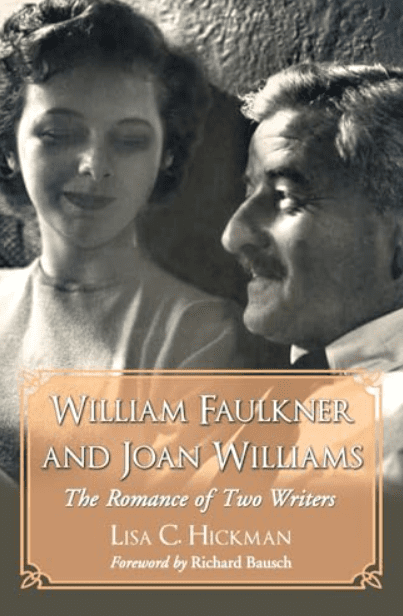
Theirs was a complex friendship, mentorship, and romantic interlude, told through their personal letters in Lisa C. Hickman’s 2006 book, William Faulkner and Joan Williams: The Romance of Two Writers. Emotions, transparency, and likely words they never thought any other living being might read reveal so much about the inner insecurities and deep wounds each felt. Their words, shared with each other, reveal their own hearts in the characters that come alive in their fiction — veiled fiction that is so much a part of their life experiences.
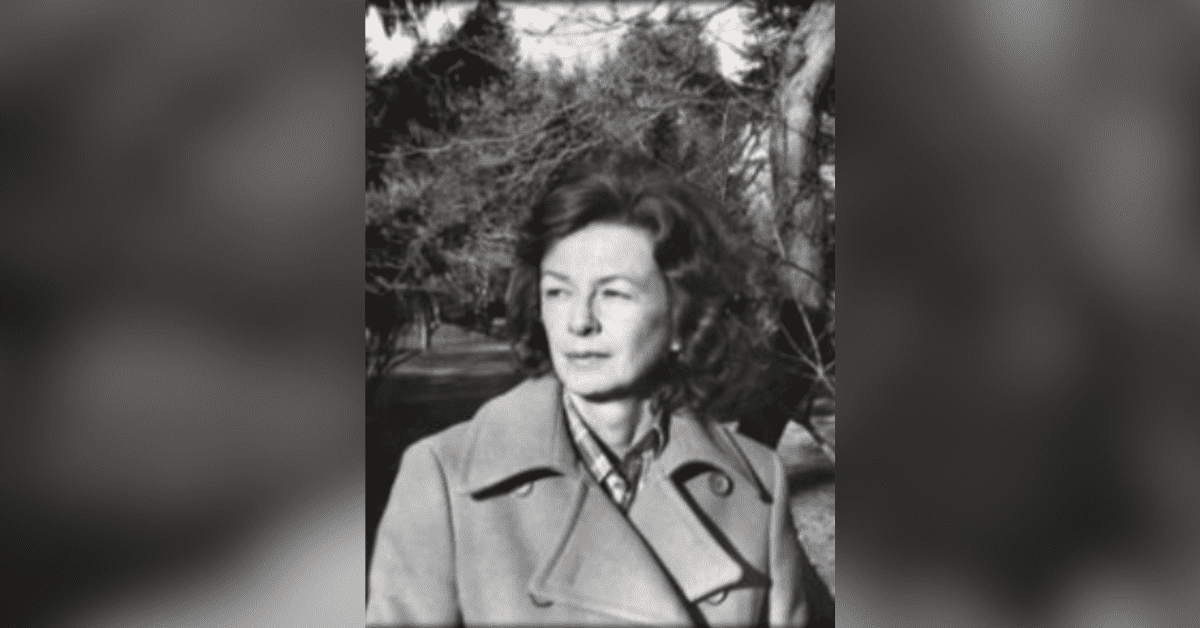
Born in Memphis in 1928, the red-haired, green-eyed beauty grew up surrounded by privilege. Her father, Priestly Howard Williams, larger than life and self-made, built his fortune as a dynamite salesman at a time when the government sought to control flooding along the Mississippi River—even dynamiting dams to protect cities downstream.
Joan was a lonely only child. Her dad’s business kept him away from home for long periods. On the night she was born, he could not be reached. Her mother never forgave him for that lack of support, and his failure to be there colored their relationship for as long as they lived. They never divorced, but Joan was aware there was no affection between them. Her mother played Bridge and shopped. Her father stayed away most of the time, although he provided a comfortable lifestyle for both of them.
Joan graduated from the prestigious Miss Hutchison’s School for Girls in Memphis and enrolled at Southwestern College in Memphis, the school that later became Rhodes College. She was bored and did not like the idea of going to college in her hometown. Joan soon transferred to Chevy Chase Junior College in Maryland and finally to Bard College in New York, just 90 miles north of New York City.
She said in an interview with a reporter from The Commercial Appeal in 1995 that she had no childhood ambitions to be a writer. She intended to be either a movie star, an airline stewardess, or a nurse. That was not to be. Her vocation was almost an accident.
In 1949, on a fluke, she entered a short story, “Rain Later,” in Mademoiselle magazine’s annual competition for the College Fiction Prize. In those days, the winners of this contest were granted an immediate introduction into the annals of serious writers. There were no guarantees for success, but it was akin to being ushered to the front of the TSA line of those hoping to become a noted American writer.
This win marked Joan’s turning point. As her other ambitions faded, she recognized her heart was in writing, even as the prospect intimidated her. When, a few months later, she read Faulkner’s The Sound and the Fury, she was determined to find a way to meet him, and she was not to be dissuaded. Joan had an inside connection with a Faulkner family friend who was married to her cousin. The three of them drove from Memphis to Oxford on a Saturday afternoon in hopes of meeting the mysterious and brilliant Mr. Faulkner.
The first meeting was a bit awkward, as it was clear the introverted Mr. Faulkner was not thrilled about the interruption to his daily routine. Joan was so embarrassed by her own presumption that she wrote a long letter of apology. It sounds so much like the twenty-year-old innocent schoolgirl she was at the time.
Faulkner seemed to relish her vulnerability and honesty—qualities he found refreshing. She was the only writer he ever took under his wing. Was it the green eyes and the red hair? Who knows. Still, he greatly respected her writing skills.
Thus began a long series of letters between them. She was twenty. He was fifty-one. What could they possibly have in common? More than you would think.
It was a shock to Joan that her mentor, who had earned so many literary accolades, still struggled and doubted himself whenever he sat down to write. He struggled with depression. So did she. He had dry periods when he questioned why he ever thought he could write anything. So did she. They connected in a special way. Faulkner did not seem to worry about the 30-year age difference between them. It was always an issue for Joan. And yet, she loved him deeply.
Throughout their relationship, Joan continued to date other men her own age. She married Ezra Drinker Bowen, a member of Sports Illustrated’s original editorial staff, in 1954. They divorced in 1970, but had two sons together.
William Faulkner continued throughout that marriage to remember Joan’s birthday with a letter that reminded her, “I love you, Bill,” until the day he died in 1962.
Joan’s books are filled with stoic women who made everything look great on the outside while suffering immeasurably on the inside. She was one who must have written what she knew from the first moment she recognized the strain in her parents’ relationship. She saw the same scenario countless times in Faulkner’s relationship with his wife, Estelle, and in her own marriage with Ezra Drinker Bowen.
Columnists from The Commercial Appeal described Joan, after Faulkner’s death, as unassuming and gracious, never considering herself special. Steve O’Dell, The Commercial Appeal columnist, wrote after Joan’s death in 2004, “She never spoke about her own literary work, unless I brought it up.” That same columnist speaks of running into her several times at Davis-Kidd bookstore in Memphis. He speaks of the most unpretentious, gracious friend he could ever imagine. She was real in every way.
I have only scratched the surface here.