(Photo from Shutterstock)
- After spirited debate in the chamber, a voice vote on a motion to table killed State Senator Jeremy England’s proposal to restore Mississippi’s ballot initiative process.
An effort to restore the ballot initiative process in Mississippi died in the Senate on Wednesday by a voice vote.
Senate Elections Chairman State Senator Jeremy England (R) presented SCR 518 to the full Senate after the measure he authored was moved out of the Elections Committee last week.
READ MORE: Restoration of ballot initiative process back before Mississippi lawmakers
“This bill is currently the only mechanism in this Capitol that allows for a ballot initiative,” England said, adding that if the measure does not pass, “there’s no option for it to come over from the House. This is the only mechanism for a ballot initiative this year.”
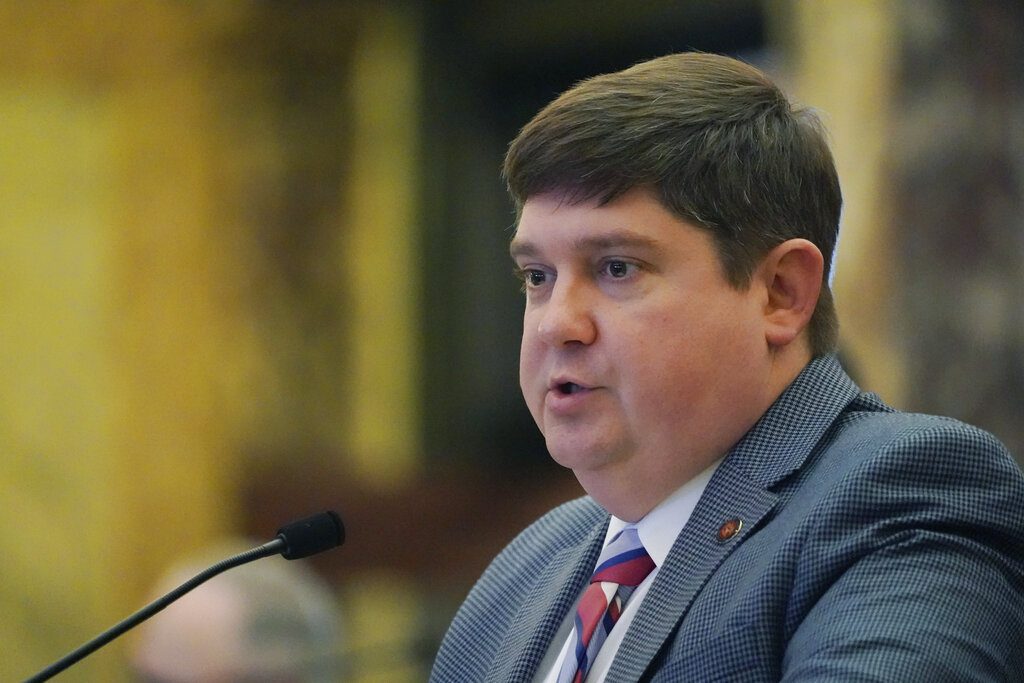
A two-thirds vote was required to pass the chamber as it would entail asking the public to amend the state constitution. England told the members he recognized that it was “a pretty steep ask” given that it is likely all 52 Senators have their own perspective on what a ballot initiative should do or if there should even be a ballot initiative process at all.
“This is something a lot of our constituents are actively asking about,” the Coast Senator said. “It’s an important issue because it is in the constitution currently and we’re trying to fix this system to be attainable yet tougher.”
Under England’s proposed measure, those seeking to place a ballot initiative before Mississippi voters would have been required to gather signatures from 10% of registered voters in the state, meaning upwards of 189,000 signatures based on current registrations. No more than one-third of signatures would have been allowed to come from any one congressional district. Should a ballot initiative be proposed that would “cause a substantial cost to the state or require the substantial expenditure of state funds,” a 60% vote of approval from the public was to be required to pass. Otherwise, an initiative would have needed to receive a majority of the votes cast and not less than 40% of the total votes to be approved. The Legislature would have also maintained the right to propose an alternative initiative on the same ballot.
England had proposed that ballot initiatives could not be used to deprive any human being of the right to life, meaning initiatives could not seek to reverse the state’s position against abortion. Initiatives would also not have been allowed that change or amend the state constitution, local laws, or the Public Employees Retirement System (PERS).
A number of Senators raised concerns over the resolution and rose to express their intent of offering an amendment to the measure. State Senator Joel Carter (R) voiced concern over outside, well-funded groups that come in the state and push topics on ballot initiatives. State Senator Daniel Sparks (R) shared his concern over the length of a ballot initiative and having the full proposal placed before voters.
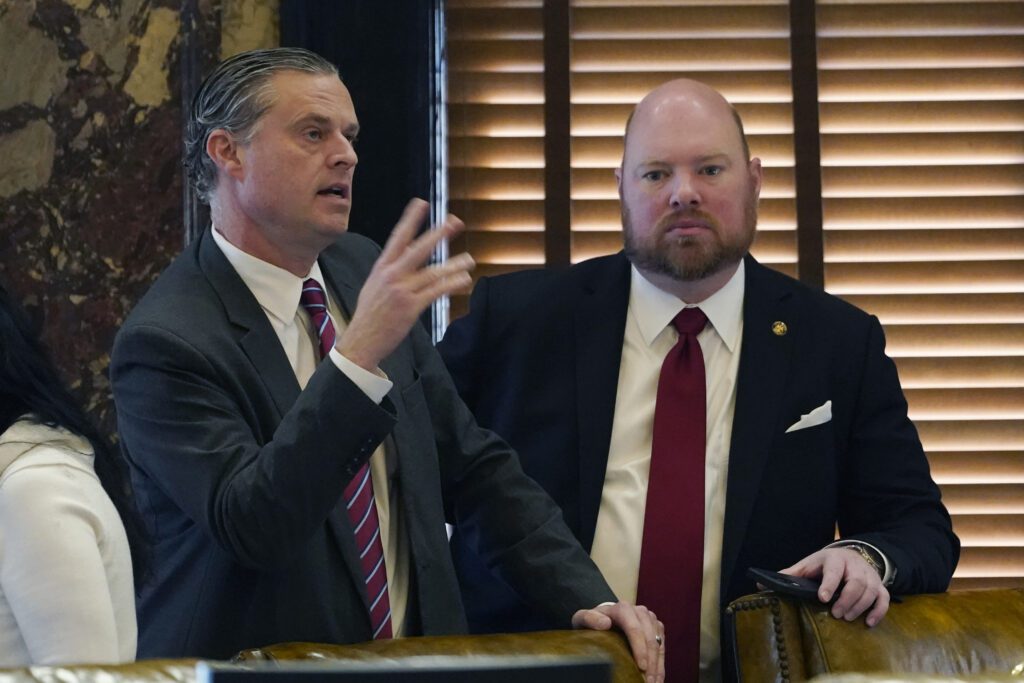
State Senator Derrick Simmons (D), the chamber’s Minority Leader, asked why it was not being proposed to simply change the number of congressional districts in the state’s constitution, which was the crux of the 2021 ruling by the Mississippi State Supreme Court that struck down the old ballot initiative process.
“One thing we have to do is able to pass something this body,” Senator England responded. “I have talked to numerous people, we’ve all had our debates and I don’t know that that would pass. I’m happy to talk about it. The process as we had it wasn’t workable. I wouldn’t be presenting that bill.”
Mississippi has been without a ballot initiative process since the 2021 state Supreme Court decision on Medical Marijuana Initiative 65 invalidated the process on the basis that the signature threshold in the state constitution could not be met. The former initiative process required signatures to come from five congressional districts when Mississippi now only has four districts.
State Senator Chris Johnson (R) shared that he has been told that roughly half of the states have a ballot initiative process. He then asked England if there was a ballot initiative process at the federal level and if he would support one.
“Not that I’m aware of, no,” England said to the inquiry, adding, “I would not [support one at the federal level]. Like I said, we’re a constitutional republic. I think it was set up to be that way.”
“Do you think our state was set up to match that system of government?” Johnson followed up to England.
“I think we do a good job of matching that system. I’m not sure why this process was put into our constitution before,” England said, noting that the process was added nearly 100 years after the adoption of the current 1890 Mississippi constitution.
Johnson then pointed out that Mississippi’s initiative process “hasn’t been around a long time.”
Senator Carter then moved to table the measure, telling the chamber he has serious concerns about the resolution and the “big money” behind ballot initiatives.
“I think that’s what we got elected for. We come into this body. We make the tough decisions. We take the hard votes,” Carter said. “You pass a ballot initiative and big money gets behind. They’re going to rally voters and all of that other stuff. It’s on both sides of the aisle, it could be far right, it could be far left, it could be whatever. This is not a good bill. This is a terrible bill.

Senator Angela Hill (R) spoke in favor of the motion to table, pointing out that the U.S. is a republican form of government, not a democracy. She said the ballot initiative is a “Trojan horse” and that Republicans “don’t need to shoot themselves in the foot” by backing the measure.
“There is no right to a ballot initiative in any state based on the U.S. constitution,” Hill said. “The ballot initiative in itself may very well be federally unconstitutional.”
Before the vote to table, Senate England said this is an attempt to amend the process that was adopted in the 1990s.
“I know all of us have heard from them, and I really hope that this debate is helpful for them to hear us talking about this and to have these concerns that I think are very valid concerns,” England. “But the fact remains that this is an issue that we, in my opinion, are inevitably going to have to remedy and look at and that’s what this attempt is to do. Otherwise, we’re just kicking it down the road because it’s still in the constitution.”
The vote to table the resolution before the chamber was a voice vote, meaning there is no record of how each member voted. It was obvious that the “ayes,” those Senators wanting the bill tabled, won the vote.
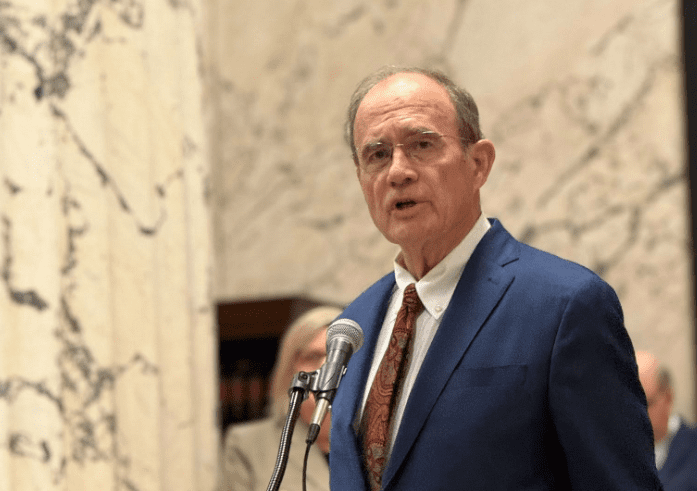
“The ayes have it, “Lt. Governor Delbert Hosemann (R) determined of the voice vote to table.
Previous attempts to restore the ballot initiative process has come from the Senate and the House on prior sessions. All have died over the last five years. During that time, concerns from lawmakers in both chambers have ranged from the number of signatures required for an initiative to be put before voters to what topics should or should not be allowed on an initiative. As was on display in the Senate Wednesday, there has also been growing concern over out-of-state monies flowing into Mississippi to push initiatives sponsored by special interest groups.