(Photo from Shutterstock)
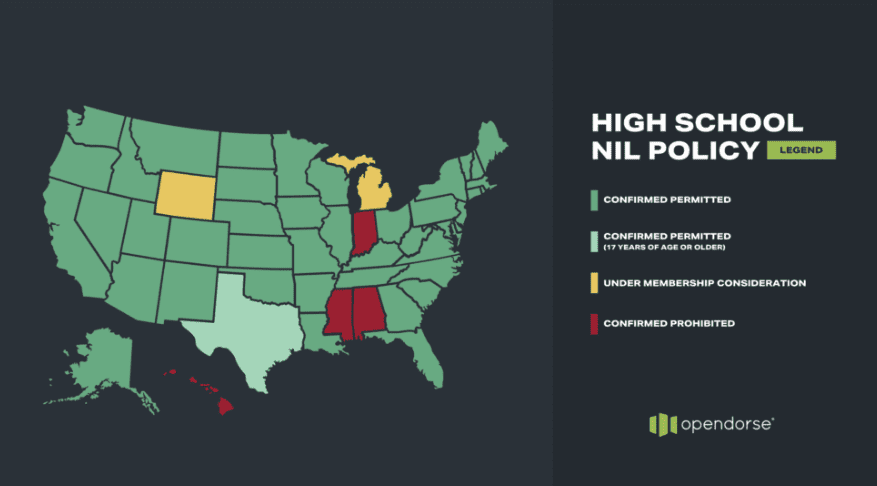
- The vast majority of states across the U.S. now allow some form of high school NIL.
A bill that would have allowed Mississippi high school student-athletes to accept Name, Image and Likeness, or NIL, money or benefits quietly died in the House of Representatives last week.
Legislation filed by State Rep. Jeffery Harness (D) titled the “Mississippi High School Student-Athlete NIL Protection Act” died the House Judiciary A Committee on deadline day.
Harness had proposed that student-athletes could earn compensation for the use of their name, image, and likeness, provided that the compensation was not contingent upon athletic performance, statistics or participation. The compensation was also not to be offered as an inducement to enroll in or transfer to a particular school.
The measure would have applied to public and private high school students in Mississippi that participate in interscholastic athletics.
As previously reported, the vast majority of states across the U.S. now allow some form of high school NIL. A report from Opendorse in November 2025 showed Alabama, Hawaii, Indiana, and Mississippi as the only states that have prohibited the practice.
Officials with the Mississippi High School Activities Association (MHSAA), coaches, school administrators and even fans spoke out in opposition to the legislation.
However, Rickey Neaves, the executive director of MHSAA, told Magnolia Tribune in July 2025 that while the Magnolia State does not allow NIL, “students cannot be denied benefit from their own identity.”
Last summer, Neaves said a high school student-athlete may sign a NIL deal under three conditions:
- The student or his/her parents cannot receive any money or benefits until the student has graduated or used all of their eligibility. If this happens, the student loses their eligibility immediately.
- The student may not use the school colors, uniform, or identify their position at a school. In other words, they can only use their own name, image and likeness.
- Any money or benefits have to be held in escrow until graduating or until all high school eligibility is used.
Under Rep. Harness’ proposed legislation, if total NIL compensation paid to a student-athlete during a calendar year was to be $10,000 or less, it could be paid directly to the student-athlete or the parent or legal guardian. However, if the compensation was over $10,000 in a calendar year, the monies were to be deposited into a restricted trust account established for the benefit of the student-athlete and not be released until the student-athlete graduates from high school or attains the age of 18, whichever occurred first.