(Photo from Shutterstock)
- While both chambers in the Mississippi Legislature passed the necessary appropriation bill to provide $2.5 million in state support funds to the youth court system, the demise of SB 2728 puts a roadblock in the Administrative Office of Court’s ability to dispense the money.
While state funding was appropriated to Mississippi’s Youth Court system during the recent legislative session, inaction on a separate extension bill for the youth court program has left dispersal of that funding in limbo.
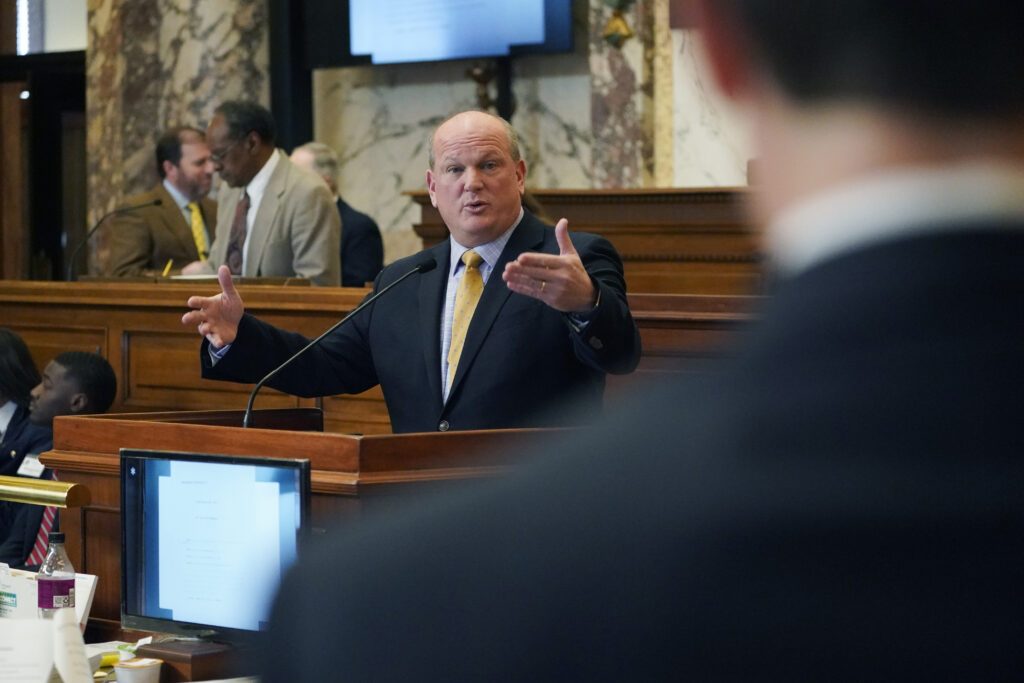
The Mississippi House of Representatives adjourned for the session as state Senator Brice Wiggins (R) was on the floor of the Senate introducing SB 2728 on the other side of the Capitol. Passing the bill was necessary to extend the youth court program that allows the Administrative Office of Courts to disperse $2.5 million in state funding to youth courts under code Section 43-21-80.
“We had the votes. I was at the podium presenting the bill and was informed the House chose to adjourn,” Wiggins told Magnolia Tribune. “I don’t know why the House of Representatives chose to do that, but the fact remains is that we had an agreement with the chairman that the bill would be brought up and passed. The House chose not to do it.”
While both bodies passed the necessary appropriation bill to provide the $2.5 million in state support funds to the youth court system, the demise of SB 2728 puts a roadblock in the Administrative Office of Court’s ability to dispense the money.
The code section specifically states that the funding is to help ensure the presence of “sufficient support personnel to carry on the business of the youth court.” Without the program’s extension, the Administrative Office of Courts is erroring on the side of caution, alerting staff in those courts through a memo that it would not disperse the funding after consulting with the Legislative Budget Office.
“To avoid any improper allocation and/or expenditure on our part or any any attempt to claw back funds from AOC or counties, we are following the guidance of LBO and will not be expending, allocating, or reimbursing any expenses with respect to these funds beginning in the new fiscal year, July 1, 2026,” the memo states.
“As it stands, I don’t think the Legislature intended to give zero dollars to support the courts that protect children,” Madison County and Youth Court Judge Staci O’Neal told Magnolia Tribune. “The fact that the Supreme Court, through the Administrative Office of Courts is saying, ‘Well we don’t want to have to give it and then claw it back’ is unfortunate.”
The Work of Youth Courts
Within Mississippi’s 82 counties, about 24 have a full-time youth court that operates under that jurisdiction’s county court, O’Neal said. The remainder are under their area’s Chancery Court where a judge typically appoints a local attorney as the youth court referee judge, sometimes referred to as “referee courts.” No matter the setup, both do the same work, just at different levels based on case load.
A variety of juvenile matters are handled by youth courts, from investigating allegations of child abuse or neglect to instances where a young person is charged with a misdemeanor crime, Hancock County County/Youth Court Judge Trent Favre said.
More severe crimes such as murder, aggravated assault and other major felonies conducted by juveniles are typically sent to a jurisdiction’s Circuit Court, where the defendant is charged as an adult. Starting July 1, juveniles who commit crimes while in possession of a firearm under SB 2710 will now be charged as adults.
READ MORE: Increased penalties for juvenile firearm-related crimes takes effect July 1 in Mississippi
Youth courts also handle matters where Child Protective Services has to get involved as well as when it concerns school truancy matters.
“So, we work with kids who are either refusing to go to school for whatever reason and trying to come up with a plan to get them back to school. Or if they’re under the age of 10, we have issues where parents don’t get their kids to school and that’s called educational neglect,” Favre said.
A youth court might also deal with other minor infractions that occur while on school grounds.
“We’ve seen an increase in the number of kids who are using vapes, and some of those vapes might contain marijuana,” Favre said. “So, if they possess that at the school then their school resource officer would turn the case over to us.”
One of the major matters the court handles deals with children who have to be remanded to the custody of the state by establishing standards in how the courts respond and how services are provided.
“[At that point] CPS becomes involved with the family and then courts have oversight of that case until its resolution, so youth courts can be very important in that process,” Favre explained. “We have a lot of power in the courtroom, but we also have power in the community to bring resources together, to evaluate the lack of resources and put plans in place to meet those needs.”
Services can include intervention services for adults dealing with substance abuse and assisting CPS in providing a plan to ensure children are in a safe home. Favre described the state’s youth court system as a “problem solving” court.
Case Loads, Community Impact
Youth courts can have positive effects within a community when resourced adequately, especially when it pertains to driving down crime and assisting in the number of children being held in CPS custody.
Favre said Hancock County Youth Court’s work has reduced the number of children in state custody since becoming a full-time court in 2018, the same year he took the bench.
“When I came in, we had close to 400 kids in custody, and we were on the national radar,” Favre recalled. “Today, I have 44 children in custody.”
Lower case loads allow Favre and his team to provide more services to families through treatment courts, which in turn address systematic issues in a community. Case load reduction also decreased the time it took to assess parents entering the system, from a maximum of 90 days down to one week.
“We now have services we can provide so we can either help the parent or get into a rehabilitation center,” he said. “We have scholarships, financial aid for that we didn’t have before, and we also have a treatment court where we provide services through a medical doctor and a lot of other services.”
Creating safer homes for children not only keeps them out of state custody and with their family, but has greater, long-standing benefits.
“The other benefit of that is when you have kids that are in safe homes and drug free environments, the national statistics indicate that they’re less likely to commit juvenile delinquent acts, so we see our volume go down in the delinquency side as well,” Favre explained.
Currently, the work within Hancock County is showing results.
“We’ve seen a pretty significant drop in juvenile crime,” Favre said. “I think the work we’re doing here in Hancock County, healing families and getting families on the right track makes a difference. I think happy, safe kids at home are less likely to commit a crime.”
In areas where the same judge handles youth and county court matters, at times the youth court cases make up a majority a judge’s time. O’Neal estimates she spends about 60% of her time on youth court cases.
“Last year, I was in youth court for a total of 129 business days,” she said.

How Many Reports of Abuse and Neglect End Up in Court?
Within Madison County, O’Neal’s court has received up to 1,000 reports of just potential abuse or neglect. Of those reports, O’Neal said only about 40 in her area become cases where court proceedings are required. Reports of abuse and neglect are vetted before passing a judge’s desk.
“In a lot of cases the recommendation is take no action on this because they’ve investigated, and there’s nothing there,” O’Neal said.
That is not because people are making false reports, she noted.
“I wouldn’t say it’s because they’re being vindictive, I think it’s because people are being cautious,” O’Neal clarified.
There are instances where people see signs of potential abuse, such as bruising on a child or other injuries, and that person is required to submit a report.
“Mandatory reporters are people that are teachers, counselors, healthcare professionals. And so, if a child comes to school with bruises on them a teacher’s obligated by law to report that,” O’Neal elaborated.
Within Harrison County, which has its own youth detention center for holding juveniles who commit crimes, there are more resources than smaller counties, but also more cases.
Harrison County Court and Youth Court Judge Michael Dickinson said his court has received about 5,000 referrals, including instances of potential abuse, neglect and/or delinquency.
“Those are actual cases that come in that [receive] some form of response, whether it’s a monitor case or an informal adjustment, or it’s actually petitioned and the kids go into custody, or they may go to detention,” Dickinson said.
The Harrison County detention center also houses juveniles from Stone and Hancock Counties as part of a memorandum of understanding.
How the Funding Loss Could Affect Courts
Collectively across the state, counties are kicking in about $38 million into the youth court system, most of which is going to the full-time courts, some $30 million.
“All the state puts in is $2.5 million dollars, which is not a lot of money and it’s not enough money to help counties that don’t have the money that the larger counties have,” said O’Neal.
While $2.5 million is a relatively small amount compared to the state’s estimated total budget of about $7.4 billion, that money can mean the difference between a youth court having office staff or the court being a one-person operation.
“The only money that comes to a county court or youth court is the support fund that is funneled through the Administrative Office of Courts,” O’Neal said.
From that $2.5 million, full-time youth courts receive $68,000, while part-time courts only see $15,000.
“And that’s all you get,” O’Neal explained. “Everything else has to come from your county supervisor’s general fund.”
In smaller counties, some boards of supervisors have pooled their resources with neighboring counties to create a court that might serve up to five precincts. This enables them to use those state and local resources to properly staff a court.
“I think that it’s particularly going to hurt the smaller jurisdictions, the referee courts,” Dickinson said. “I mean, those areas have fewer resources to begin with. So I think they’re probably going to feel that loss a little bit harder than the larger jurisdictions.”
“It’s the difference between having some support staff, versus not,” O’Neal added. “And when I say support staff that includes somebody to be your intake officer, somebody to be your court administrator.”
Smaller, referee courts may have only one other person other than the judge on staff, so the loss of the state funding can make providing the necessary services to families more difficult.
“And of course, just it could lead to greater family instability overall,” Dickinson said. “I’d love to see the Legislature allocate 10 times the $2.5 million, but even then it still won’t cover what the counties already pay in order to keep the youth courts alive.”
Next Steps
From the start of the 2026 session, the Administrative Office of Courts alerted both chambers in the Legislature that the youth court program needed the extension, Wiggins explained. He added that long-term it is the Legislature’s intent to address that statute in the 2027 session.
In the meantime, Wiggins said there are several possibilities.
“That may include requesting a deficit, that may include some special arrangement in the sense of the chairman looking at it,” Wiggins said. “But from a legal or legislative standpoint, we are where we are right now.”
Judges are now waiting to see if the Administrative Office of Courts will disburse the appropriated funding through a deficit or other means, or if the local youth courts’ respective boards of supervisors will cover the shortfall until a long-term solution is found.
“That’s a decision for the board of supervisors to make,” Dickinson explained. “I hope they do, cause we don’t want to lose any of the services we provide. But that would ultimately be up to each individual county’s board of supervisors as to whether they cover it.”
No matter what happens with state and local funding, youth court judges plan to continue helping families.
“In the absence of that money will we continue to do our job and do the best we can and protect children, absolutely,” O’Neal said. “We will do our job whether the Legislature or the Administrative Office of Courts makes a decision to give us the support funds or not. And hopefully the counties will pick up the tab everywhere, like they historically have already done.”
Without intervention for adults and assisting in providing safe homes for children, the result could have major repercussions to the justice system overall.
“I hope in the future, we see a better look at the youth courts and the work that they do,” Dickinson expressed. “These kids, if we don’t intervene now, they’re going to end up turning into criminals in the adult system. It’s good intervention work, and it takes a group of folks who are passionate about it and who really want to make a difference.”

Jeremy Pittari