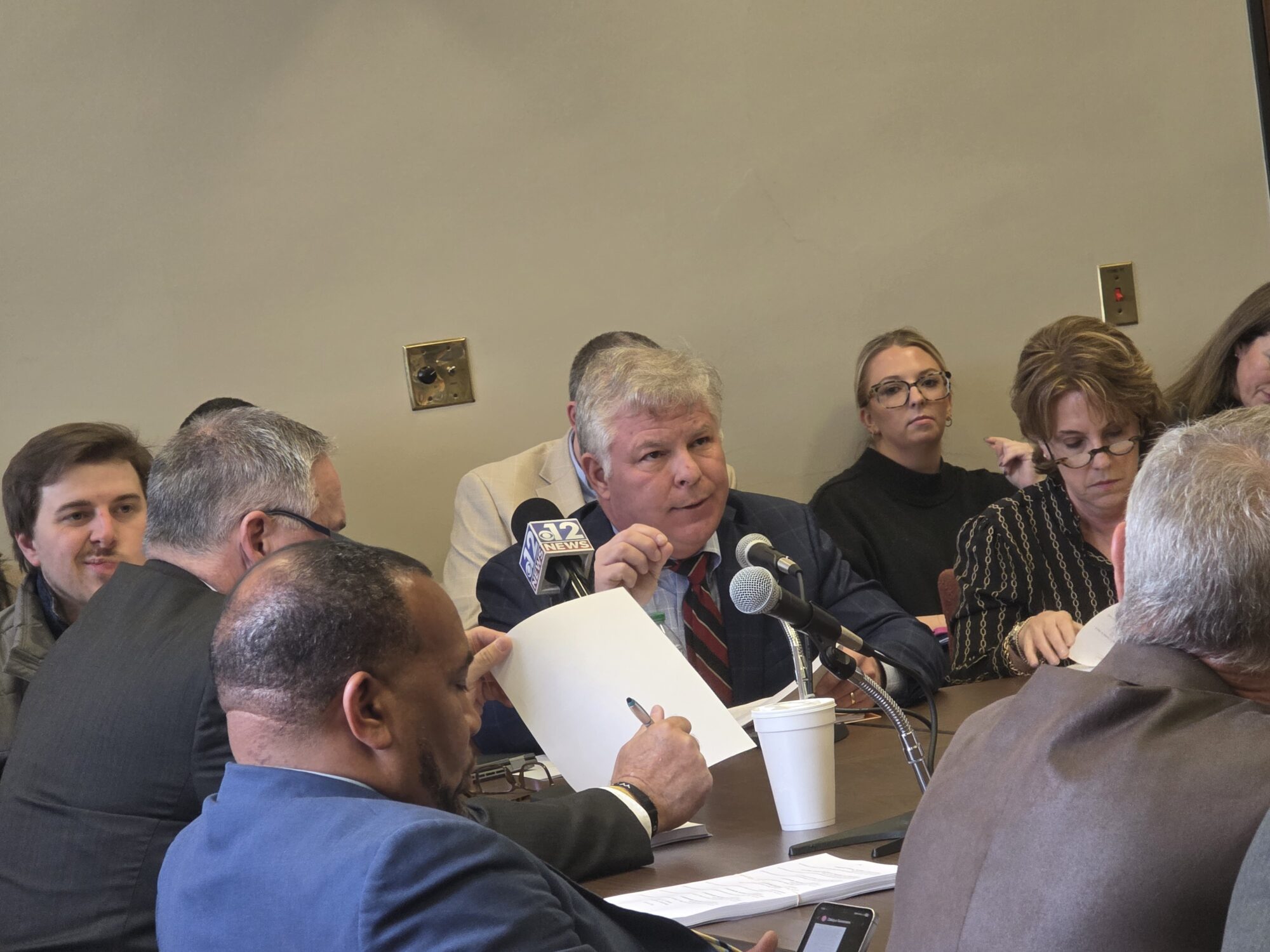
House Education Committee Chair Rob Roberson (R) describes HB 633, which requires public and charter schools to have automatic defibrillators with close reach on campuses and at athletic activities. (Photo by Jeremy Pittari | Magnolia Tribune)
- While there are sure to be challenges in consolidating or closing schools, lawmakers were told by three superintendents with consolidation experience that the long-term impact of consolidation was beneficial to students and the community.
The drop in birth rate is playing a part in Mississippi’s declining K-12 enrollment numbers, and it has lawmakers considering the need to consolidate schools as well as school districts in areas across the Magnolia State.
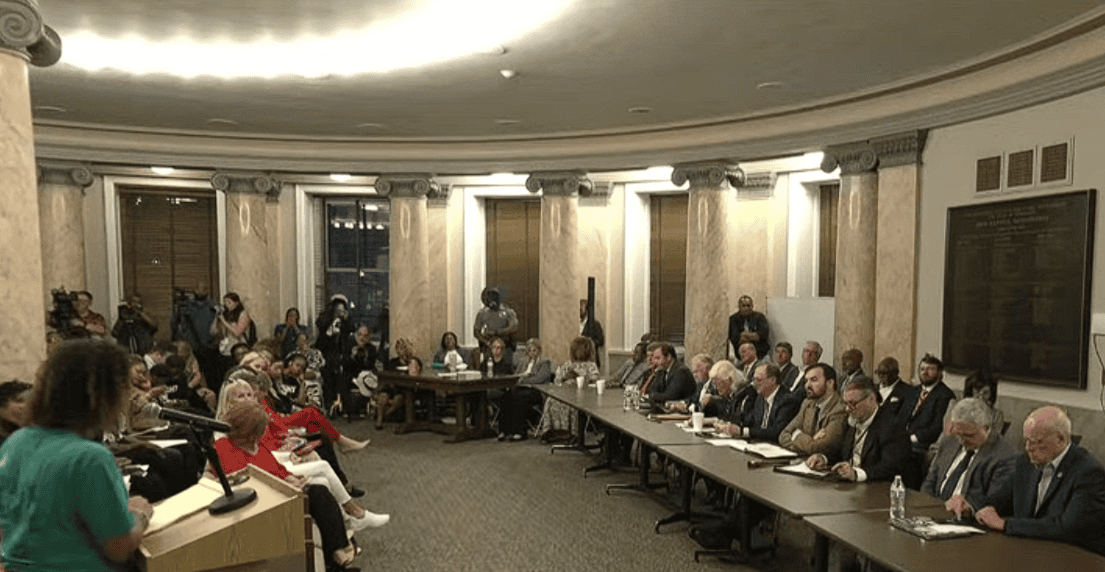
To that end, Speaker Jason White (R) appointed members of the House of Representatives to a select committee tasked with holding hearings while out of session to gather information as they consider the best path forward.
The most recent hearing of the Select Committee on Consolidation for the House of Representatives was held Thursday. As part of the discussion, lawmakers heard presentations from three Mississippi school district superintendents have experience with consolidating districts.
John Eillison (former superintendent for the Chickasaw County School District), Leake County School District Superintendent Will Russell, and Dr. Theresa Jackson (former Winona-Montgomery Consolidated School District Superintendent) all told the legislators that the process is not easy, but some positive impacts can be seen in the years following consolidation.
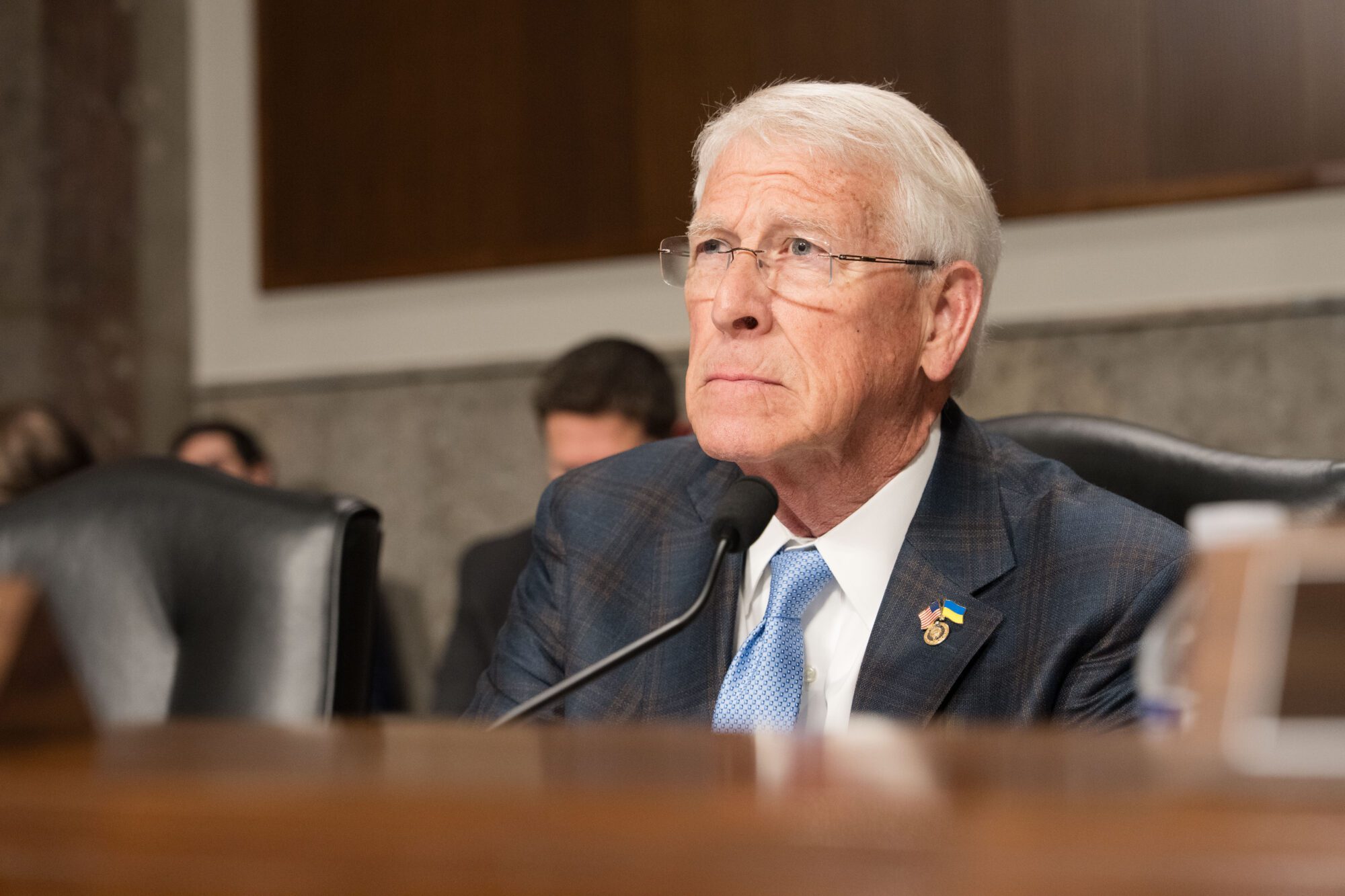
“All three of them said it’s a tough business,” Select Committee Chair State Rep. Rob Roberson (R) said. Roberson also serves as the chairman of the House Education Committee.
Russell is currently working to consolidate his district, while the retired superintendents went through the process within the past decade.
One of the challenging aspects pointed out by Dr. Jackson was the impact to the local community.
“The students maneuver quickly through this process. It’s the adults who tend to have a little harder time managing their identity issues,” Roberson said.
The three agreed that in the long run the benefit for the children attending those schools is better services. Consolidation, they said, in their respective district was the right thing to do at the time. It also ensures teachers are being fully utilized to meet the needs of the students.
Another aspect of consolidation the speakers warned the select committee about was the potential for a drop in district accountability scores immediately after a school is closed. However, scores do trend back up over time, typically in 1-3 years.
Lawmakers were also advised on the potential for lawsuits from angry community members. In response, Rep. Roberson said the Legislature will consider a method where the state can assist districts that face any potential litigation when consolidation occurs.
“Overall, these three superintendents were very positive in their estimation of what the long-term impact of consolidation will be for the community and the students,” Roberson said.
Out of the three superintendents, the only one that initiated the consolidation process voluntarily was Russell, who said he is shuttering schools to save money and properly distribute resources.
“That was, to me, one of the more impressive things,” Roberson said. “I asked the question, ‘Why is it so hard for districts to make these decisions on their own?'”
He said he was told in response that at times school boards cannot see the benefit of consolidating and closing schools.
“When you shut a school down, there usually may be someone who loses a job, and those are really tough decisions for a school board to make,” Roberson explained.
When asked what districts might be considered for consolidation in the coming session, Rep. Roberson said those specifics are still being ironed out.
“I think what we may end up doing is coming up with some standards, and we may pick some very low hanging fruit that needs to be dealt with. I would love to be able to pick two or three,” Roberson said.
It is unlikely that any measure that can gain support in both the House and Senate would be an immediate action, meaning districts could be given up to three years or more to implement any closures.
“I do think we have to give school districts, the ones being consolidated, time to do this in a proper way, getting the community involved. I would love to see the community back these things,” Roberson elaborated. “This is intended to be a help, not a hinderance.”
To remove politics from the process, Roberson said he is considering proposing that the Legislature pass an agreed upon set of standards and an established procedure that would then be sent to the Mississippi Department of Education for implementation. He believes that would help “take politics out of the process” and give MDE the authority to act based on the legislative guidance. Otherwise, it could be nearly impossible to get a consolidation bill through the legislative process, Roberson added.
The House select committee also heard from Dr. Courtney Taylor, Executive Director of AccelerateMS, about the need to focus on Career and Technical Education (CTE) programs.
Her bottom line was that the state needs to better target students as well as the state’s adult population for skills training or retraining to fill current voids in Mississippi’s workforce. Some of those jobs include registered nurses, EMTs, electricians, plumbers, HVAC technicians, machinists and professionals trained in water and sewage treatment.
“If we can get people involved in those positions, there are plenty of jobs out there,” Roberson said.
Since the goal of CTE programs is to aid in people becoming self-sufficient, high schools are being asked to focus on those programs students would be most likely to turn into a career. Dr. Taylor told the committee that only about 9% of the students in CTE programs end up using those skills after high school, Roberson said.