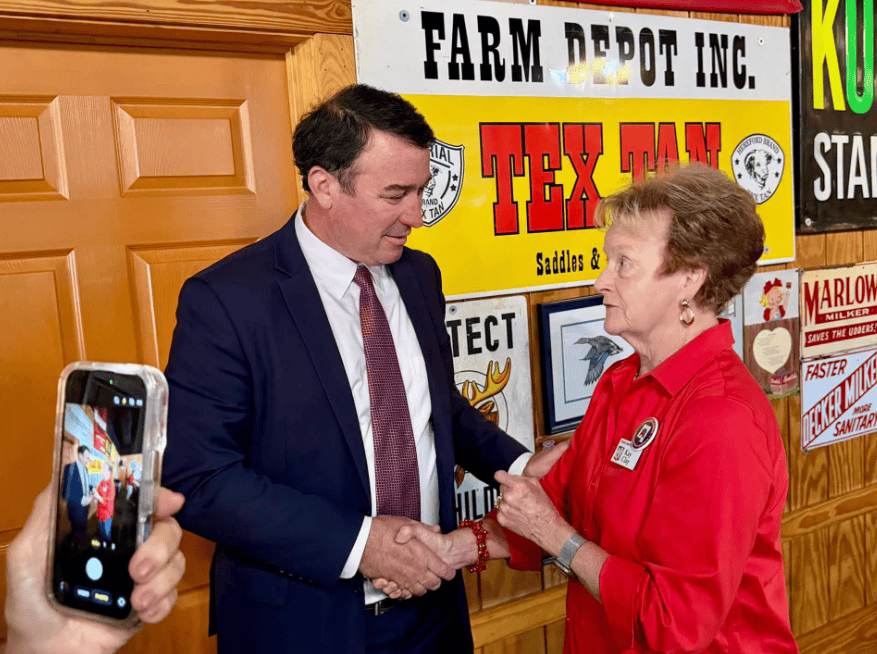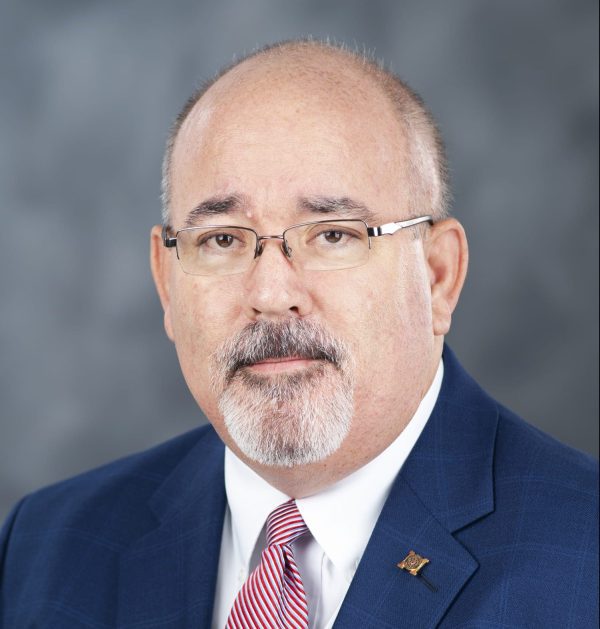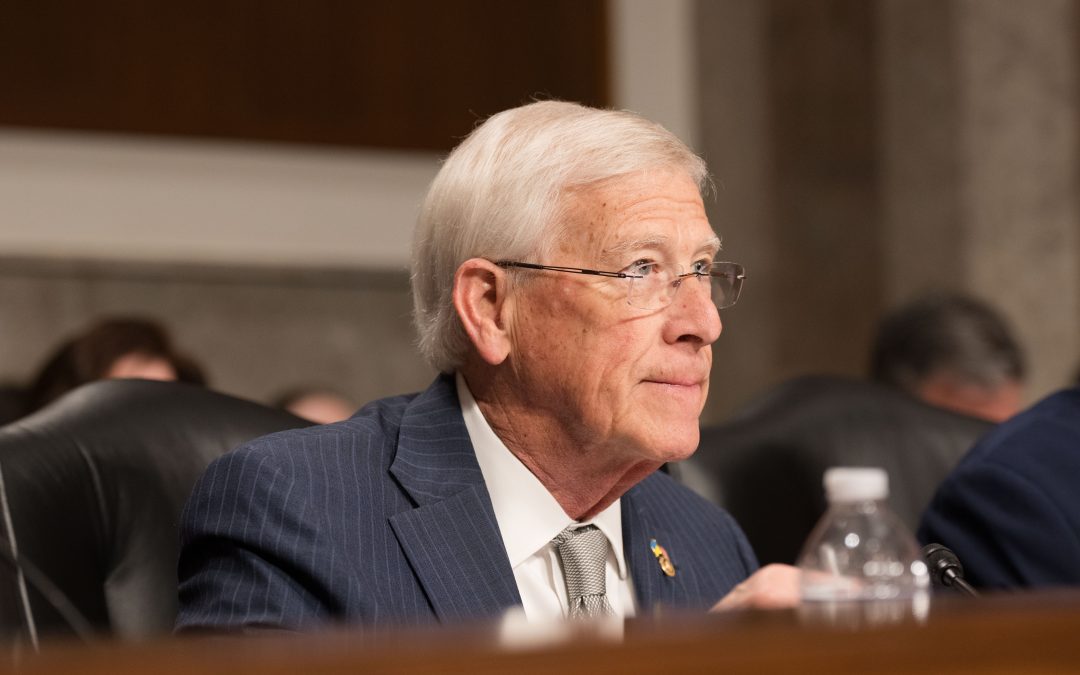
Commissioner of Agriculture and Commerce Andy Gipson speaks at Mississippi Hobnob, October 2025 (Photo from Gipson's Facebook page)
- Commissioner of Agriculture Andy Gipson says until recently, Mississippi’s SNAP error rate didn’t cause welfare bureaucrats much concern. But President Trump’s One Big Beautiful Act changed that.
Just last week, the U.S. Government Accountability Office (GAO) estimated that improper welfare payments are costing state and federal taxpayers a staggering $186 billion a year – and as much as $3 trillion overall since 2003. It’s numbers like these that have inspired Secretary of Agriculture Brooke Rollins to do everything she can to eliminate fraud from state Food Stamp programs.
Thus far, Secretary Rollins’ efforts have led to the removal of millions of ineligible recipients. “A lot of that is fraud,” says Rollins. “A lot of it is people taking the program that shouldn’t have been.”
In particular, the Trump administration is seeking to remove ineligible illegal aliens from U.S. welfare programs. And while Mississippi has complied with data requests that allow USDA to crosscheck eligibility, a deeper problem remains: an agenda to turn a blind eye to fraud and undermine the good work being done by Secretary Rollins and the Trump administration.
Food Stamps, otherwise known as SNAP, is a federal program, but states are responsible for determining eligibility and issuing benefits. To ensure the accuracy of these benefits, the USDA calculates a SNAP “error rate.” When a state pays too little, it’s called an underpayment. When a state pays too much, it’s called an overpayment. It will come as no surprise that, according to the GAO, welfare error rates consist mostly of overpayments to people who are ineligible.
Until recently, Mississippi’s SNAP error rate didn’t cause welfare bureaucrats much concern. But President Trump’s One Big Beautiful Act changed that. States will be penalized for high error rates: overpaying or underpaying. When a state’s error rate exceeds 6 percent, federal law now requires that state to pay a portion of SNAP benefits using state funds, instead of only federal funds.
Mississippi’s error rate for 2024 is 10.69 percent, nearly double the federal target of 6 percent. That failure carries a price tag of approximately $120 million a year.
How did Mississippi get here? According to the Mississippi Department of Human Services (MDHS), the blame lies with outdated technology, client-based errors, miscalculations by their eligibility specialists, and a small sample size.
Lt. Governor Delbert Hosemann also points to MDHS’s use of a fraud management tool called “change reporting.” Change reporting refers to the process used by states to report changes in income, residency and other essential factors related to welfare eligibility. On a recent broadcast, Hosemann asserted that “it’s absolutely crazy” to keep using change reporting to verify welfare eligibility. Hosemann also gave the impression that no other states are using change reporting.
That’s not true. Nineteen other states are using some form of change reporting for SNAP. Arkansas, for example, uses change reporting for groups with high welfare usage, such as those receiving cash assistance and those on Medicaid. Arkansas’ SNAP error rate is 9.56 percent – slightly lower than Mississippi’s, but well above the federal target of 6 percent. Tennessee uses change reporting for households requesting SNAP for short periods (less than four months) and for those whose only earned income is from self-employed adults. Tennessee’s error rate is 9.47 percent.
Mississippi’s error rate of 10.69 percent is actually below the national average of 10.93 percent – an average that obviously reflects the majority of states using some form of simplified, or non-change, reporting.
Looking more closely, 84 percent of Mississippi’s error rate comes from overpayment errors. In other words, MDHS is too often giving SNAP benefits to people who are not eligible. Hosemann’s solution is to use simplified reporting, which means less reporting and potentially more fraud. If most of Mississippi’s error rate came from underpayments, Hosemann might have a point. But the data shows he is on the wrong track.
What Hosemann also failed to acknowledge is that, under his leadership, the Senate didn’t merely try to eliminate change reporting, they attempted to destroy Mississippi’s groundbreaking welfare-to-work program altogether. As reported out of committee by the Democrat chairman hand-selected by Hosemann, HB 1772 would have repealed the entire 2017 Hope Act. This law, which I supported when I served in the House, has inspired some of the welfare fraud reforms coming out of the White House today. Repealing the Hope Act would be an absolute slap in the face, not only to Mississippi taxpayers and voters, but also to the Trump Administration.
Even more troubling is the timing of Hosemann’s attempt to repeal the Hope Act. A few months before the 2026 session began, it came out that MDHS is not properly verifying the income of SNAP applicants. Instead, the state is allowing clients to self‑report their earnings, effectively running a multimillion‑dollar program on the honor system.
Income verification for SNAP is not optional. But MDHS has quietly adopted a different practice: one that directly contradicts both federal law and state legislative intent in the Hope Act.
MDHS claims it lacks access to income‑verification systems, but that excuse doesn’t hold up. Mississippi can use free federal tools—unemployment records, Social Security Administration data, IRS matches, and new‑hire reports—specifically designed to prevent the errors the state will be penalized for under the One Big Beautiful Act.
I voted for the Hope Act because it requires stronger identity, eligibility, and asset checks, along with coordinated data‑sharing between Medicaid and MDHS to prevent fraud. Yet it’s increasingly clear that MDHS has not been verifying eligibility in any meaningful way for years.
MDHS says it wants to cut its error rate to 8 percent by 2026, but even that target remains above the federal limit and would still cost Mississippi millions. Setting a goal that guarantees continued penalties is not reform, and gutting the Hope Act is not a plan. Mississippi can do better than that, working with the Trump Administration to hit the targets they are giving us – not by ignoring welfare fraud, but by eliminating it.