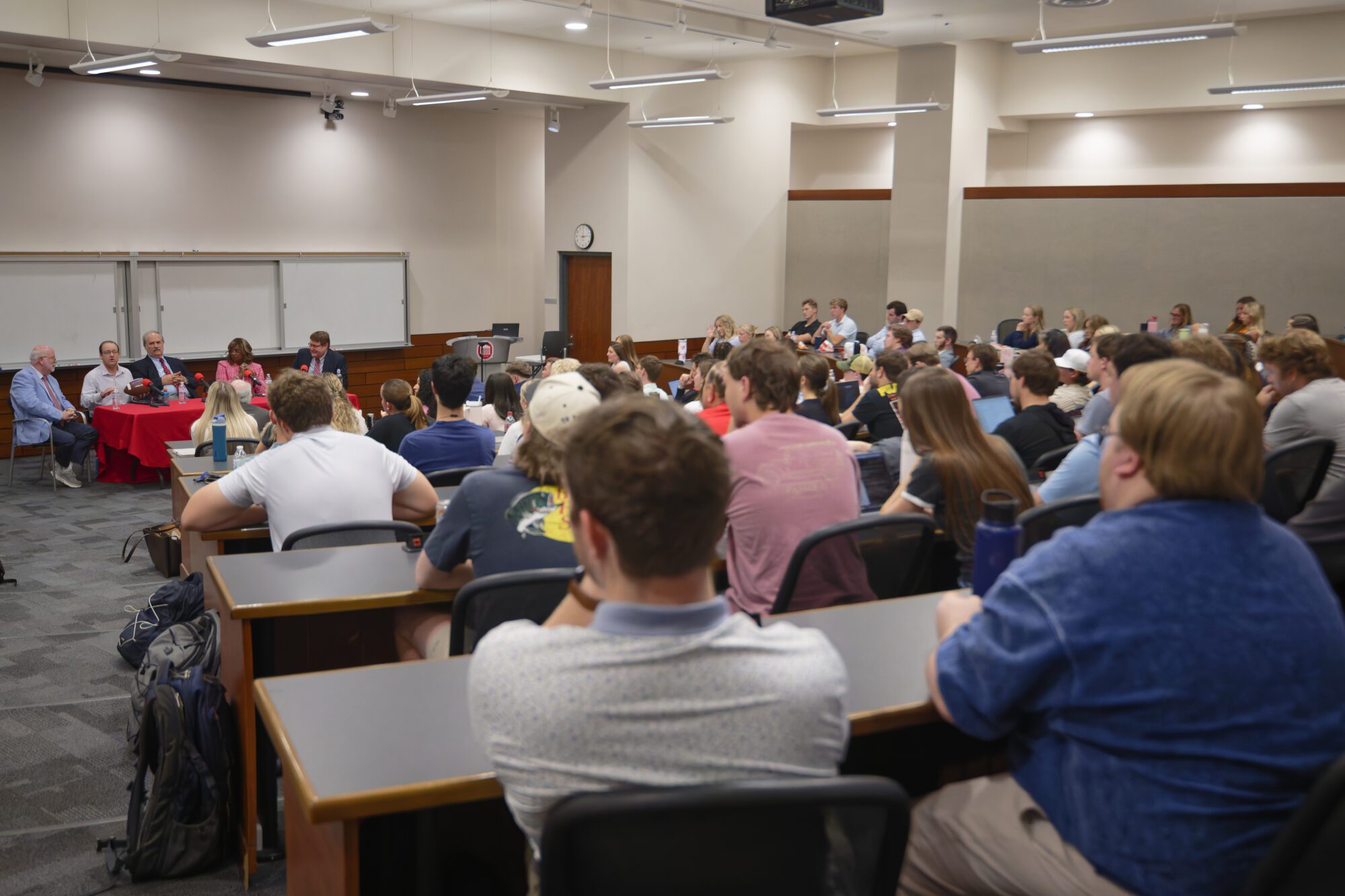
The University of Mississippi's Weems Auditorium is filled for the Future of College Football symposium on Wednesday (Sept.2). Legal scholars discussed the history of football player incentives and challenges facing college athletics. Photo by Hunt Mercier/Ole Miss Digital Imaging Services
- Ole Miss law symposium examines how TV money, compensation and legal battles transformed the game.
As most college football teams prepare to kick off the season this weekend, legal experts at the University of Mississippi gathered Wednesday (Sept. 2) in Weems Auditorium to ponder what lies ahead for collegiate athletics in the era of NIL, lawsuits and eligibility challenges.
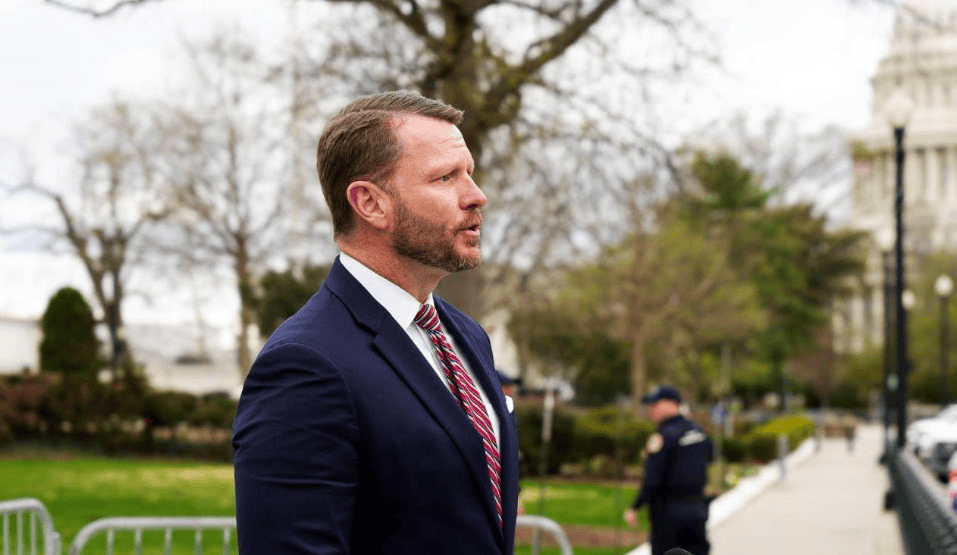
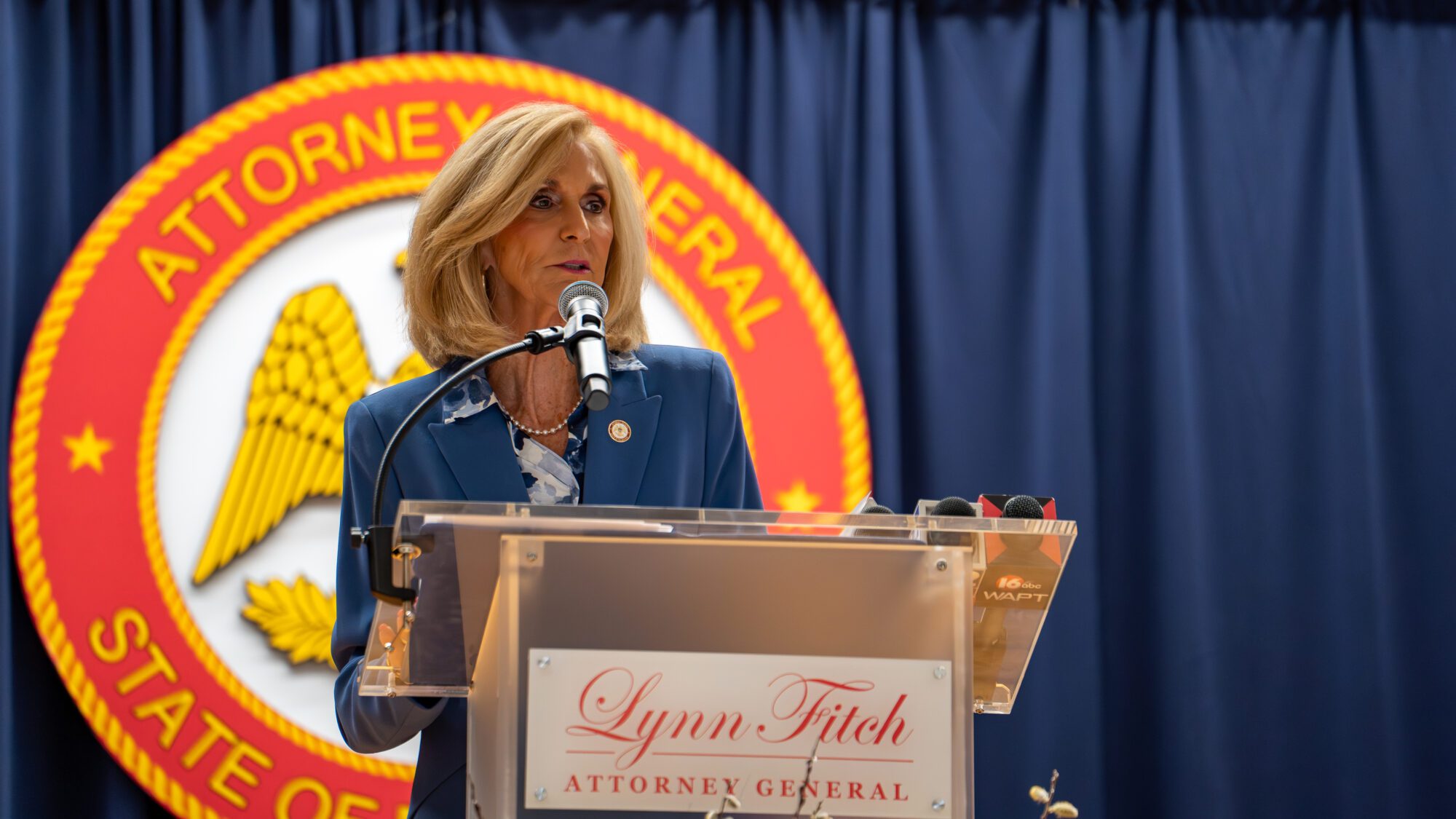
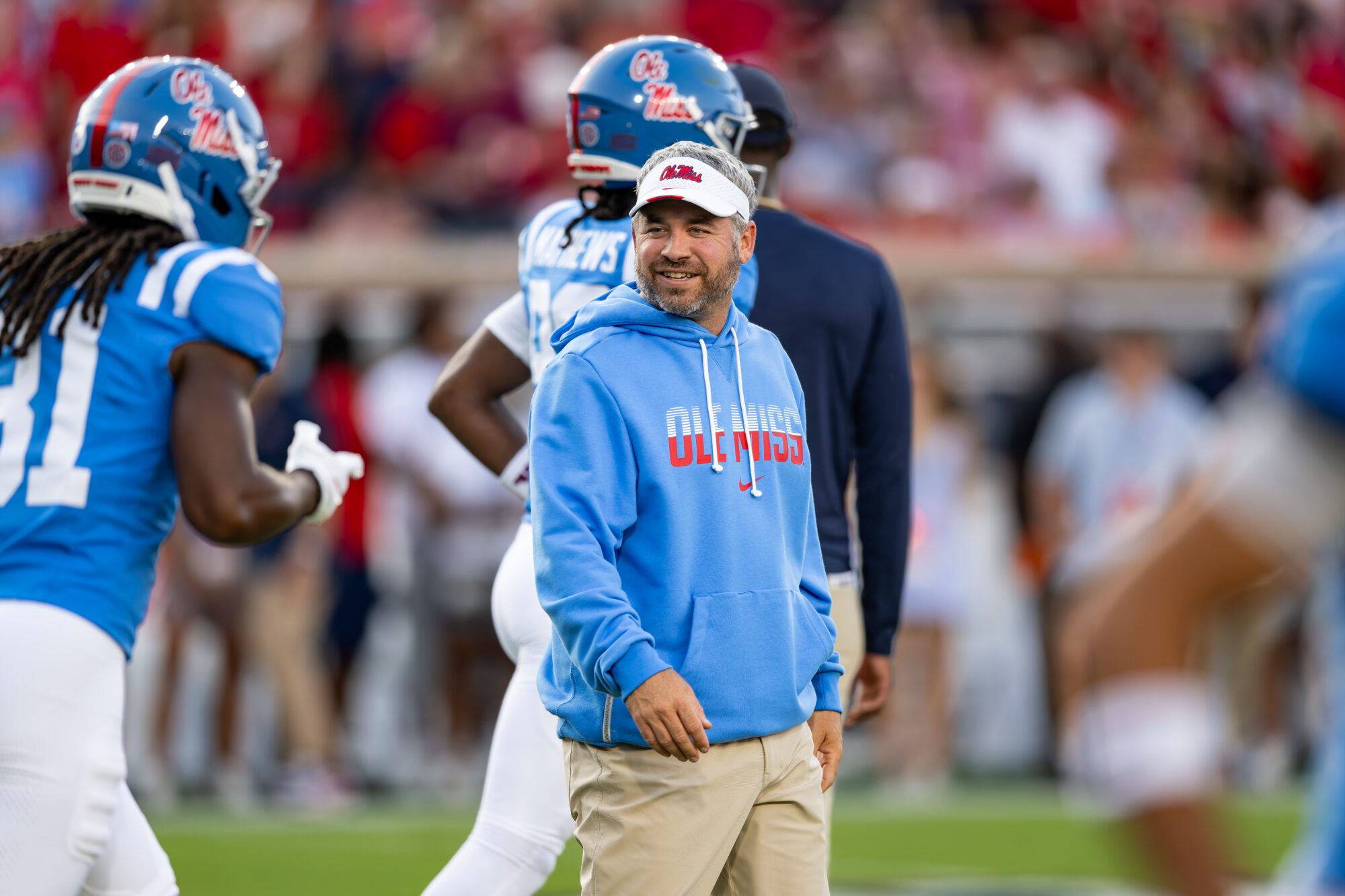
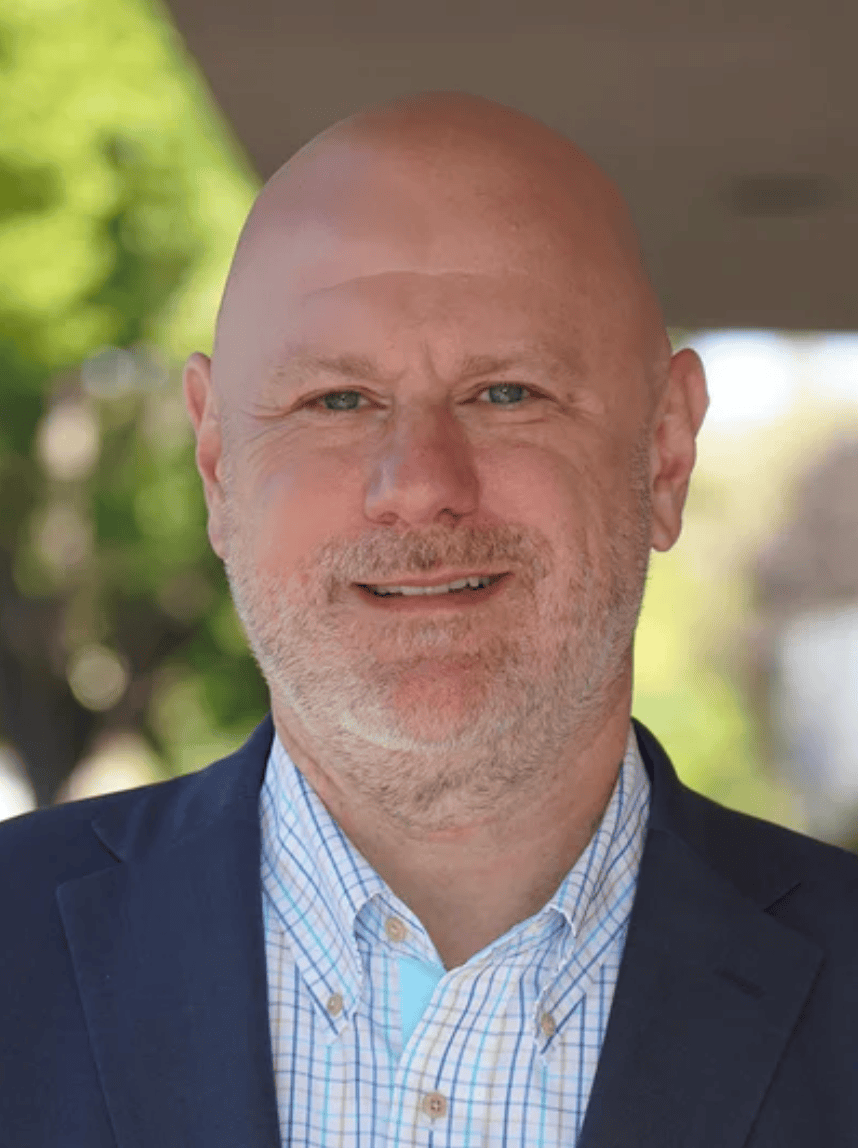
Five experts from the School of Law and Department of Intercollegiate Athletics spoke during the Future of College Football symposium, posing questions that must be tackled to determine the sport’s future in the age of compensation and commercialization.
“Many are characterizing the commercialization in college football as the Wild West,” said William Berry, the law school’s associate dean for research and Montague professor of law. “But is this just the product of good old American capitalism? Or the loss of an amateur ideal to commercial greed?”
College football was far less commercialized for decades. Until 20 years ago, playing college football was about getting a scholarship to receive a college education.
“That college scholarship, that full ride, for a lot of them, the only way they could make college work,” said David W. Case, professor of law. “The rank and file of college football players was the education, and it was the scholarship and the way they get something that they wouldn’t have been able to get that would transform their lives.”
Case attributes modern issues facing college football to the term of Roy Kramer, who served as commissioner of the Southeastern Conference from 1990 to 2002.
“He (Kramer) helped build the big super conferences and helped produce a massive television contract,” Case said. “And that’s when the revenue started going through the roof.”
The television contracts increased conference, and eventually, athletes’ revenue, even though athletes had received some form of payment even before NIL.
“College football players have always been paid extra money other than those scholarships,” said Martin Edwards, associate professor of law, who spoke from his father-in-law’s experience as a college football player. “They’ve been paid under the table, they’ve been paid in cash, they’ve been paid in benefits for decades.”
When teams could not officially pay players, they turned to other things to recruit them.
“You give them the best facilities and the best coaches,” said Ron Rychlak, distinguished professor of law. “Coaches’ salaries went through the roof and (then there is) construction.
“So, without being able to pay money, you said, ‘Here’s what we can offer you.’
Another development that fueled the commercialization of sports was the development of VCRs and DVRs, allowing people to record television and movies and skip past commercials, he said. Still, virtually everyone watched sports live.
“When suddenly the advertisers realize everybody watches sports live, those commercials are very valuable and the tremendous shift came that made live sports so much more valuable, and that was a huge benefit to college sports, pro sports all the way around,” Rychlak said.
Advertising revenues soared, leading us to an era when college players are paid.
“Now that players are entitled to a piece of that revenue, it’s created all of these incentives and all of these legal issues that, back when the big money really wasn’t there, didn’t exist,” Case said.
The legal issues of eligibility and compensation being litigated are primarily contractual or antitrust arguments. A Colorado court recently granted a nationwide injunction in Wisne vs. NCAA that gave all college athletes five years of eligibility.
“The theory that they’re advancing is a contract theory,” Berry said. “There’s contract between NCAA and all the member institutions, and athletes are third-party beneficiaries in the contract.”
Initially, that advertising money benefitted all student-athletes at a college or university.
“From a college perspective, that money largely supported every other sport: women’s sports, nonrevenue sports,” Rychlak said.
But with football players getting the lion’s share of the money, colleges face another problem.
“They are now looking for other revenue sources,” he said. “Now, there’s a struggle within athletics to try to cover all the other sports.”
In the spring of 2026, the House vs. NCAA antitrust settlement resulted in athletes being able to get 22% of the average power conference revenues.
“We’ve gone from a system where the NCAA regulates giving a cup of coffee to a student athlete to ‘a system that shares hundreds of thousands or even millions of dollars of revenue with athletes,'” Berry said.
Colleges are now likened to running professional football teams, but without professional rules or guidelines concerning payment caps and the transfer portal.
“If we’re going to run professional force franchises, we need to be able to have the kind of rules that professional leagues have,” Case said. “We need salary cap. We can’t have unlimited free agency, it’s too disruptive.
“We need to have some rules that everybody knows where the boundaries are, where the gaps are, what you can do, and what you cannot exceed so that we can all start playing by the same rules.”
The goings-on of college football teams affect not only other college athletics, but also high school players.
“You have to think about what is happening to the high school athletes,” said Angela “Ane” Redmond Debo, Ole Miss athletics associate general counsel. “Since the transfer portal opened, most schools now are picking up their football players from the transfer portal.
“Where do the high school athletes go? How do they get here?”
The antitrust laws limit the establishment of rules and procedures that could subside the “Wild West” atmosphere and free market.
“I think the antitrust laws, the risk of those treble damages, the risk of these antitrust lawsuits in court all over the country is impeding the ability of the stakeholders – whether that’s the universities, the athletic departments, the TVs, conferences and even the players themselves – is impeding their ability to make rules that would make the sport healthier in the long run,” Edwards said.
Perhaps those rules will become established on the conference level. Berry advocated for college athletes becoming employees of the conferences in a recent paper in the Texas Law Review. A conference-based labor union could immunize schools from antitrust law.
“If we have rules just on a conference-by-conference basis, we might avoid some of the antitrust claims because there would be some that were completely free market and others that were regulated and limited in other ways,” Rychlak said.
The Ole Miss experts cannot predict the future.
“What might be best for everybody?” Berry said. “I don’t know, but these issues remain highly contested. So, stay tuned.”
This article is republished courtesy of Ole Miss.