(From Ole Miss)
- While the technology is still developing, the team at Ole Miss and UC San Diego is working to use it to find early diagnostic markers for conditions such as Type 1 diabetes and traumatic brain injuries.
A University of Mississippi professor and his team have developed a technology that may one day lead to the early diagnosis of juvenile diabetes and CTE caused by traumatic brain injuries.
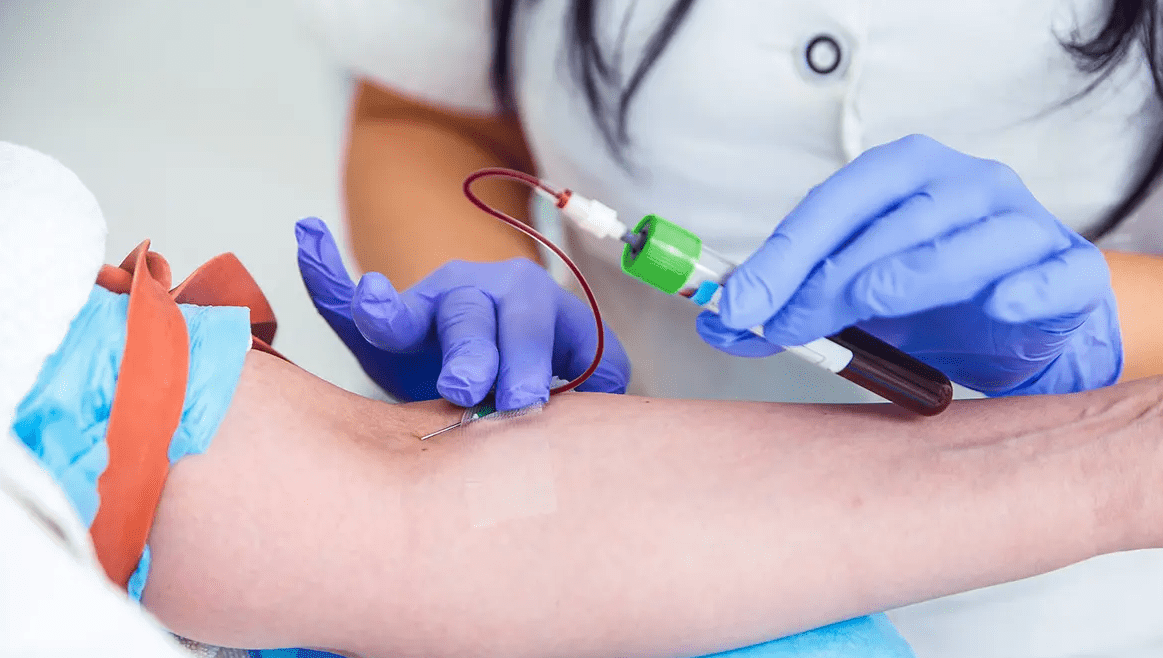
The technology allows researchers to see and label protein shapes and interactions in mammal blood that can possibly lead to an earlier diagnosis of disease before a person even shows symptoms.
The team is led by Joshua Sharp, professor of pharmacology in the School of Pharmacy, along with Lisa Jones, professor of chemistry and biochemistry at University of California at San Diego, and James Stewart, associate professor of pharmacology and research associate professor in the UM Research Institute of Pharmaceutical Sciences.
“It is widely practiced in medical diagnostics and disease research to look for how quantities of a particular molecule change to diagnose disease or understand how particular biological processes work,” Sharp said.
“For example, during an annual physical, the doctor might look at hemoglobin A1C levels, which is how much of a particularly modified type of hemoglobin is in the blood. However, we know that for many diseases, the early steps are not necessarily changes in how much of a particular molecule is around, but what that molecule is doing.”
The new technology uses a reagent, a substance that can produce a chemical reaction, and UV light, to allow researchers to see how proteins are behaving in mice with diabetes, rather than merely observing the protein’s quantitative presence.
“In order to work, proteins have to form these intricate, folded, three-dimensional structures, and these three-dimensional structures actually do the chemistry that life depends on,” Sharp said. “How those folded proteins interact with other things, is the key behind how they work.
“With this technology, we can see how the protein’s folding and interacting with other things, and how that changes in a diseased versus healthy cell.”
Sharp likened the new technological discovery to using a can of spray paint to study a ball of yarn.
“If I’ve got a ball of yarn, you have no idea how this yarn is wound; there are thousands of different ways that the yarn could be wound,” he said. “But if I take a can of spray paint and spray the ball, then lay out the yarn, you can see which parts of the yarn were on the outside and which parts were on the inside, and that narrows down how the yarn could be wound.”
This is the same basic idea for studying proteins inside a molecule.
“By capturing how protein structure changes in disease states, such as the complement activation and altered iron handling we observed in diabetes, we can begin to identify structural biomarkers that may appear earlier than traditional biochemical markers,” Stewart said.
This is the first time a technology has existed to examine changes in the three-dimensional structures of many proteins simultaneously in a clinical sample.
While the technology is still developing, the team is working to use it to find early diagnostic markers for conditions such as Type 1 diabetes and traumatic brain injuries.
“The hope is that we will be able to use this method to find an early structural biomarker for Type 1 diabetes that will be able to develop a targeted test for, so we can screen children with a simple blood test early enough for preventative treatment to have a chance to help,” Sharp said.
Additionally, they hope to develop and use the technology for traumatic brain injury to better diagnose them.
This technology opens new areas of research to find biomarkers of disease that can help detect diseases that are difficult to diagnose.
“For the average person, the long-term impact is the potential for more precise and earlier detection of disease because this approach allows us to determine whether that protein is functioning normally or has been structurally altered by disease,” Stewart said.
“In the future, this could translate into blood-based tests that detect disease earlier, monitor progression more accurately and help guide treatment decisions.”
This article is courtesy of the University of Mississippi.