- Rosedale Distilling Company, on the banks of the mighty Mississippi, near Terrene Landing, is the foundation and culmination of years of perseverance and determination.
Native son Jack Coleman, now the mayor of Rosedale, watched from a distance during the late 70s and 80s as his beloved Delta suffered the economic decline ravaging its small communities, threatening to erase the deep sense of place that had defined it for generations. Jack says he always knew he would return to his hometown someday, and that in doing so, he wanted to help the place that had made him who he is.
He had only to “figure out” the what and the how.
All he knew in the beginning of his quest was that he had to think outside the box of what had been tried before.
Rosedale Distilling Company, on the banks of the mighty Mississippi, near Terrene Landing, is the foundation and culmination of years of perseverance and determination, clear-eyed creative thinking, planning, researching, selling his idea to others, and understanding the maze of state and federal tax credit programs and other incentives that could work together. The enormity of what has begun and what has been accomplished is mind-boggling, to say the least.
But be sure. There is more to come.
Jack graduated from Bolivar County District One High School, formerly Rosedale High, in 1971. He earned both an accounting degree and a Juris Doctor from the University of Mississippi before building an impressive forty-year career in and around Capitol Hill in Washington, D.C.
His resume is a collage of accomplishments that include an appointment in the Reagan administration, a leader of the National Trade Association for Government Contractors, an environmental lawyer for the United States Department of the Interior, and one unsuccessful foray into politics as a Reagan-endorsed candidate for Congress in 1988 in the Second District.

In 2015, he married Elizabeth Ames, his true soulmate, a San Antonio native, whose talents, interests, and experience complement his skill set perfectly. She, too, has quite a resume, but left her prestigious position with a Washington law firm, embraced the Mississippi Delta, challenges and all, and has not looked back. She says, “I married Jack, and I married his vision as well.”
Evidence of their energy and collaborative efforts thus far is the ongoing renovation of 130,000 square feet of historic local buildings, each with a story to tell as they are meticulously restored and repurposed, inviting tourists and locals who love history, authentic experiences, and gracious Southern hospitality.
Beyond attracting Deltans from miles around, Viking Cruise ships dock regularly in Rosedale and offer bus excursions for their passengers eager to experience a bit of the “Mississippi Blues Trail.” Those tourists will soon get a bit of additional history with a tour of the distillery, a bite to eat at the elegant, authentically restored “River Club,” and perhaps a tasting at one of the themed tasting rooms in the “Explorer’s Club” celebrating the history of the area’s exploration by Spanish, French, and British explorers.
Rosedale’s revival will not depend solely on tourism. A distillery is not dependent on just the local market. Although the three Rosedale Distillery Bourbons launched in numerous Mississippi package stores in June, the plan is for nationwide distribution in the near future.
Other than the quality and taste of Rosedale Distillery’s product, what makes it unique? Jack says convincingly, “You have to marry ideas and product with history. Marketing requires a good story.”Jack comes from a lineage of great storytellers on both sides of his family, but telling the stories that inspired the Rosedale Distillery is not a stretch at all. They are as authentic as they come and greatly enhance their brand’s marketability.
Jack and Elizabeth do not have to invent the area’s legends or stories. There are plenty, including one that is quite personal to a very young Jack Coleman.
He was only eight years old when his maternal grandfather, “Bootsie” Jackson, put him to work in his hardware store, instructing him to greet every customer, look them in the eye, and offer to help. “Bootsie,” a shrewd businessman who enjoyed his King Edward cigars, was also the teacher of life lessons. From hunting and fishing to the art of customer service, the gift of gab, and everything in between, “Bootsie’s ” influence on his grandson ran much deeper than teaching him how to navigate the aisles of the hardware store.
One of Jack’s most frequent and memorable customers was the renowned bootlegger Perry Martin, who supplied speakeasies, governors’ mansions, and Al Capone’s establishments with his special recipe before, during, and long after Prohibition. Jack had no idea what Mr. Martin was doing with all those oak barrels and copper tubing he was buying from Jackson Brothers’ Hardware Store, but he thoroughly enjoyed waiting on him.
It seems young Jack Coleman was the only one in the dark. According to a 2015 online article by Delta State University’s Center for Culture and Learning, “While it now takes 6.5 hours to travel by modern highway from Rosedale to Chicago, distance was a non-issue then, thanks to the Illinois Central Railroad, which ran from Rosedale Street North all the way up to Chicago. It helped that Rosedale was a fishing town, and that there stood a large icehouse by the railroad: Perry Martin’s whiskey could then be packed beneath layers of ice and fish before being transported to Chicago.”
Even the sheriff of Bolivar County, who had never met Perry Martin, knew that every New Year’s Day, he would have a large jug of Perry Martin whiskey waiting on his front porch as a token of his appreciation.
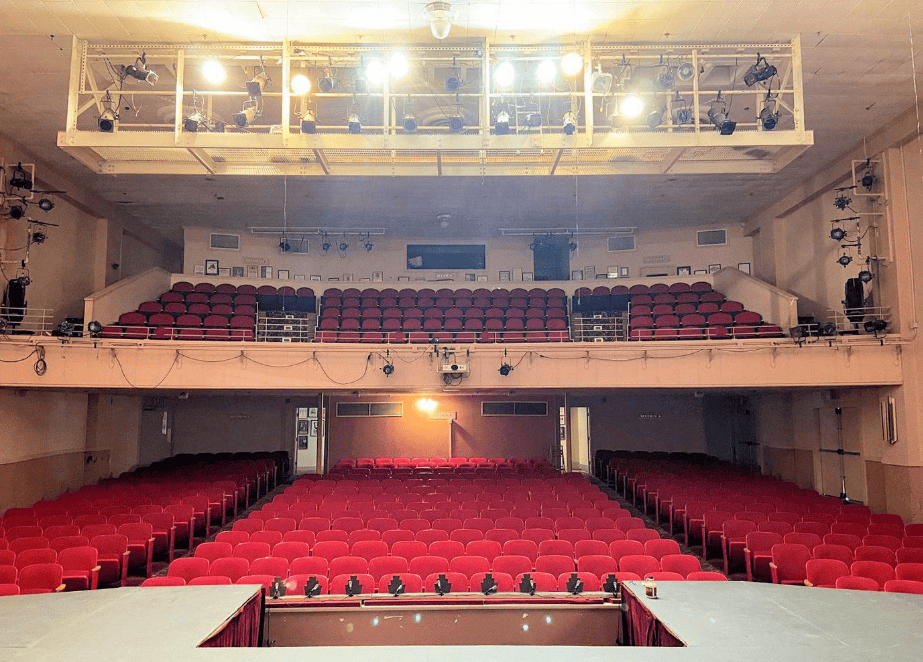
The “River Club,” at 305 Court Street, is directly across from the former Jackson Brothers’ Hardware Store. This renovated jewel was built in 1916 and was originally the law office of Charles Scott, a larger-than-life resident who was once the world’s largest cotton planter; his Rosedale Cotton won the Gold Medal at the 1904 St. Louis World’s Fair.
That building later housed the local Ford Dealership from the 1930s until the 1980s. From photographs, newspapers, and other research, Jack and Elizabeth gathered mountains of information required to begin what would be a monumental undertaking. After several environmental studies and federal and state historic and new market tax credit applications, the restored building is stunning and has already hosted several casual evenings of entertainment, drinks, and get-togethers, Delta-style.
In the coming weeks, their commercial kitchen at “The River Club” will be operational. It will offer a dining menu and a bar menu, with special cocktails, from 4 p.m. to 9 p.m. on Thursdays through Mondays. Sunday brunch is also on the drawing board.
Other plans include a blues club honoring Blanche K. Bruce, a Rosedale resident and the first Black American to serve a full term in the United States Senate. Opening soon is also the Delta Mercantile and Art Gallery, which will offer gifts, collectibles, and art that highlight the history and uniqueness of Mississippi, especially the Delta.
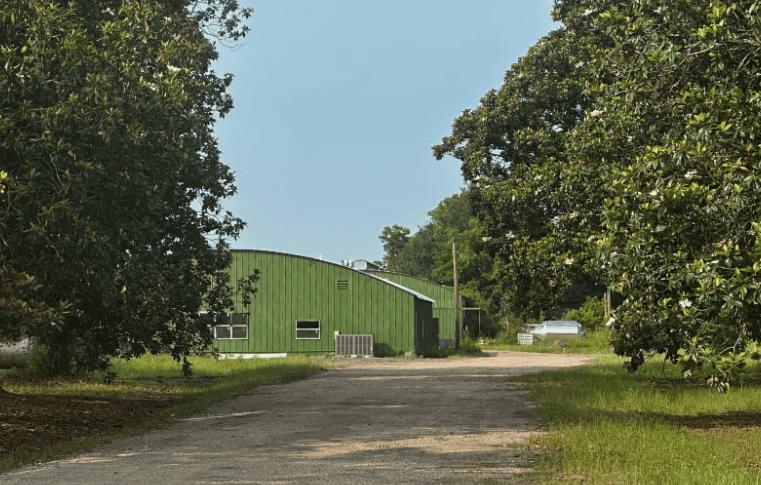
Between the distillery itself, located about a mile from downtown in the reclaimed and renovated 1950s-era Alabama Metals Products factory, and the downtown venues, at least 50 jobs will be created. Projections for tourist engagement through the cruise ship excursion estimate about 40,000 visitors per year. Add to that figure the Delta’s residents who never mind a little car ride and always and forever love a reason to socialize.
Rosedale renewal is happening, and it is a happy experience.
The 1920 census named Rosedale the most populous town in the most populous county in Mississippi. Those glory days are long past, but the story is not over. There is a gleam in Jack Coleman’s eyes and enthusiasm in his voice as he says, “I just did not want it to die.”
He adds with confidence.
“We have the history. We have the story. We have the know-how.”
I, for one, believe him.

Marilyn Tinnin