(Photo from Mont Helena)
- There, above the Delta fields, is a house built on an ancient mound, connected to a bride who never became one, nearly lost to fire and neglect, restored by people determined to preserve its story, and spared when a tornado tore through the surrounding community.
Drive down Old Highway 61 near Rolling Fork, and there it is.
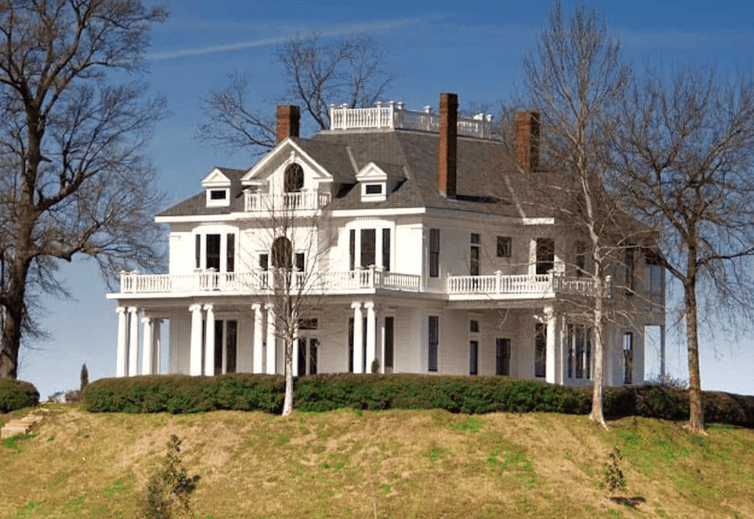
Rising above the flat Delta fields, Mont Helena looks almost as if it belongs to another landscape. The stately white home sits high atop an ancient Native American ceremonial mound, its columns visible long before you reach it.
For years, visitors could step inside and hear the remarkable story of the woman whose name it bears. Today, Mont Helena is privately owned and closed while repairs are underway, with no certainty about whether public tours will return.
But Mont Helena is still there.
And after more than a century of fire, neglect, storms, and one of the most devastating tornadoes in Mississippi history, that feels significant.
The March 2023 tornado that devastated Rolling Fork spared Mont Helena. The house still stands over the Delta fields, holding a story that began long before its walls were built.
Historian Jane Witham knows that story well. For 10 years, she helped share the history of Mont Helena with visitors and participated in the annual play that brought its most famous love story to life.
“The house itself was built on top of a ceremonial Indian mound,” Witham said, noting that there were originally three mounds at the site. The other two were eventually lost to agriculture. “Actually, the way I look at it is if the house had not been there, that mound might not have been preserved either.”
The story of Mont Helena begins with Helen Scrymgeour Johnstone, born in 1839. Her father, John T. Johnstone, came to Mississippi from North Carolina and acquired land in Sharkey County that became known as “The Helen Place.”
Helen grew up primarily at Annandale near Madison, but Witham said she and her mother traveled to the Delta property when Helen was young, staying in the caretaker’s house. Mont Helena did not yet exist.
Then came the love story that would follow Helen for the rest of her life.
Helen met Henry Gray Vick after his carriage broke down near Ingleside, the home of Helen’s older sister. The two were quickly taken with one another, and Henry eventually proposed. Helen’s mother insisted they wait until Helen turned 20 to marry.
Their wedding was planned for May 20, 1859—Helen’s 20th birthday.
It never happened.
Shortly before the wedding, an argument between Henry and James Stith eventually resulted in a challenge to a duel. According to the history Witham and others researched, Henry fired his pistol into the air. Stith did not.
Henry was killed.
His body was returned to Madison, where he was buried on what should have been his wedding day. Helen attended in her wedding dress, wearing a black veil.
The tragedy earned Helen the name that still follows her through Mississippi history: the Bride of Annandale.
Life, however, continued.
Helen later met Episcopal priest George Carroll Harris. Witham said Helen initially resisted marriage because she believed she would always love Henry, but Harris assured her he could accept that. They married, raised a family, and spent years following his ministry.
Harris later served in Memphis during the devastating yellow fever epidemic of 1878. Witham said the church where he served was converted into a hospital. Harris contracted yellow fever himself but survived, and letters between George and Helen from that period remain part of the family’s historical record.
Eventually, Helen and George returned to the land her father had acquired for her decades earlier.
Mont Helena was intended to be their retirement home.
The first house burned before they could move into it. They started over, building again on the mound, and the house that emerged around the turn of the 20th century became the Mont Helena recognized today.
Decades later, however, the house nearly disappeared.
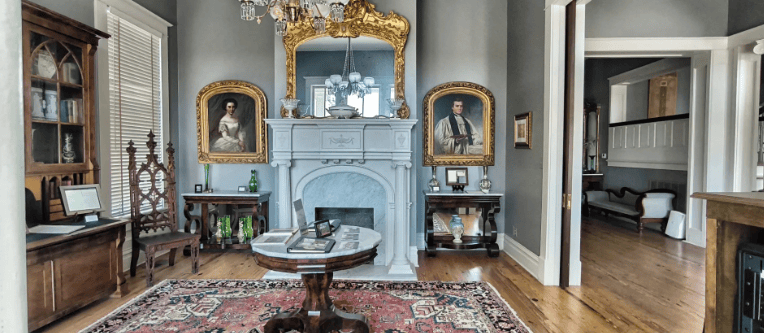
By the 1990s, Mont Helena had fallen into severe disrepair. Witham recalled that the deterioration was so extensive that “you could stand in the basement and see through” the house. During restoration, enough of the original flooring was salvaged to recreate the ground floor, while missing architectural details, including fireplaces, were reproduced from old photographs.
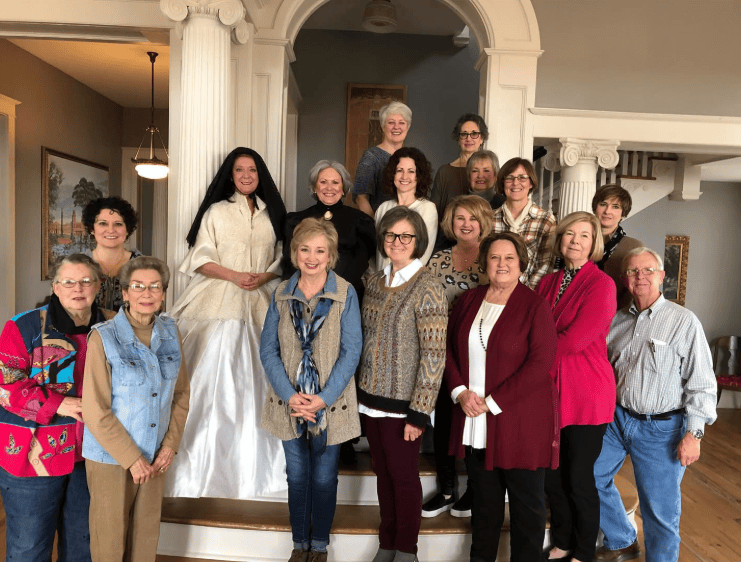
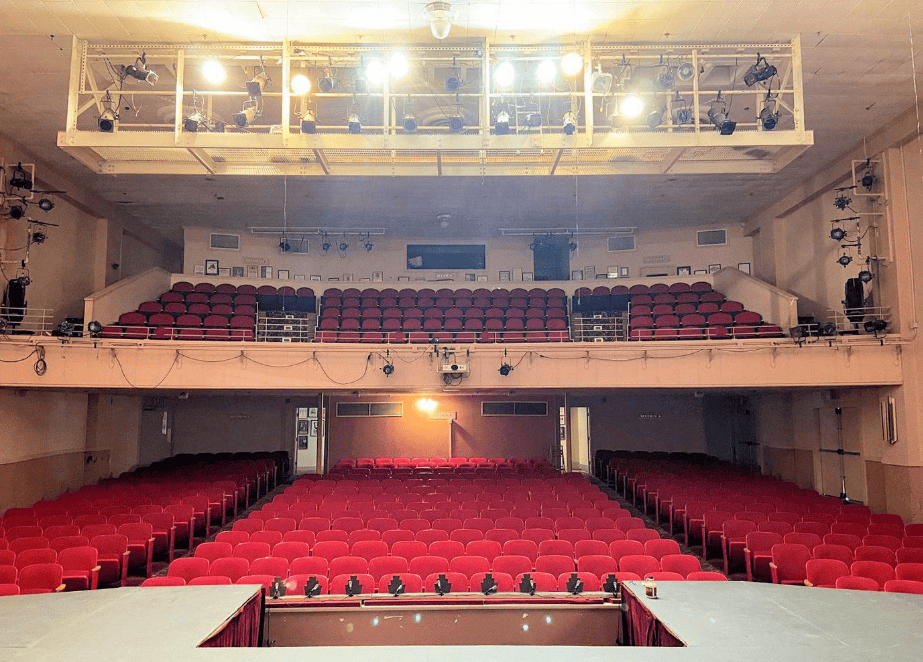
That restoration eventually allowed Mont Helena to become something more than a historic house. For 10 years, history quite literally came alive there through Mont Helena: A Dream Revisited.
Witham was part of it from the beginning.
“We did the play for 10 years,” she said. “I wish you could have seen it. It was fabulous.”
Performances were intimate, limited to just 40 guests. During intermission, visitors were served a recreation of the wedding reception Helen and Henry never had, complete with period-inspired foods and a wedding cake display. The play ran on Thursday, Friday and Saturday nights during portions of the spring.
And the tickets? They were not easy to get.
“It was sold out every night within a few minutes of when we put the tickets on sale,” Witham recalled.
Witham eventually became one of Mont Helena’s historians, sharing its story before performances, while the owner, Drick Rodgers, discussed the house and its architecture.
Rodgers maintains a family connection to the history surrounding Mont Helena. According to Witham, he is not a direct descendant of Helen, but is descended through the family of Helen’s sister’s husband. His grandmother, Annie Carpenter, was also a close companion of Helen later in Helen’s life and served as executrix of her will. Letters preserved through that connection helped historians piece together details of Helen’s life.
And then, of course, there are the alleged ghosts.
Witham never experienced anything paranormal herself.
“I personally have not,” she said. “But I have trusted friends who have.”
Some reported footsteps and voices upstairs when no one else was there. Another acquaintance told Witham he saw a woman in a white dress standing in a window. Paranormal investigators have spent nights inside the home, although Witham remains unconvinced they found definitive proof of anything supernatural.
Maybe that uncertainty is part of Mont Helena’s allure.
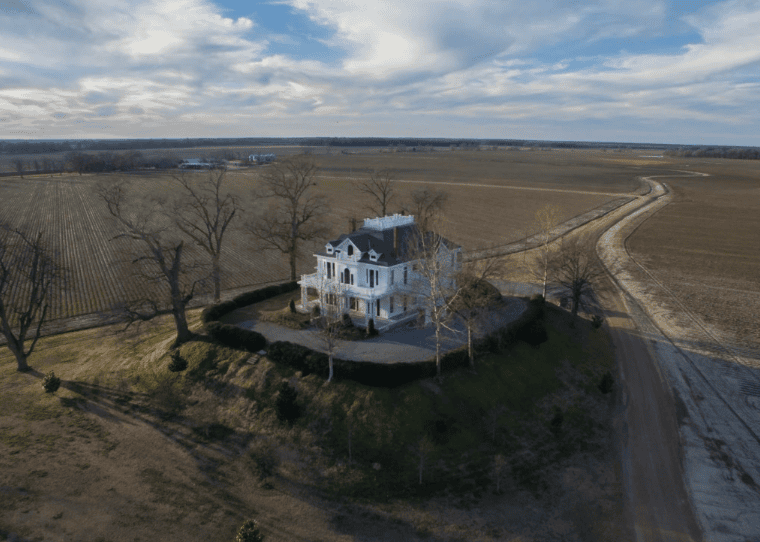
For now, the doors are closed. The house is privately owned and undergoing repairs, and its future as a public attraction remains uncertain.
But travelers along Old Highway 61 can still see it from the road and take photographs from public areas. Visitors should remember that Mont Helena remains private property: admire the house from an appropriate distance and do not approach or go onto the porch.
Even from the road, though, it is difficult not to stop and look.
There, above the Delta fields, is a house built on an ancient mound, connected to a bride who never became one, nearly lost to fire and neglect, restored by people determined to preserve its story, and spared when a tornado tore through the surrounding community.
Mont Helena has spent more than a century watching Mississippi change, and it is still standing tall today.

Meredith Biesinger