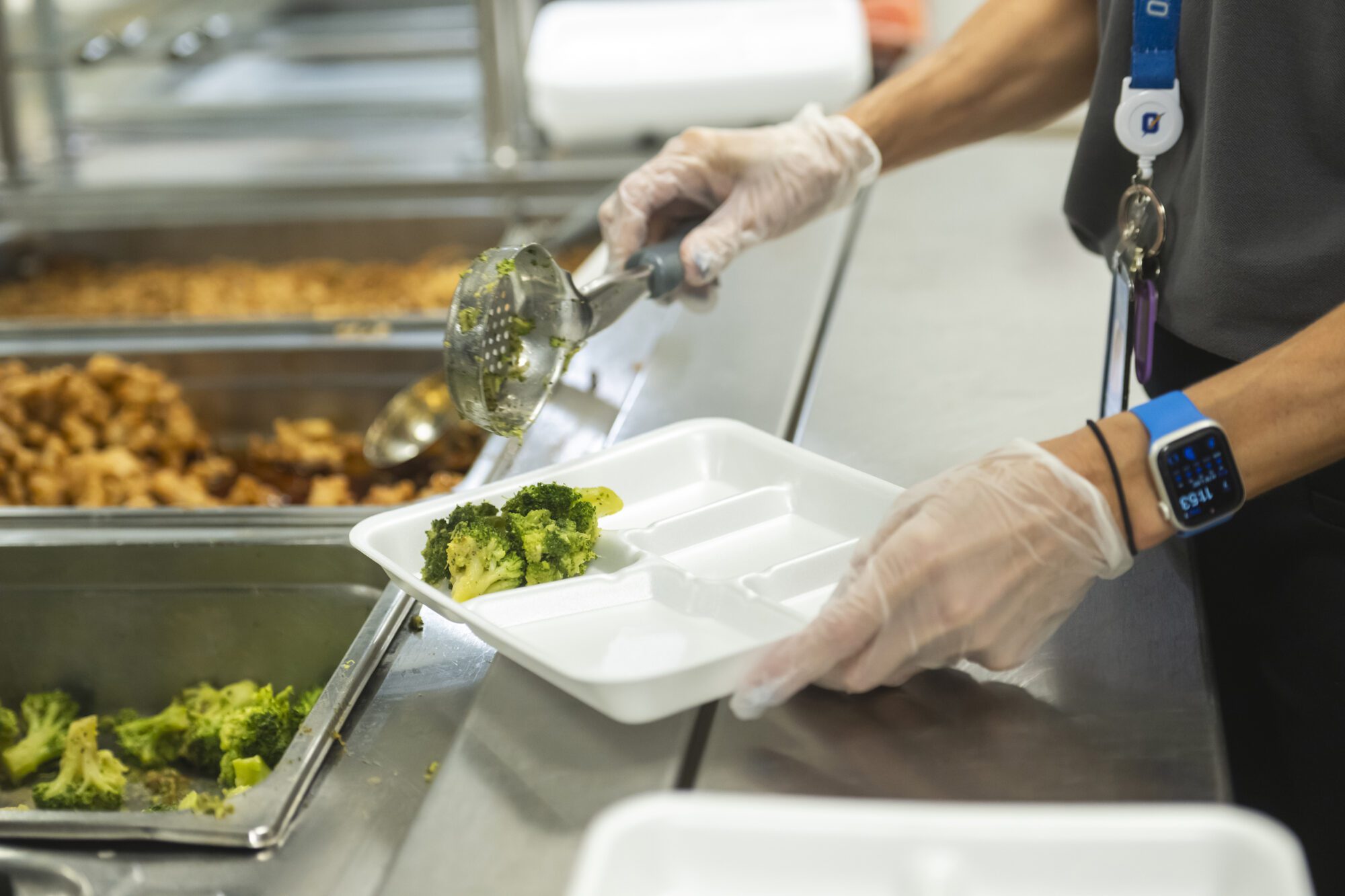
Ahead of the U.S. Department of Agriculture's updated guidelines for school lunches, researchers at the Institute of Child Nutrition studied which cafeteria foods students eat most often and how much sodium and sugar those foods contain. Substituting excess sugar and salt with herbs and spices could keep the flavor while making the meals healthier. Photo by Srijita Chattopadhyay/Ole Miss Digital Imaging Services
- “School meals alone do not determine a child’s lifelong eating habits, but they can play an important role,” said Aleshia Hall-Campbell, executive director of the Institute of Child Nutrition at Ole Miss.
Pizza, pastries and parfaits are staples in many school cafeterias. But new research from the University of Mississippi and the University of Southern Mississippi suggests some of students’ favorite meals may contain more sodium and sugar than schools will be allowed to serve under updated federal nutrition standards.
The U.S. Department of Agriculture will require schools across the United States to reduce sodium and added sugars in meals by fall 2027. A new study published in Nutrition Reviews aimed to identify which popular menu items are highest in sodium and sugar, giving school officials a starting point for creating healthier menus.
“School meals are designed to meet nutrition standards, and for many children, they are among the most balanced meals they eat,” said Aleshia Hall-Campbell, executive director of the Institute of Child Nutrition at Ole Miss. “But because students may eat school breakfast and lunch many times each week, the nutrition quality of those meals matters.
“Reducing added sugars and sodium is not about blaming school meals. It is about using school meals as an opportunity to support children’s health while still serving foods students enjoy.”
The researchers aimed to create healthier versions of students’ preferred meals that adhere to updated guidelines for the National School Lunch Program and School Breakfast Program, said Ruaa Al Juboori, assistant professor of public health and data analytics statistician.
“For families, the practical point is that these changes are not about taking away foods students enjoy,” she said. “They are about making the foods already served in schools a little healthier while keeping them familiar, flavorful and appealing to students.
“This matters because school meals reach many children every day. For students who eat breakfast and lunch at school, even small changes in added sugar and sodium can make a difference over time.”
To make students’ favorite foods healthier, the researchers surveyed 1,071 school nutrition professionals to determine what schools serve and what students eat most often. Then they reviewed recipes for those cafeteria items – such as pizza, smoothies, yogurt parfaits, muffins and chicken wings – to identify which foods contained the highest amounts of sugar and sodium.
For example, flavored chicken wings recipes average more than 2,100 milligrams of sodium per serving. The USDA’s Dietary Guidelines for Americans recommends adults eat no more than 2,300 milligrams of sodium per day.
Excess sodium intake over time is linked to high blood pressure, a major risk factor for cardiovascular disease. Because many students eat school meals every weekday, researchers say even modest reductions in sodium could have meaningful long-term health benefits.
Substituting herbs and spices for excess salt and sugar can make recipes healthier. But those improved recipes will succeed only if students will eat them, the researchers said.
“While sodium and sugar make foods taste good, herbs and spices can also add flavor to the foods we eat,” said Marjuyua Lartey Gibson, director of the institute’s Applied Research Division at Southern Miss. “School nutrition professionals should explore flavor enhancers, such as spices like cinnamon, nutmeg and ginger for sweetness, and salt substitutes like herbs – rosemary, thyme, garlic and paprika – to minimize sodium.
“Taste testing and student feedback are also important, because the best recipe change is one that students will actually eat.”
While the primary goal of the research was to help schools meet nutrition guidelines, the long-term impact of improving cafeteria offerings is improving student health.
“School meals alone do not determine a child’s lifelong eating habits, but they can play an important role,” Hall-Campbell said. “Children are exposed to foods at school again and again, so school meals can help shape what students see as normal, familiar and acceptable.
“That is why balance is important. We want students to enjoy their meals, but we also want them to become familiar with foods that are lower in added sugar and sodium and still taste good.”
This material is based on work supported by the USDA grant no. FNS-CN-ICN-FY23.
This article is republished courtesy of Ole Miss.