(Photo courtesy of Freda Clark)
- “I don’t think there was ever a time when art wasn’t part of me,” Freda Clark shares. “But I realized it would become my life’s work when I noticed that every major moment in my life, whether joyful or painful, led me back to creating.”
Growing up in Mississippi, Freda Clark paid close attention to the world around her.
“I learned to observe people,” the Vicksburg artist says. She watched how people dressed, how women wore their hair. She noticed the culture and the family dynamic of joy, struggle, and resilience. “Those observations eventually became the foundation of my work.”
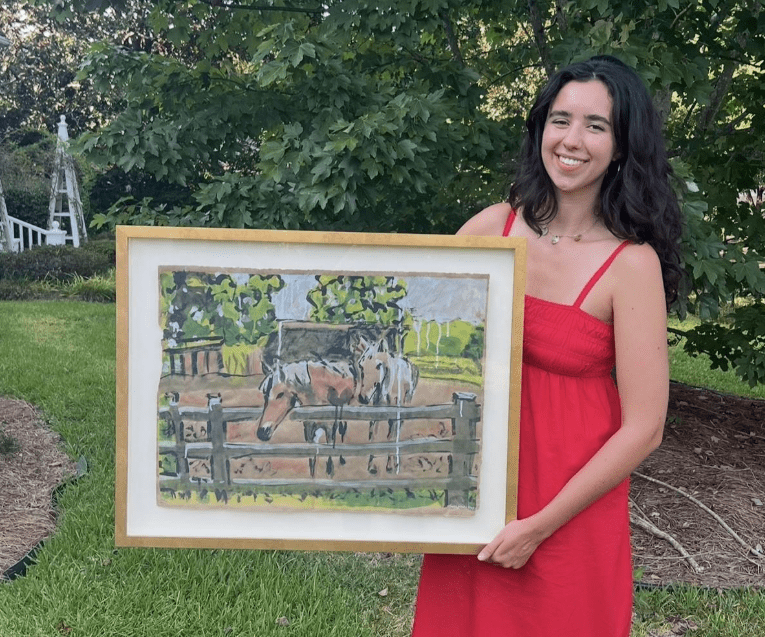
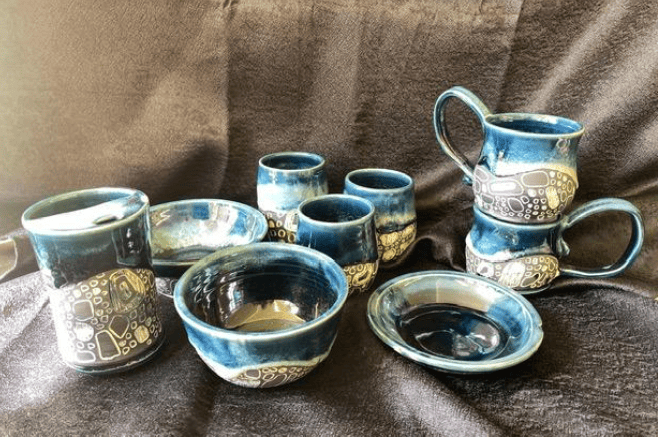
Clark coupled her early observations with a love of creating art and built her artistic reputation on celebrating healing, self-acceptance, and the beauty of ordinary life through her richly colored paintings and functional ceramics meant for everyday use.
“I don’t think there was ever a time when art wasn’t part of me,” she shares. “But I realized it would become my life’s work when I noticed that every major moment in my life, whether joyful or painful, led me back to creating.”
Art wasn’t just something she did. It was how she survived. Through her creative expressions, she came to understand herself and how she connected with others. This led her to establish multiple layers of purpose in her art and to notice something that refused to let her go.
“Some of my earliest memories are of creating art in elementary and middle school. My early teachers really made an impression on me,” she says. “But they were all white. I never had an art teacher who looked like me, even in high school and college. I wanted to become the change I wanted to see.”
Today, Clark is an educator in her Ceramics 101 program, introducing students to hand-building, wheel-throwing, glazing, and the creative process. And Clark has learned that teaching clay is about much more than technique.
Clark elaborates on how clay exposes perfectionism. “Students quickly learn that mistakes aren’t disasters. They’re opportunities. I want my classroom to feel like a place where curiosity matters more than perfection. If someone leaves believing they’re creative, even if they walked in convinced they weren’t, then I’ve done my job.”
Clark, too, had focused on mastering techniques for creating work that sells. “But life has a way of stripping away what’s superficial,” she explains. “Going through divorce, grief, heartbreak, loss, and learning to rebuild myself forced me to ask bigger questions about why I create.”
The answer was that her work wasn’t just decoration. It was medicine.
“Creating is incredibly therapeutic because I’m processing emotions that I sometimes don’t even have words for. Once the work is finished, I often see parts of myself reflected to me that I hadn’t fully acknowledged.”
When someone connects and says, “I saw myself in that painting,” or “This piece changed my morning routine,” Clark knows healing extends beyond her.
“The artwork becomes a conversation between strangers who suddenly realize they’re not alone.”
She adds that every painting, every ceramic vessel, every sculpture expresses that you are still worthy. You are still beautiful. You can become whole again. “Once I understood that, I stopped chasing trends and started creating from truth.”
Clark also came to understand that healing isn’t a concept to be researched. “It was something I desperately needed,” she says. “Like many women, I spent years looking outside myself for validation. Relationships, achievement, success …I believed those things would make me feel complete.”
But healing isn’t about becoming someone new or a new version of yourself before the hurt. “It’s remembering who you’ve always been underneath fear, rejection, and disappointment, remembering parts of yourself that you rejected for the sake of peace or someone else’s approval.”
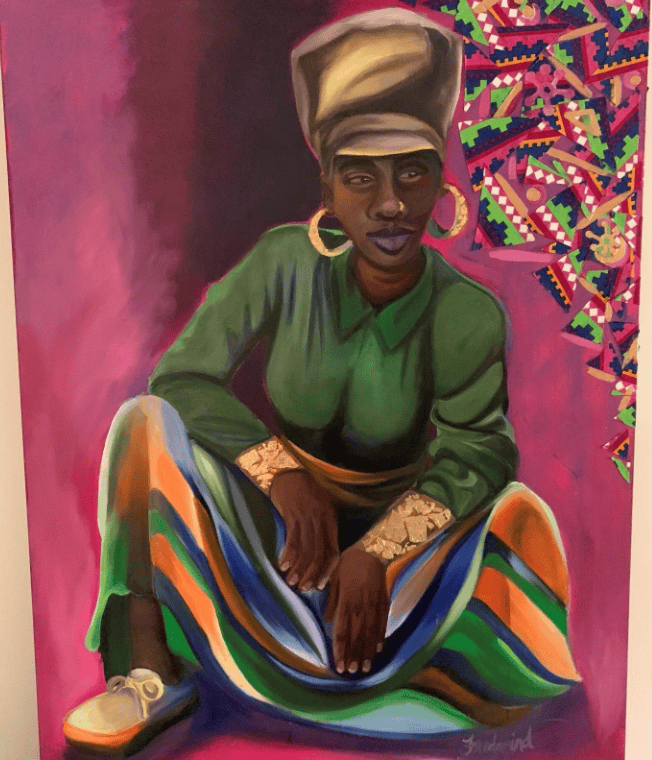
As Clark began to love and accept herself, she altered her artwork. “The women I paint became softer and stronger at the same time. They took up more space. They became unapologetic. I realized I wasn’t just painting women. I was painting the version of ourselves we’re all trying to become.”
By this, she means women command attention because they embody it.
Women carry so much, she says. “We carry generations. We carry expectations. We carry families. We carry dreams.”
But she adds that women are too often taught to shrink themselves. She wanted to create images where women are impossible to ignore.
“They are powerful, luxurious, gentle, sensual, intelligent, spiritual, and deeply human all at once. My work gives women permission to exist fully without apologizing, to be seen as divine and ethereal.”
Clark hopes viewers recognize themselves before recognizing her painting. She wants them to see abundance rather than lack and to remember that softness isn’t weakness. That rest isn’t laziness. That beauty isn’t something they earn. Of course, her women aren’t perfect. They are not meant to be. They are whole.
“I hope viewers leave believing they deserve to take up space exactly as they are.”
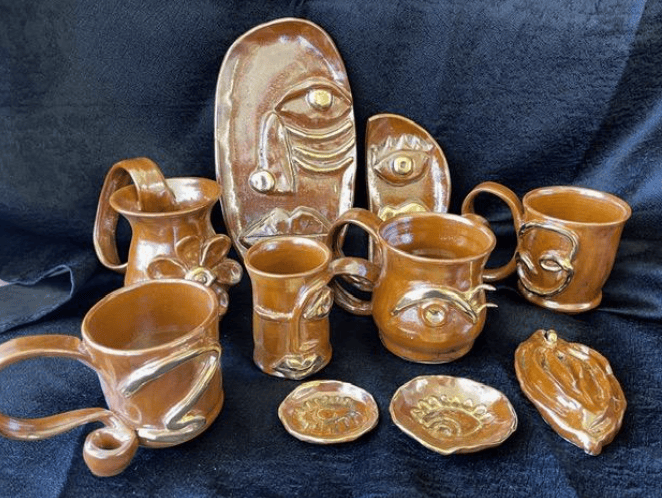
This same spirit carries into her ceramic work, which plays a part in everyday rituals. While painting allows her to tell stories visually, clay allows people to hold those stories—literally.
“There’s something incredibly intimate about ceramics because people live with them,” she says with pride. “They drink from them. Eat from them. Place flowers in them.”
In a sense, her pottery brings ritual into everyday life, and her paintings ask people to pause and reflect.
“Together, they blur the line between fine art and daily living. I love the idea that healing can exist both on a gallery wall and in someone’s morning coffee mug.”
Clark believes that color is emotion. “Before someone understands the subject matter, they feel the color. I’m drawn to saturated yellows, purples, oranges, blues, and rich earth tones because they carry energy. Yellow reminds me of illumination and divinity. Purple speaks to spirituality and transformation. Blue creates space to breathe and is cleansing. Earth tones remind us where we come from. Every color has a purpose, and together they create an emotional experience.”
Clark approaches her life in the way she approaches pottery.
“Clay humbles you. You can have a perfect plan, and the kiln reminds you that you aren’t in complete control. It’s taught me patience and resilience, and that failure isn’t the opposite of success. It’s part of the process.” To illustrate, she notes that sometimes a piece cracks, or a glaze surprises you, but the unexpected result is better than what you originally imagined. “Life has worked the same way for me.”
With her roots firmly planted in Mississippi, she finds inspiration in its beauty and complexity. “Mississippi taught me to pay attention. There’s beauty here that’s easy to overlook if you’re only passing through,” she says. You’ll miss the conversations, churches, front porches, the Delta landscape, the Mississippi River, the complicated history, and the resilience of the people.
“Outsiders sometimes see Mississippi only through the lens of its struggles, especially as a black woman with the racial history of the South.”
Therefore, growing up in the South shaped Clark’s perspective as a Black woman.
“Black girls and boys are taught a different way of being or existing in order to have safe experiences. So, I see and pick up on things that the average person would not.”
Clark appreciates that Mississippi artists know their landscape is a place of incredible imagination, innovation, storytelling, and cultural influence. Some of the world’s greatest creative traditions were born here because people found ways to create beauty despite hardship.
“That spirit lives in my work.”
And that work continues to evolve. The recent loss of her father prompted her to think more profoundly about legacy, about what remains after a life is lived.
“I’m becoming increasingly interested in ritual and the sacredness of everyday life,” she says. “I’m exploring how ordinary objects like mugs, bowls, vessels, and domestic spaces can become symbols of healing, abundance, and self-devotion.”
Because she wants to continue building spaces where creativity feels accessible to everyone, her exploration goes beyond gallery walls.
“I want every piece I create to leave someone feeling just a little more connected to themselves than they were before they encountered it.”
Lastly, if you are already using one of Clark’s special pieces in your everyday life, she wants you to remember her words and believe them. “You are worthy, whole, and already enough.”

Richelle Putnam