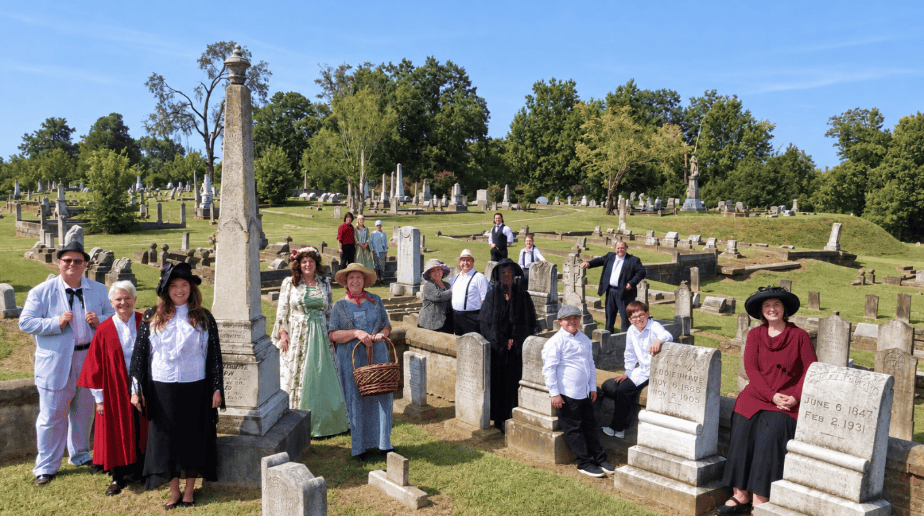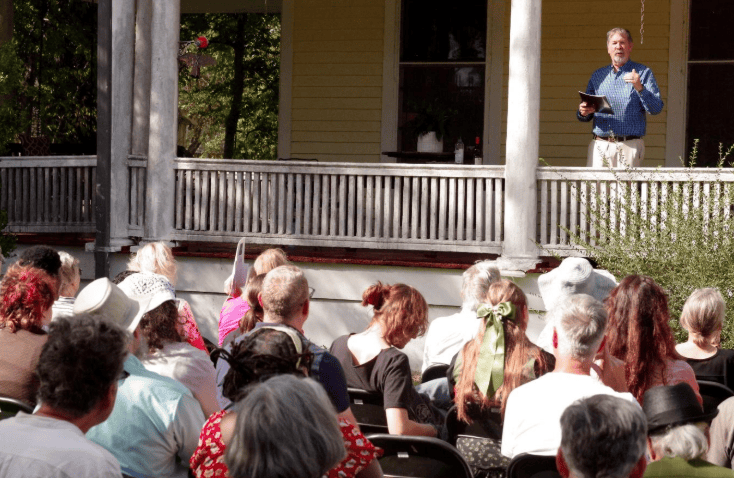
Tennessee Williams scholar Tom Mitchell, emeritus professor in the Department of Theatre at the University of Illinois at Urbana-Champaign, speaks to an audience during the 2025 MS Delta Tennessee Williams Festival (MDTWF) on Panny Mayfield’s legendary front porch. The MDTWF has had its signature Porch Plays in the historic district where a young Tom Williams walked and played in his formative years before growing up into the great American playwright, Tennessee Williams. (Photo by Ride Hamilton)
- The 34th annual Mississippi Delta Tennessee Williams Festival centers on This Property Is Condemned, a one-act play Williams wrote around 1939.
Every October, Tennessee Williams returns to Clarksdale, where his words drift across front porches and into the landscape, summoning the people and places he wrote about decades ago. Williams spent only part of his childhood in this Delta town, but its characters and their tangled relationships followed him onto stages around the world.
The 34th annual Mississippi Delta Tennessee Williams Festival centers on This Property Is Condemned, a one-act play Williams wrote around 1939. For festival director Jen Waller, as she follows Williams’ life, the connections often follow her.
“I let the connections, or should I say the spirit, guide me,” says Waller, who also directs the Coahoma Higher Education Center from her office inside Clarksdale’s historic Cutrer Mansion. “It’s like a big story for me to figure out — to put the pieces together and make sure it all makes sense.”
Tennessee Williams and The Delta
Before becoming a Pulitzer Prize-winning playwright, Tennessee Williams was Thomas Lanier Williams, a Mississippi boy. Born in Columbus, Mississippi, in 1911, Williams was the son of Cornelius Williams, a traveling salesman, and Edwina Dakin Williams. While his father traveled, young Tom and his mother lived with her parents, the Reverend Walter Dakin and his wife, in Episcopal rectories across the South.
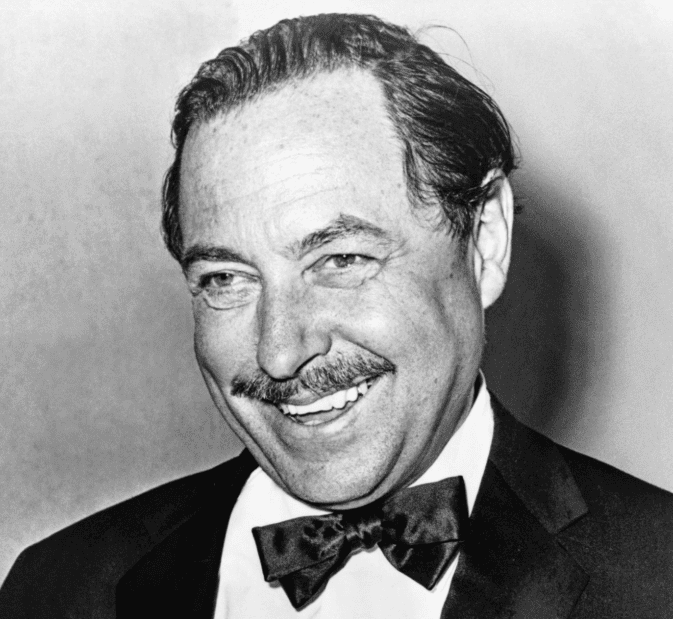
Around 1917, the family settled in Clarksdale, where Reverend Dakin served St. George’s Episcopal Church. The Williams family lived in the rectory beside the church on Sharkey Avenue. They stayed about a year before Cornelius took a job with a shoe company in St. Louis and moved his family north. But Clarksdale remained part of Tom’s childhood. His grandparents lived there for about 16 years, and he returned by train for Christmas visits and summer stays.
During one fourth-grade semester in Clarksdale, Williams contracted diphtheria and was confined to the house to recover under the care of his family and Ozzie, the Black nurse who helped raise the children.
Waller says his Delta experiences surfaced decades later. “A lot of his plays, he drew from his childhood memory.”
Williams rarely named Clarksdale, yet the town flows through his work like the Sunflower River flows through the town. His mother chronicled their Delta years in her memoir, and Williams fondly remembered his early childhood.
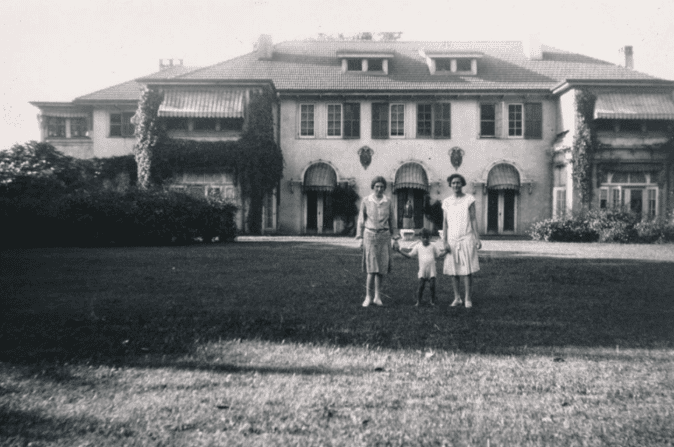
In his play, The Glass Menagerie, Amanda Wingfield recollects her gentleman callers. Among them is a Cutrere, a name drawn from Clarksdale’s prominent Cutrer family.
The Cutrers, whose mansion stood as a center of local society, captured young Williams’ imagination. Their wealth, parties, and place in the town’s social order offered the human theater Williams later brought to the stage. Waller calls the family “a big muse” for the playwright.
Local lore also connects a Clarksdale sheriff named Brick to Cat on a Hot Tin Roof and the play’s lantern-lit lawn party to gatherings on the Cutrer Mansion grounds.
A Chance Meeting in France Spurs a Mississippi Delta Festival
The Mississippi Delta Tennessee Williams Festival began with a Mississippi journalist, a chance encounter in France, and a shared belief that Clarksdale deserved a place in the playwright’s legacy.
Panny Mayfield had worked for the Clarksdale Press Register before becoming a grant writer for Coahoma Community College. Around 1990, she wrote an article for Mississippi Magazine exploring Williams’ formative years in Clarksdale. That article led to an invitation to a Tennessee Williams conference in Nantes, France, where a production of Orpheus Descending was part of the gathering.
Mayfield was to meet Dr. Kenneth Holditch of the University of New Orleans, then one of the country’s leading Williams scholars. The two had never met. As Waller tells the story, Holditch stood in a hotel lobby explaining that he was waiting for a woman from Mississippi when he heard someone call, “Laura, come this way.” Mayfield’s Southern drawl had found him.
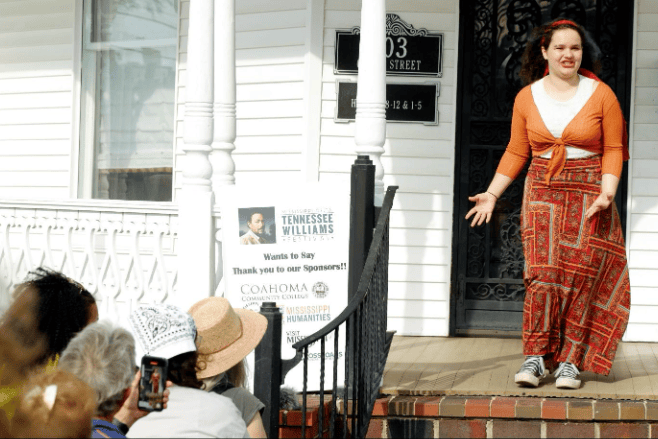
That encounter grew into a festival that has brought Williams’ work back to Clarksdale for more than three decades. With support from Coahoma Community College President Dr. Vivian Presley, a 1992 National Endowment for the Arts grant, and guidance from Holditch, Dr. Ann Abadie of the University of Mississippi, and Greg Boyd, Mayfield helped establish the festival in 1992. Coahoma Community College has sponsored it ever since.
Mayfield led the festival for 25 years before passing responsibility in 2017 to a team that included Kohlhaas and Waller. Dr. Matt Foss guided the event through the COVID years, and Waller became director in 2022.
Today, the Cutrer Mansion serves as the festival’s year-round headquarters, linking the event’s planning to a Clarksdale landmark tied to Williams’ imagination.
A Festival Built Around a Play
Each year, Waller follows what she calls the festival “recipe,” established by Mayfield and Holditch. The foundation remains the same: choose a Williams play and build a festival around its themes, history, and connections to the Delta.
The recipe holds. But the ingredients may change.
“As I’m planning it, it just takes me where I’m supposed to go,” Waller says. “I’m hoping that Tennessee’s guiding me a little bit.”
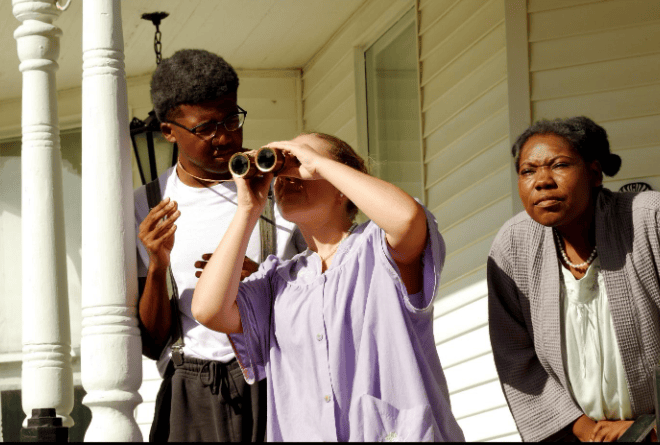
This year’s selection, This Property Is Condemned, tells the story of Willie, a young girl who meets a boy beside a railroad track. Through their conversation, Williams sketches a world of poverty, loneliness, and childhood caught in the circumstances of the adult lives around them.
While researching the play, Waller discovered another path into the story: the 1966 film adaptation. “It tells a very different story from the one-act play,” she says.
Directed by Sydney Pollack, the film starred Natalie Wood and Robert Redford, with Francis Ford Coppola among its screenwriters. Hollywood expanded Williams’ brief encounter between two children into a feature-length drama.
Though the film takes place in the Delta, most of the production unfolded farther south. Bay St. Louis, on the Mississippi Gulf Coast, served as a principal filming location. This summer, Waller drove to Bay St. Louis to explore that connection.
The Bay St. Louis Little Theatre had purchased the former film location in 2007 and reopened there in 2010. During Waller’s visit, the theater’s board president mentioned an earlier event that had reunited two of the film’s child actors. Their names were Mary Badham and Jon Provost. Badham had earned her place in film history as Scout Finch in the 1962 adaptation of Harper Lee’s To Kill a Mockingbird. Provost had spent seven seasons playing Timmy Martin on Lassie, becoming one of television’s most recognizable child actors. Waller tracked down both actors and invited them to Clarksdale. Both accepted.
Their appearance gives festival audiences a chance to explore two interpretations of the same Williams story: the spare one-act written for the stage and the expanded drama Hollywood brought to the screen.
Badham and Provost can speak from experience about the film, its production, and their childhood work alongside some of the era’s major stars.
“I think it’s going to be amazing,” Waller says.
The Mississippi Delta Cultural Tour
Written around 1939, This Property Is Condemned was published in 1941 alongside another Mississippi one-act, At Liberty, in William Kozlenko’s anthology American Scenes under the shared title Landscape with Figures.
This title gave Waller direction for the 2026 festival. Why not take visitors into the landscape and let them experience it for themselves?
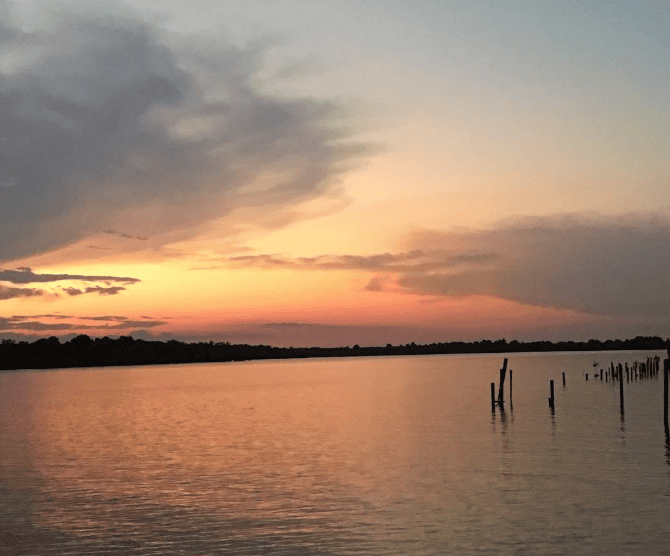
This tour concept recalls an earlier festival tradition organized by Jimmy Thomas and the University of Mississippi’s Center for the Study of Southern Culture. Those outings included stops and discussions at the Cutrer Mansion. Before her death, Ann Abadie had urged festival organizers to bring the tour back. So, they did.
“This is my chance to share that landscape,” Waller says.
The signature porch plays will close the celebration. On Saturday, actors will perform on four porches in Clarksdale’s historic district, with two New York actors performing At Liberty, reuniting the companion plays of Landscape with Figures. The Delta Dinner Party moves to Moon Lake this year, while the Cutrer Mansion welcomes visitors for tours on Saturday from approximately 1:00 to 2:15 p.m.
Landscape With Figures
With a backdrop of railroad tracks, the rectory, the Cutrer Mansion, and the Delta countryside, traces of the lives Williams observed, remembered, and transformed into drama live on.
The landscape remains. And his figures keep returning.
34th Annual Mississippi Delta Tennessee Williams Festival
October 15–17, 2026 | Clarksdale, Mississippi
The festival takes place at locations throughout Clarksdale, including the historic district, Cutrer Mansion, Tennessee Williams Rectory Museum, and Moon Lake.
Festival highlights: Mississippi Delta Cultural Tour on Thursday afternoon; a conversation with Mary Badham and Jon Provost; the Delta Dinner Party at Moon Lake; Cutrer Mansion tours on Saturday, approximately 1:00–2:15 p.m.; and the festival’s signature porch plays, including At Liberty.
Public festival programs are free and open to the public. Special meals require paid reservations.
More information: Visit deltawilliamsfestival.com and VisitClarksdale.com

Richelle Putnam