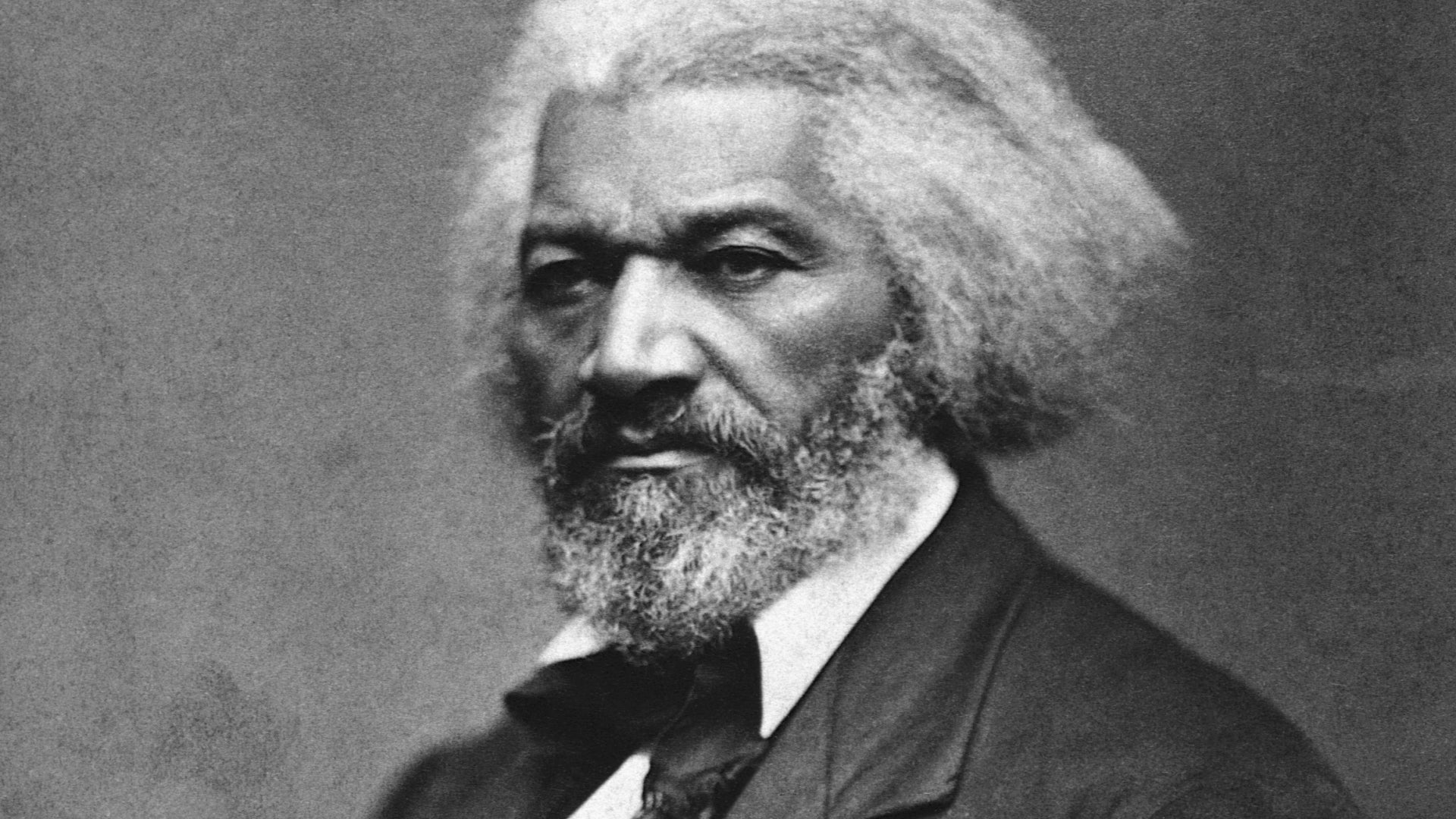
Frederick Douglass
Listen to the audio version of this article (generated by AI).
- Any reverence for our nation’s founding must address our nation’s original sin. Frederick Douglass, a former slave, thought the sin sprang not from the ideals of America, but from gross deviation from those ideals.
Frederick Douglass stood before a crowd at Corinthian Hall in Rochester, New York.
Independence Day had come and gone. The bands had played. The flags had waved. Ministers had thanked God for the blessings of liberty. Politicians had praised the miracle born in Philadelphia seventy-six years earlier.
Now the celebration was over.
It was July 5, 1852.
Douglass looked across the audience gathered before him, a sympathetic lot of mostly white do-gooders that comprised the Rochester Ladies’ Anti-Slavery Society. Douglass asked a question that still echoes nearly two centuries later.
“What, to the American slave, is your Fourth of July?”
A pall fell over the room.
“A day that reveals to him, more than all other days in the year, the gross injustice and cruelty to which he is the constant victim.”
Douglass went on to denounce the hypocrisy of a nation that proclaimed liberty while millions remained enslaved. He called the celebration a sham, the nation’s professions of freedom hollow, and its religion too often a cloak for oppression.
No one listening could have mistaken his anger. Frederick Douglass was not an outside observer passing judgment on the United States.
He was born into slavery.
He was separated from his mother before he could know her. He had watched family members whipped. He had endured beatings himself. Under American law, he was not considered the owner of his own labor, his own future, or even his own body.
Douglass escaped bondage only by extraordinary courage, eventually becoming one of the greatest writers and orators in our nation’s history.
If anyone possessed the moral authority to declare the American experiment a fraud, it was Frederick Douglass.
Modern Americans often assume the lesson of Douglass’ speech is that the Declaration of Independence was a lie.
Douglass believed almost exactly the opposite. He saw in the Declaration beautiful ideas selectively applied.
The previous two essays in this series explored the revolutionary notion that every human being is endowed by his Creator with rights that no king and no government can take away, and the Constitution that James Madison helped design to preserve those rights.
Any reverence for the American founding must grapple, though, with our nation’s original sin.
That failure was catastrophic.
Between the sixteenth and nineteenth centuries, historians estimate that approximately 12.5 million Africans were forced aboard slave ships bound for the Americas. Nearly 2 million died in transit across the Middle Passage. The roughly 10.7 million that survived produced millions of children born into hereditary slavery.
Husbands and wives were sold apart. Human beings were bought and sold alongside livestock. Families were torn apart.
America was not alone in this evil. The Sub-Saharan slave trade pre-dated European arrival by nearly a thousand years. Almost every civilization in recorded history dealt with slavery at one point.
But America committed this sin while declaring that all men are created equal, with the right to life and liberty.
The glaring contradiction cannot be minimized.
Nor did the sin end in 1865. The Civil War concluded slavery, but it did not destroy the prejudice that had sustained it.
The Thirteenth Amendment to the Constitution abolished slavery.
The Fourteenth promised equal protections.
The Fifteenth guaranteed that the right to vote could not be denied because of race.
Yet for generations those constitutional promises remained, for many black Americans, promises on paper more than realities of daily life.
Jim Crow replaced chains with discriminatory statutes. Lynch mobs of men in white hoods replaced slave patrols. Poll taxes and literacy tests replaced outright disenfranchisement.
Justice was too often withheld by the very institutions charged with delivering it.
Mississippi knows this history as well as any place in America.
It remembers Emmett Till.
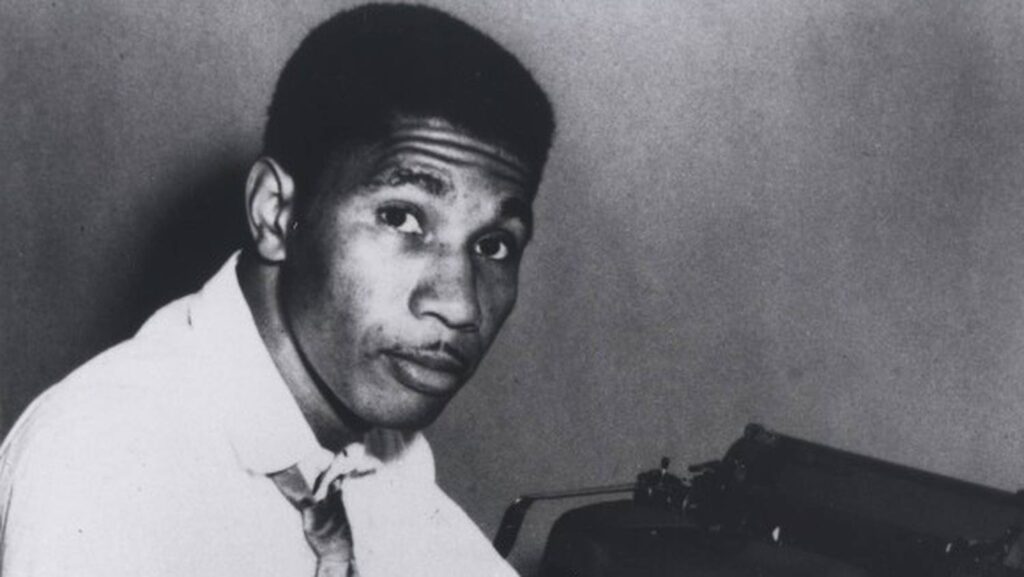
It remembers Medgar Evers bleeding out in his own driveway.
It remembers James Chaney, Andrew Goodman and Michael Schwerner buried beneath an earthen dam in Neshoba County. All because they believed black Mississippians deserved the full measure of citizenship promised nearly a century earlier, and were willing to do something about it.
These are not stains to be scrubbed from our history. They are wounds to be remembered. William Faulkner famously said “the past is never dead, it is not even past.” There are vestiges of darkness that persist, at a minimum, in the psyches of the offspring of those who faced its horrors.
Still, standing before a hall of abolitionist women in Rochester, full of righteous anger, Douglass did not reject the ideals of 1776. He called on America to live up to the Declaration:
“The principles contained in that instrument are saving principles. Stand by those principles, be true to them on all occasions, in all places, against all foes, and at whatever cost.”
A man born into slavery did not conclude that liberty itself was fraudulent. He concluded that America failed to practice what it preached.
There is an enormous difference between those two things. One rejects the American founding. The other calls America back to it.
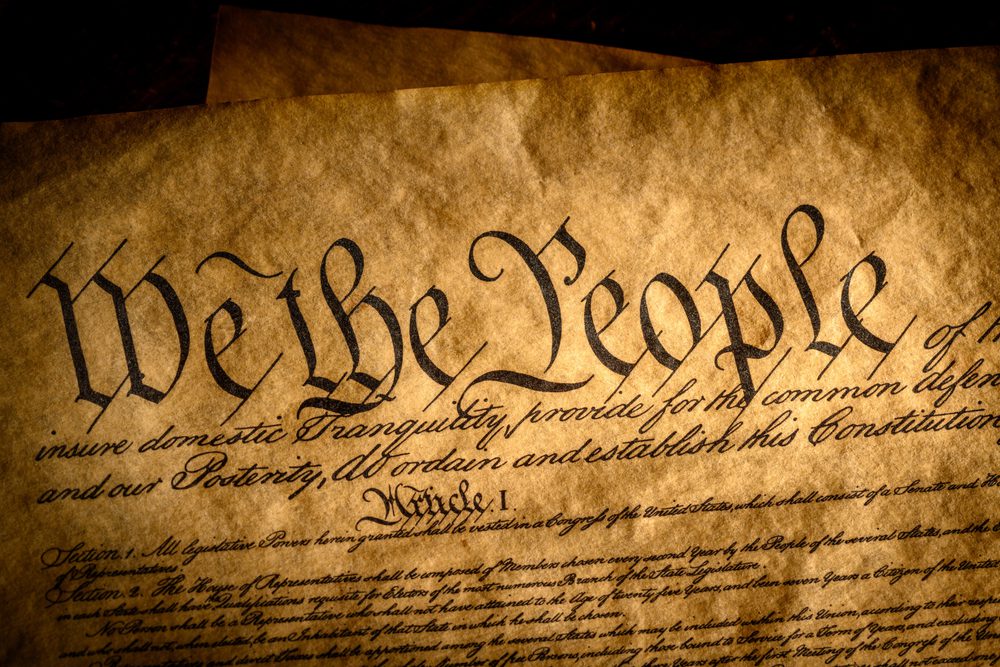
Abraham Lincoln measured the nation’s birth not from the Constitution, but from the Declaration. At Gettysburg he reminded Americans that the nation had been “conceived in Liberty” eighty-seven years earlier.
The Reconstruction Amendments sought to make the Constitution better reflect the Declaration.
The civil rights movement did not ask America to invent a new creed. Martin Luther King Jr. called the Declaration and the Constitution a promissory note. Medgar Evers insisted Mississippi honor the guarantees written into both.
The struggle was long. It was costly. For many, it is not finished.
But neither are we the nation we once were.
The America that legalized slavery abolished it. The America that tolerated segregation outlawed it. The America that denied millions the ballot now entrusts men and women of every race with the highest offices in the land.
This is a feature of the American inheritance. We inherit not only extraordinary ideals and stable institutions, but the responsibility to live by them more faithfully than those who came before us.
Every step toward justice this nation has taken since the time of Douglass came not from abandoning those “saving principles,” but from finally taking them seriously.
This is the third in a series on the American inheritance leading up to the 250th celebration of America’s birth as a nation. We are not promised that the inheritance endures. It is fragile. It requires the courage and sacrifice of each new generation.
READ:
Part I: An American Inheritance that nearly wasn’t
Part 2: An American Inheritance: The Longest Surviving Constitution on the Planet

Russ Latino