Insurance Commissioner threatens to pull licenses of over 70 producers after scheduled hearings

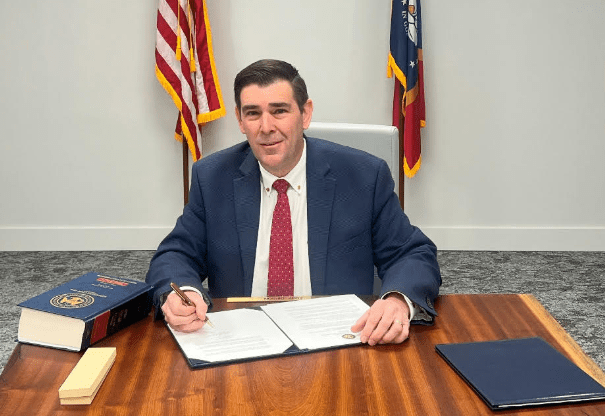
Commissioner Mike Chaney at the Commissioner's Roundtable this morning during the NAIC Summer National Meeting in Chicago, August 2024 (Photo from MID on Facebook)
- The announcement from the Mississippi Insurance Department comes amid the Trump administration’s push to crack down on waste, fraud and abuse in government social programs. Mississippi Insurance Commissioner Mike Chaney said his office has been quietly investigating this for about a year.
Insurance Commissioner Mike Chaney (R) sent a letter this week to over 70 insurance producers doing business in Mississippi alleging that their resident producer license was obtained and/or maintained through material misrepresentation or false pretenses. The producers handle Medicare advantage plans.
“By signing and submitting a Mississippi residential producer license application, you expressly certified and attested, under penalty of perjury, that all information, statements, and supporting documentation provided was true, accurate, complete and not misleading,” Chaney wrote to the companies. “You further acknowledged that any misrepresentation of material fact constitutes a violation subjecting you to potential regulatory enforcement action including denial or revocation of licensure, and any additional civil and criminal penalties authorized by law.”
A hearing has been set for July 20 where the companies may offer any documentary evidence or exhibits to the hearing officer to challenge the commissioner’s claims. If the hearing officer rules against the companies, the Insurance Department can then place the companies on probation, suspend, revoke or refuse to issue or renew their insurance producer’s license. Additionally, the commissioner may levy a civil penalty against the companies in an amount not to exceed $1,000 per violation.
In lieu of the hearing, the companies could simply choose to voluntarily surrender their license.
Federal Push to Address Fraud
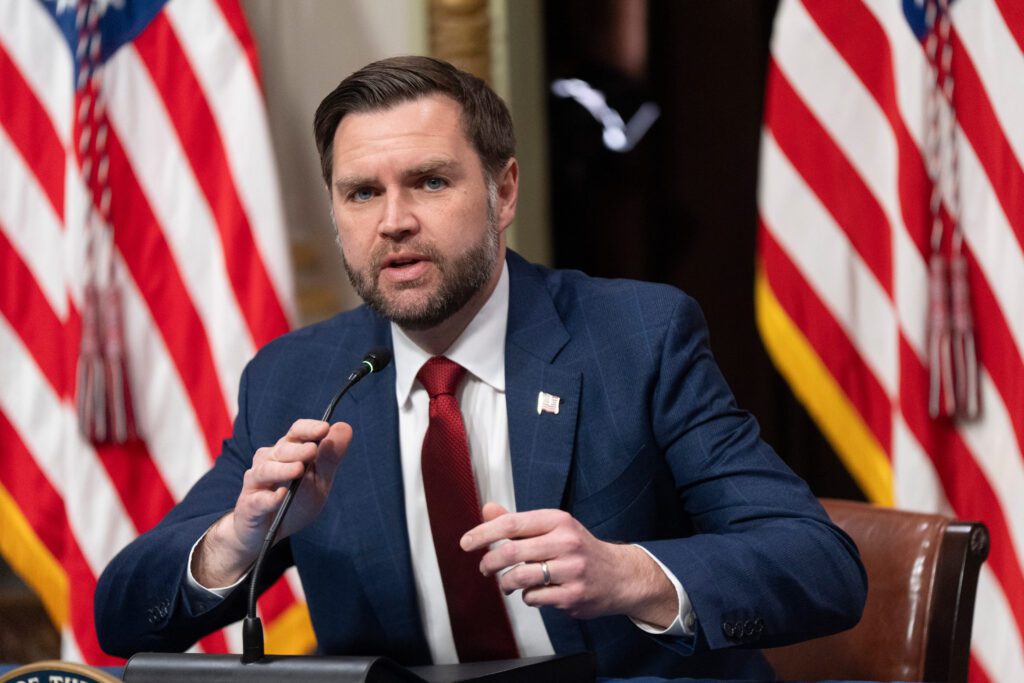
The announcement from the Mississippi Insurance Department comes amid the Trump administration’s push to crack down on waste, fraud and abuse in government social programs. Vice President J.D. Vance, who is leading the effort, is taking a “whole of government approach” in reviewing where taxpayer dollars are being misspent.
In May, the Centers for Medicare & Medicaid Services (CMS) in coordination with Vance’s anti-fraud task force, announced a six-month, nationwide data-driven moratoria on new Medicare enrollment for hospices and home health agencies. Vice President Vance also announced a $1.34 billion deferral of California’s Medicaid reimbursements while threatening to withhold Medicaid money for states that do not crack down on fraud.
Commissioner Chaney told Magnolia Tribune this week that the “Feds” have been slow to react, saying until his department has real evidence it is hard to pull a license.
“We’ve been quietly investigating this for about a year,” Chaney said of his department. “And we may prosecute some of these folks, try to make them pay restitution back. From what we can see just between us and the couple of other states it’s hundreds of millions of dollars.”
That prosecutorial action could rely on the Attorney General’s office or a local District Attorney.
Chaney said tackling the effort to root out fraud and abuse takes cooperation from the companies and from CMS.
“We made one of the healthcare carriers give us the names of all the brokers and we got CMS to help us do that,” the commissioner said. “Once they give us the information we need, it takes us a while to get all the paperwork done, and we’ve got 70 of them noticed for hearings. So that’s a big deal.”
He said more could follow as the department continues its review.
The move from the Mississippi Insurance Commissioner also follows a recent report from Paragon Health Institute estimated that 47% of all Mississippi sign-ups during the 2026 Affordable Care Act (ACA) enrollment period were improper, which could cost taxpayers more than $600 million. Improper enrollments are exchange sign-ups where the person enrolled is not eligible for the subsidy they are receiving.
READ MORE: Report: Improper ACA enrollments in Mississippi could cost taxpayers over $600 million
The report also showed Mississippi with the highest proportion of ACA enrollees with unknown race or ethnicity in 2026 of any state in their analysis, “a sign that enrollment intermediaries may be signing up people without their knowledge or consent.”
Changes in the Exchange
Commissioner Chaney said health insurance providers Cigna and Molina are leaving the health exchange in 2027, noting that the companies had people enrolled “they didn’t know about.”
“They got the sickest of the sick,” Chaney said of Molina, calling them “a good company that got screwed by a lot of brokers.”
“We found carriers were unenrolling some of their folks,” Chaney added, saying he understood why Molina was pulling out of the Medicare side.
As for Cigna, the commissioner said the company was leaving the exchange due to unfunded mandates and uncertainty over whether the federal government was going to force them to cover preventative drugs for conditions such as AIDS and HIV. Chaney said while that is a “hot issue,” he will not try to force companies to pay for drugs that are not required to be paid for by the federal government.
In addition, Chaney takes the position on such drugs that he is not going to endorse a lifestyle where people can get free drugs “so they can do promiscuous things.” He notes that when those diseases have come through other means, such as by way of a blood transfusion, “We’ve never had a case that has not been paid for when that happens.”
“The problems you run into is when people have alternate lifestyles and they want the public to pay for it,” he said.

Setting Up a Mississippi Exchange
As previously reported, Mississippi lawmakers have sought to encourage the formation of a state-based exchange in prior legislative sessions but work on it has repeatedly stalled.
In 2024, the Mississippi Legislature passed legislation that authorized the Commissioner of Insurance to establish and operate a state-based healthcare insurance exchange under the ACA. However, Insurance Commissioner Mike Chaney (R) said he would not move forward without the approval of the governor.
During the recently ended 2026 legislative session, State Rep. Hank Zuber (R) put forward a measure in the House to require the Insurance Commissioner to establish a state exchange. It passed 116-0 in the House, but the bill did not make its way out of the Senate Insurance Committee.
State Senator Walter Michel (R), chairman of the Senate Insurance Committee, told reporters at the time that he did not bring the House bill up because it lacked the support of Chaney.
The commissioner has maintained that he would not establish a state exchange without the governor’s agreement, which Governor Tate Reeves (R) has withheld.
Chaney explained that a state-based exchange would be funded by charging a fee. The federal government allows a 3.5% fee.
“But to make a state exchange work today you’ve got to charge 4.5%. That’s what Georgia had to do. Georgia went up to 4.5% and that means premiums go up,” the commissioner said.
“The problem is, Tate’s right,” Chaney added. “If we had expanded the exchange and expanded Medicaid, we would have put 150,000 people on Medicaid up to 150% of the federal property level, and with the Feds pulling the rug on the entitlements out, the state would have to eat all of that this year.”
He said the result would have been some “pretty strong money.”
“You’re talking about $2,000 minimum per person. It’d be $300 million at a minimum this year,” Chaney said.

Frank Corder