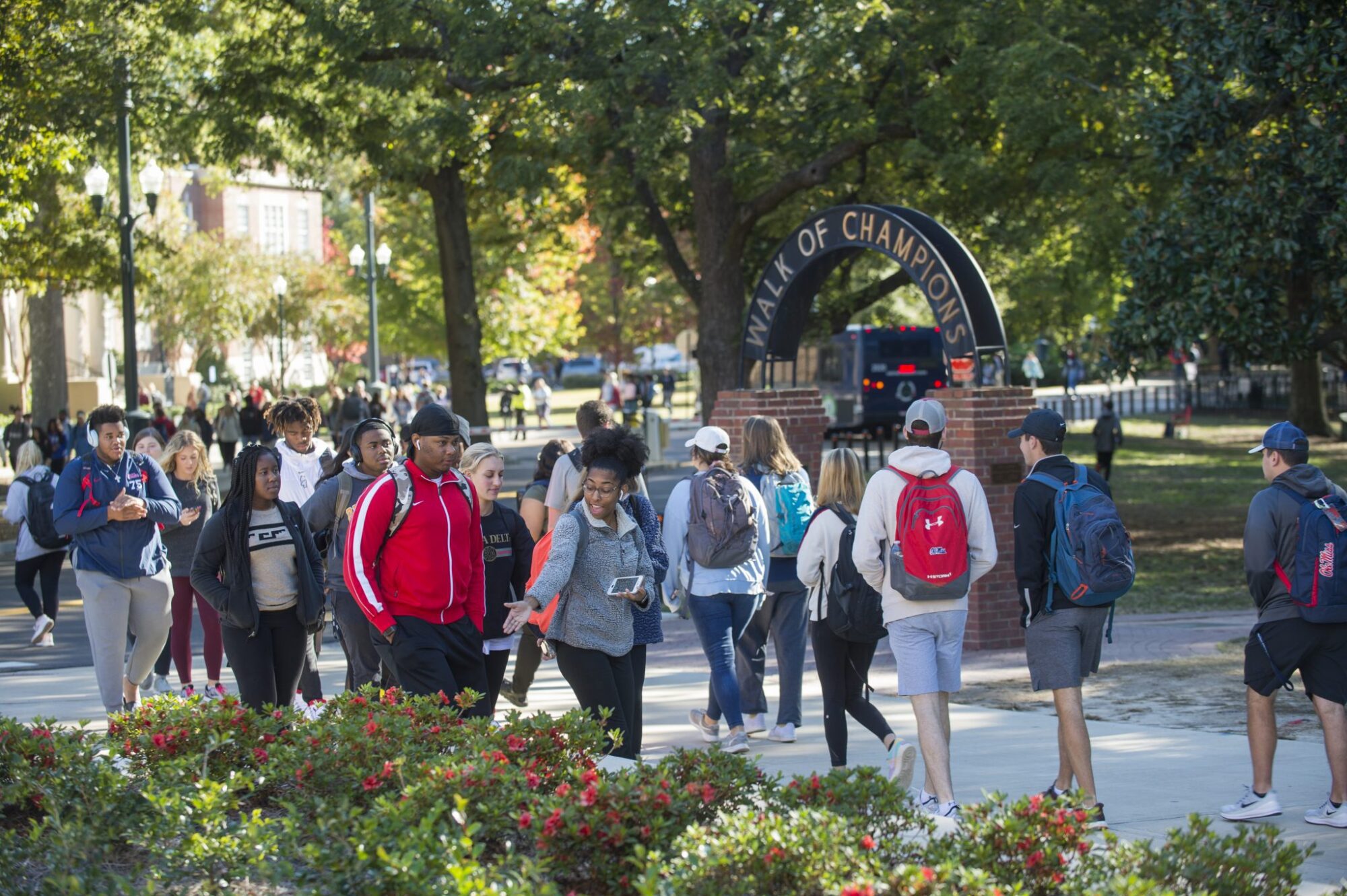
(Photo from OleMiss.edu / by Christian Johnson/Ole Miss Digital Imaging Services)
- While Mississippi’s community colleges and universities are not currently experiencing the effects of the predicted enrollment cliff, a report from the IHL projects that the Magnolia State will see the second-largest decline in high school graduates from 2023 to 2041.
There has been much conversation in higher education in recent years focused on the predicted “enrollment cliff,” an anticipated decline in college enrollment beginning in 2025.
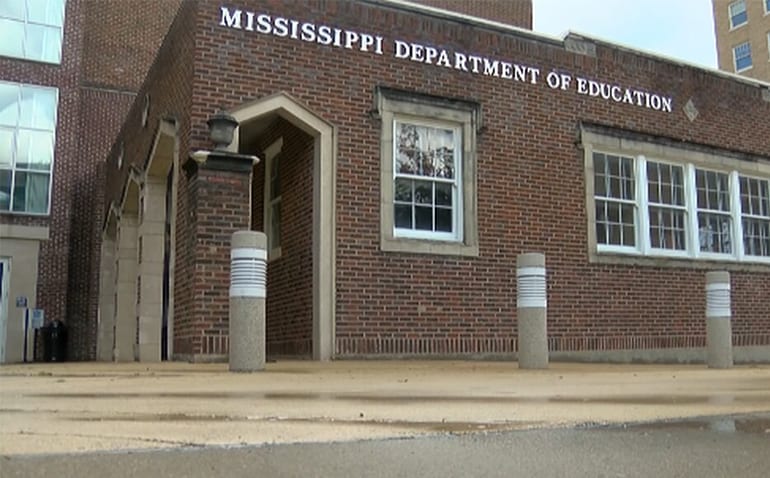
Over the last decade, Mississippi has seen 63,000 fewer students enroll in public schools, according to data from the Mississippi Department of Education. That is often attributed, at least in part, to a decline in birth rates.
According to the Centers for Disease Control and prevention, the birth rate in Mississippi in 2005 was 68.7 for every 1,000 women aged 15 to 44. Data from 2024 shows that number has fallen to 57.3 per 1,000 women.
Education leaders say fewer births leads to less public school enrollment and subsequently less high school graduates who will consider a higher education.
The National Center for Education Statistics reports that from 2012 to 2022 college enrollment nationwide of people aged 18 to 24 declined from 41% to 39%.
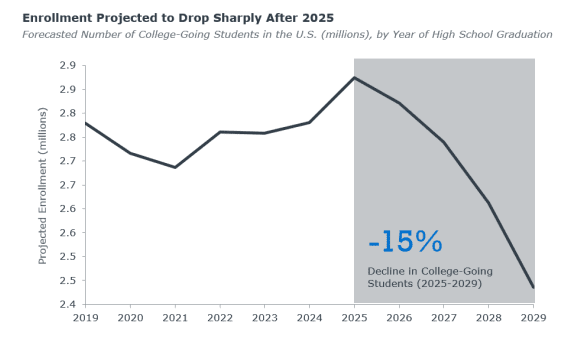
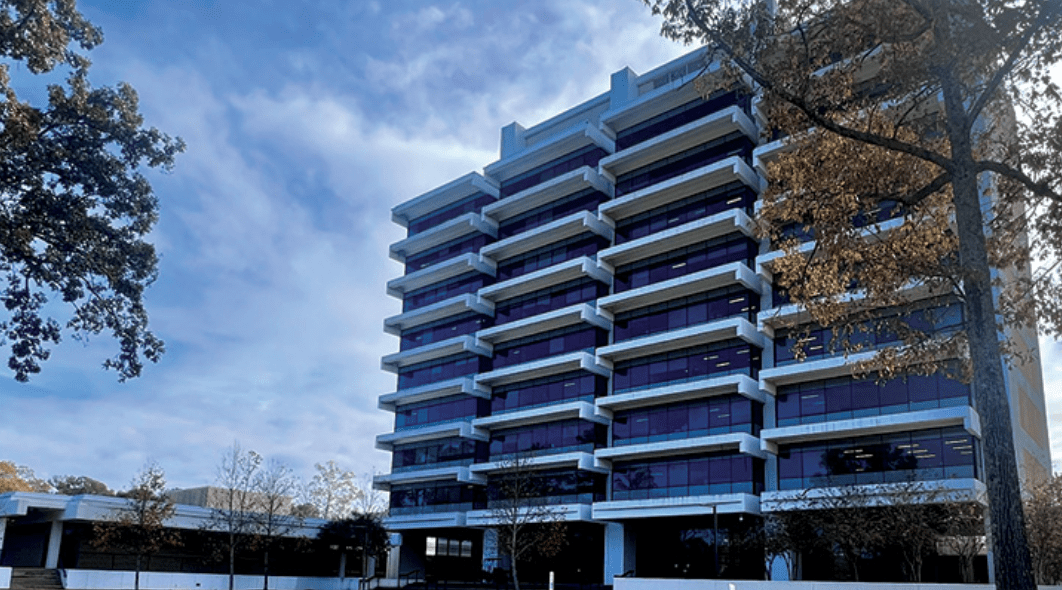
In a report presented to the Legislature by the Mississippi Institutions of Higher Learning in December 2025, it was predicted that by 2050, the nation will see an 11% increase in the age of the nation’s total population but experience a decline in younger populations. Data included in the report, drawn from USA Facts, noted a 1.5% decrease in the population aged 5 to 19 from 2010 to 2022.
As a result, Mississippi is projected to experience the second-largest decline in high school graduates from 2023 to 2041.
“Mississippi, however, faces an overall population and high school graduate decline — up to 26 percent by 2041 — intensifying the national ‘enrollment cliff’ for colleges,” the report outlines.
However, Mississippi’s community colleges and universities are not currently experiencing the effects of the predicted enrollment cliff.
Community College Enrollment
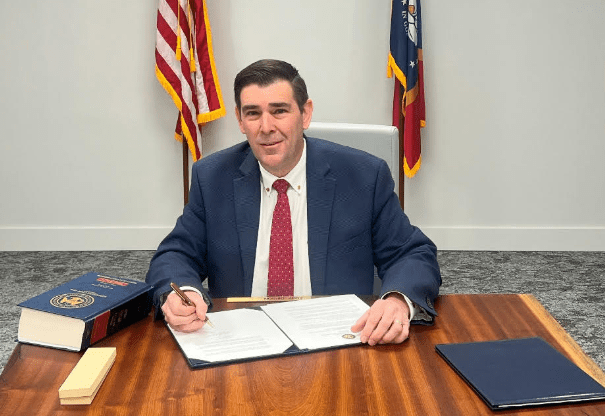
Mississippi Community College Board Executive Director Kell Smith reports overall enrollment has been up over the past two years at the community college level despite the predicted enrollment cliff.
“Our average student is 22 years old in age,” Smith said. “Obviously we serve students that are those traditional high school graduates, but we serve a lot of non-traditional students as well.”
He added that while the enrollment cliff is still anticipated to have an effect on the system, community colleges offer people already in the workforce an opportunity to obtain additional skills and job training to seek a new field – a service that is growing in need as Mississippi sees increased corporate investment in the state.
“We see a lot of folks that come back that may have earned a Bachelor’s degree and get an associate of applied science or a career tech degree to help them go into one of those fields that are so much needed across the state,” Smith said.
University Enrollment
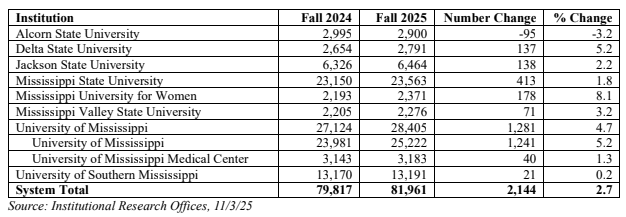
Just like the two-year colleges, enrollment is gaining ground within a majority of Mississippi’s eight public universities.
Only Alcorn State University saw an enrollment decline (3.2%) during the fall 2025 semester compared to the previous year, with Mississippi’s institutions of higher learning seeing an overall 2.7% increase in enrollment.
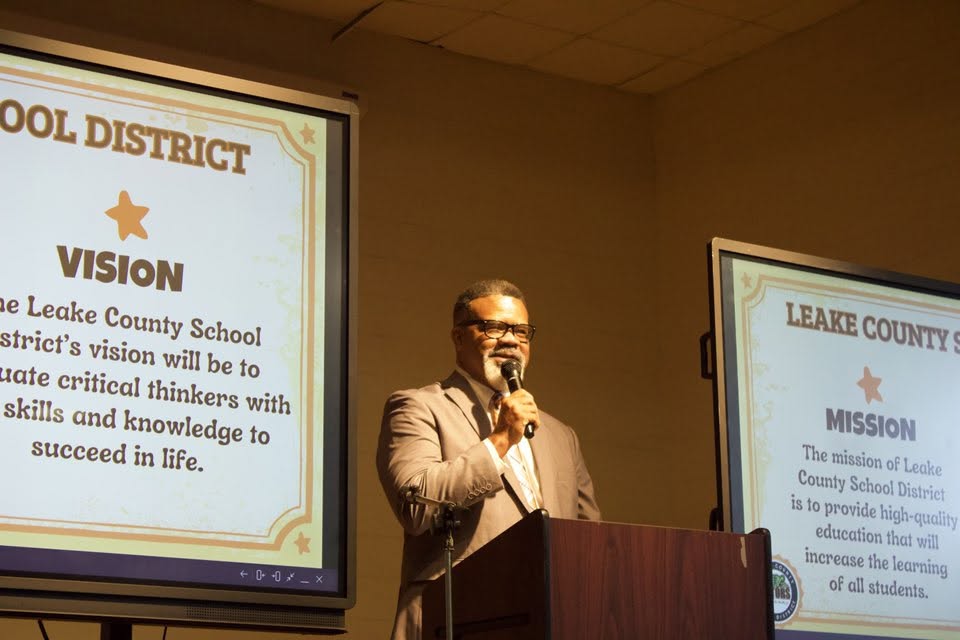
IHL Director of Communications John Sewell said the agency is attempting to negate the predicted enrollment cliff through strengthened marketing and recruitment of out-of-state students. In addition, there is a focus on developing additional online courses.
“Each institution is adapting strategies — focusing on affordability, workforce alignment, and data-driven planning — to sustain enrollment and meet future state workforce needs,” the report described.
Student Housing
Housing needs at the state’s universities is also being addressed, education leaders say.
“Renovations and new construction projects related to student housing are happening across the system, with plans for additional bed space where needed to meet demand,” Sewell described.
For example, last November, the IHL Board approved a public-private partnership between Ole Miss and PRG-Oxford Properties LLC to build additional student housing. The new facility is expected to provide more than 1,200 new beds by the end of next July.
At the state’s community colleges, each campus works at the local level to ensure housing needs are met, as housing needs vary by college campus, Smith said.
Potential for Campus Consolidations
Consolidation of K-12 campuses across the state could be on the agenda in the coming 2027 legislative session. Some lawmakers have also floated the possibility of closing lower performing, lower attended university campuses. Those prior discussions have never led to legislative action.
Within IHL there does not appear to be an appetite to close any campus any time soon.
“Our focus is the success and sustainability of all eight public universities,” Sewell said.
The same is true for community colleges.
“I don’t think there is a need for [consolidation]. Our 15 community colleges are autonomously created and governed,” Smith described. “They’re created by the Legislature and then governed at the local level.”
He added that each community college within Mississippi also responds to the various individual needs in their areas, as most students served by a particular community college live near by.
“What’s needed in one pocket of the state is different than what is needed in another pocket of the state. That could be from the Coast, the Golden Triangle, or the lower six coastal counties to the Pine Belt.”
Smith contends that the design allows those institutions to meet the workforce needs of the students and the region.
Addressing Workforce Needs
Construction jobs are one of several sectors increasing in demand as industries move into Mississippi or expand their current footprint in the state.
Other jobs reported to be in high demand across the state include welders, particularly on the Coast, and nursing across all areas of the Magnolia State.
“Each of our community colleges has a nursing program, but we still need more nurses in the state,” Smith said, adding that community colleges are working to meet the demand for more people to work in industrial maintenance and technology.
The two-year colleges are also poised to assist those who may have left high school prior to obtaining their diploma. Smith estimates there are about 330,000 Mississippians who currently do not have a high school diploma.
“If you’re a high school drop out and you’re looking to upskill to improve your job skills, a community college can put you in that position to be successful so long as you are willing to put in the work,” Smith said. “If we can focus on that population that’ll certainly help negate any kind of enrollment cliff that we may be encountering,” Smith added.
But catering to students without a high school diploma comes with a caveat.
“Those without a high school diploma have a lot of needs. They sometimes have needs when it comes to getting them through the pipeline,” Smith explained. “They may need to have their educational skills brought up to a certain level. They may not have a support system in place that will allow them to go to a community college.”
To stay abreast of the changing workforce needs in the state, the Community College Board works closely with AccelerateMS.
“That’s the number one issue that companies identify when they look to locate to an area is, ‘What’s your available workforce?'” Smith described. “Working with [AccelerateMS Executive Director] Courtney Taylor and her team and the 15 [community] colleges, we’re all pulling in the right direction, hopefully to ensure that the state has the workers needed for all these jobs that are coming to Mississippi.”
At the university level, degree paths are regularly added and deleted based on enrollment and completion rates as well as what the market demands.
Sewell said each university in Mississippi collaborates with state and local economic developers to gain an understanding of the academic programs required to meet the state’s workforce needs.
“New academic programs are regularly presented to the IHL Board of Trustees for consideration, and information about each program includes data on labor demand and salary,” Sewell described.