(Photo from Shutterstock)
- This is the first year Mississippi students were tested under a new standard for kindergarten readiness. In addition, MDE is implementing two new initiatives aimed at improving reading and math skills.
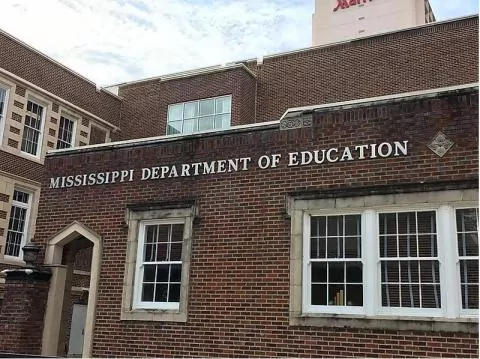
Mississippi’s State Board of Education was informed last week on the most recent Kindergarten Readiness Assessment results as well as received an update on efforts to put the state’s math and adolescent literacy initiatives into action.
Kindergarten Readiness
This is the first year students were tested under a new standard for kindergarten readiness.
Students in the state’s kindergarten classes, Pre-K early learning collaborative programs, state invested Pre-K programs, and other publicly funded Pre-K programs are tested twice per year, in the fall and spring.
Chief Accountability Officer Paula Vanderford said the results for spring 2026 show the statewide score for kindergarteners in the fall of the 2025-2026 school year was 37.07, increasing to the 55.02 percentile in the spring.
Early learning collaborative student scores were 30.52 in the fall and 69.71 in the spring while state invested programs reported student scores of 26.87 in the fall and 66.39 in the spring. Other publicly funded programs reported scores of 26.15 in the fall and 56.13 in the spring.
Vanderford said that since the rigor was increased from the prior year, the scores are not comparable with results from previous years.
Wendy Clemmons, Chief Academic Officer, noted that with the state invested programs testing so closely to the other programs in the state, MDE would like to seek more funding for them.
“Our job is to equip kindergarten and grade one educators with evidence-based instructional practices that are aligned to the science of reading,” Clemmons said.
Through the use of high-quality instructional materials, MDE is working with schools to ensure students are receiving grade level skills in phonics, vocabulary and oral language. When remediation is required, teachers will implement intervention strategies.
Literacy and Math Initiatives
Passage of SB 2294 during the 2026 legislative session means that all students will soon receive instruction in civics, computer sciences and financial literacy. It also means MDE is implementing two new initiatives.
“But the biggest two pieces in 2294 for us is the adolescent literacy initiative and the math initiative that we refer to as M3, Moving Mathematics in Mississippi,” Clemmons explained.
On the literacy front, Mississippi’s proven gains in third grade reading through utilizing instructional practices focused on the science of reading will be extended to the eighth grade.
“We understand that students have a reading gate in third grade,” Clemmons told the Board. “We understand that many of them pass that reading gate, they move into the fourth grade and the supports that we’re able to offer just were not there, as they were in K through 3.”
Students in those grades will be screened three times per school year and reading plans will be established for students with deficiencies. Parents are to be notified within 30 days of a student being identified as deficient. That notification will also include the school’s remediation plan.
Starting in the 2027-2028 school year, each district must have at least one dyslexia therapist or reading therapist for fourth through eighth grades.
Remediation efforts can continue into high school if deficiencies are still noted during the screenings.
“So, that means ninth graders in 27-28, that go in with unresolved deficiencies, there has to be a strong remediation program for those students,” Clemmons said. “The idea here is when those students graduate from high school, they are successful readers.”
The math initiative will entail assigning coaches to teachers in second through sixth grades, along with providing professional development to educators.
Screening for math skills in students in grades K-5 will also take place three times annually, and personalized plans will be established for students in need.
Other Business
During Thursday’s meeting, the Board approved a motion to add two additional Educator-in-Residence positions to help with the implementation of the reading initiative.
“These coaches will be two of the 15 that we spoke about that will provide coaching supports in the science of reading to schools with the lowest performance measures for the past two years,” Clemmons explained.
The agenda item entails a five-year agreement for the two positions and will be funded through nearly $1.1 million in state funding.
Clemmons added that the work of EIR staff will be evaluated annually.
Members also approved motions to reappoint Matt Miller as the Chair of the State Board of Education and Matt Mayo as the Vice Chair.

Jeremy Pittari