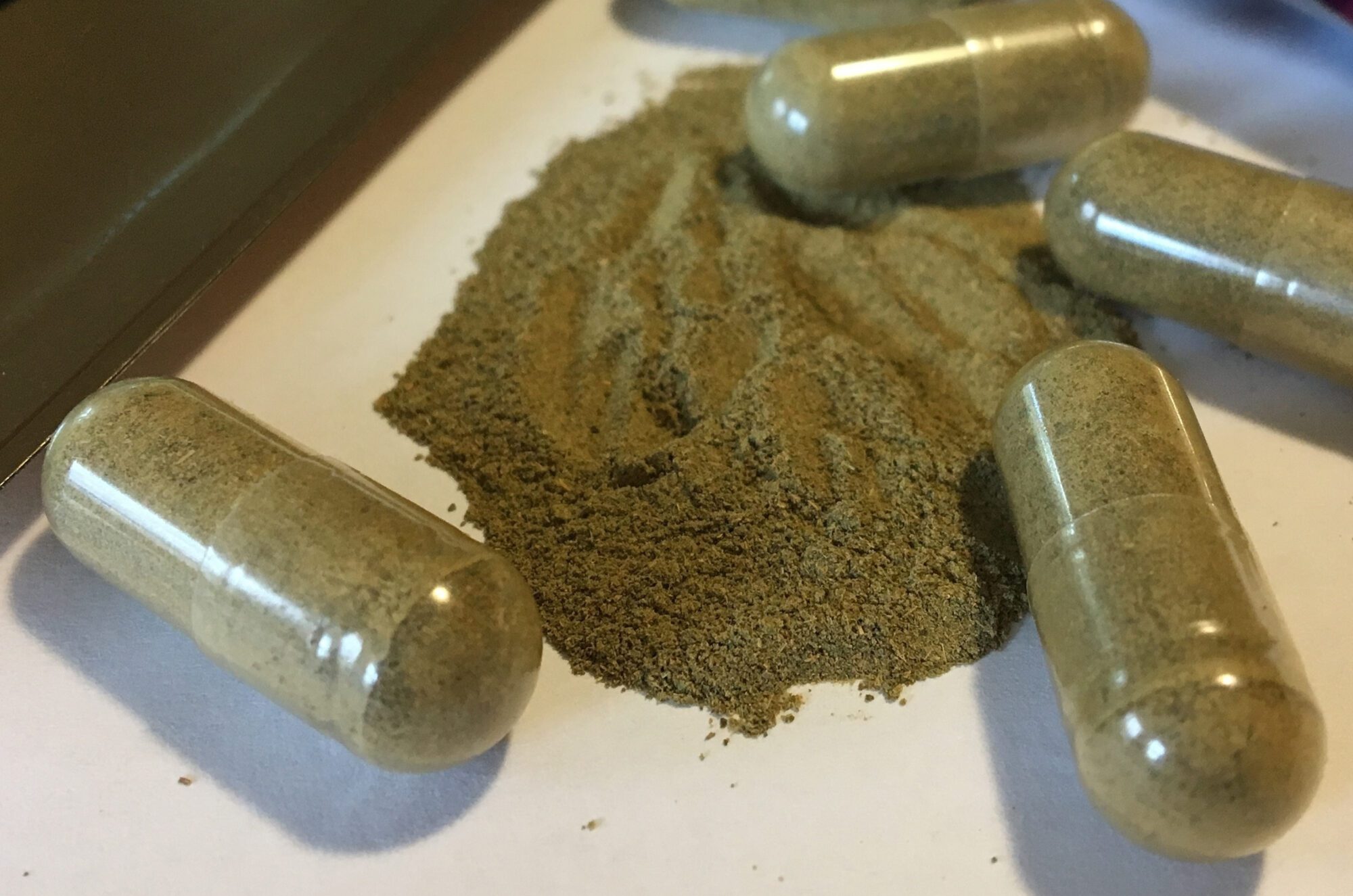
FILE - This Sept. 27, 2017 file photo shows kratom capsules in Albany, N.Y. (AP Photo/Mary Esch, File)
- The Mississippi House Drug Policy Committee heard testimony from law enforcement, the medical community, and advocates for natural leaf forms of kratom this week.
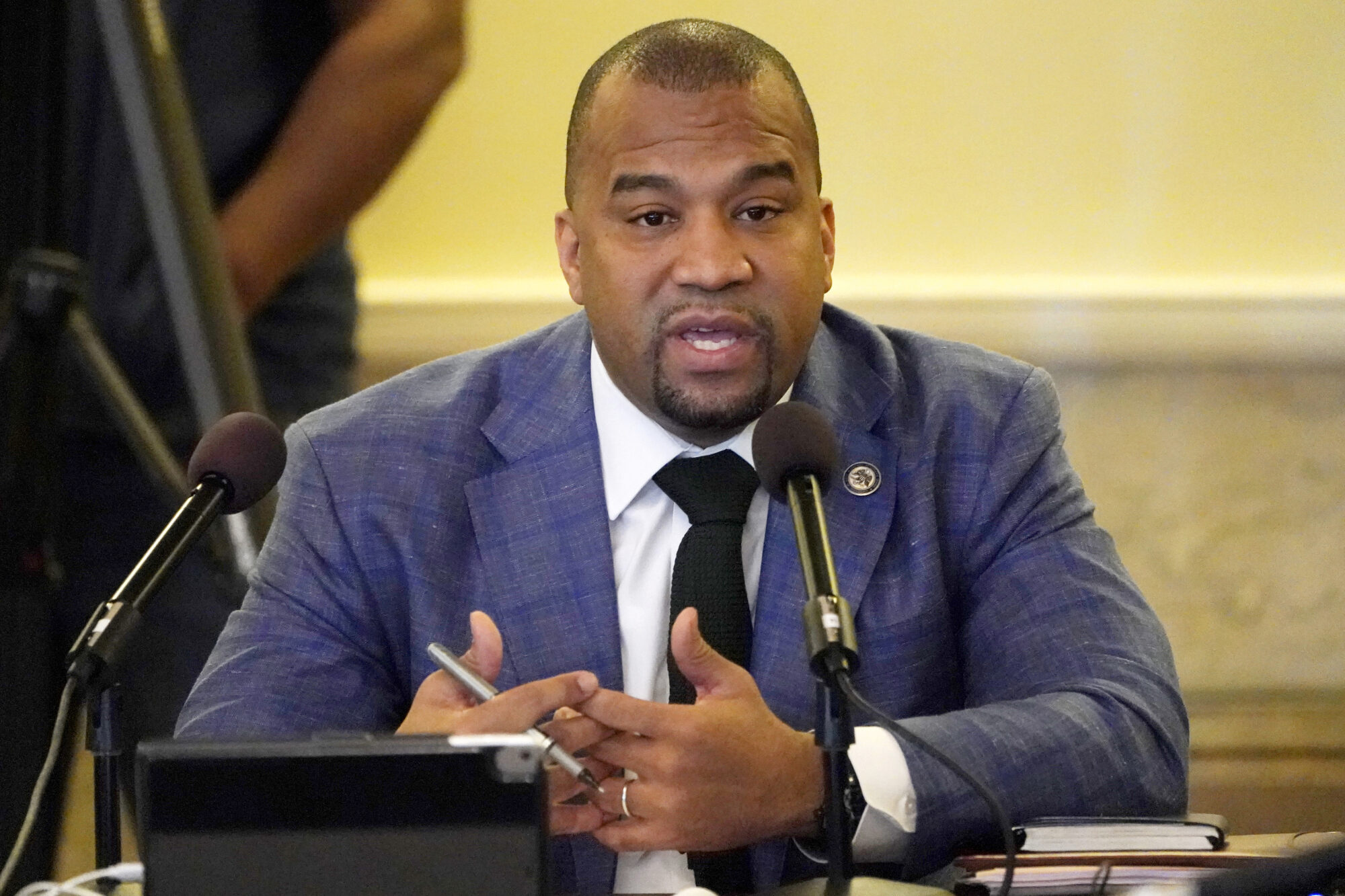
Members of the Mississippi House Drug Policy Committee collected testimony from various professionals and community members on Wednesday as they work toward potential legislation that would establish a ban or increased regulation of products marketed as containing kratom.
Testimony included personal accounts of how the natural “leaf” forms of kratom can be beneficial and how dangerous synthetic compounds of kratom products can be very harmful.
The Oxford incidents
In light of the two separate deaths that occurred in the city of Oxford back in September, where kratom-based products were found at both scenes, the mother of one of the young men advised lawmakers to put universal regulations in place.
Rebecca Strang, mother to the late Robert Strang, said she only knows about kratom because her son’s death is believed to have been caused by the use of a product marketed as kratom.
“I have 44 days of experience with kratom, and that’s because Robert died 44 days ago today,” Rebecca said.
The second death that occurred the same day at a separate location also involved the presence of a synthetic kratom product. That incident involved the death of 18-year-old Aiden Hamilton.
The product where Robert was found contained synthetic forms of kratom were MGM 15, MGM 16 and MGI, which were recently classified as a Schedule I controlled substance by the Drug Enforcement Administration and the Department of Justice back in August. His mother added that the recent classification should have meant all products containing those substance should not have been on the shelf when her son entered the business that day.
“The Smax Mango Breeze that Robert purchased in Oxford on September 20th tested positive for MGM 15, and MGI. My son was dead the next day,” Rebecca described. “Why was it still on the shelf?”
She called for the Legislature to put a ban in place for all forms of kratom and establish laws that allow for more effective enforcement and regulation.
“My son is the tragic example of failed enforcement. If the laws were enforced, Smax Mango Breeze kratom would have never been on the shelf and Robert would still be here today,” Rebecca added.
She demonstrated the ease of which the products can be obtained by bringing two products she purchased not two blocks away from the state Capitol where the hearing was being held. Both products contained at least one of the chemicals now classified as Schedule I.
“How do I have easier access to kratom, a defined opioid, than I do to pseudoephedrine?” Rebecca posited.
Healthcare providers advocate for more regulation
For the past several years, Mississippi’s State Health Officer has called for more regulation of the various products that claim to contain kratom.
When committee chair State Rep. Beth Waldo (R) asked Dr. Daniel Edney what he would like to say, his answer was simple.
“I think you just heard it,” referring to Rebecca’s testimony.
Edney said that while the state has chipped away at the problem, efforts to continually change the molecular make-up of these products has provided manufacturers with loopholes that avoid bans. Further, those chemical changes are increasing the potency. While natural kratom is typically used as a stimulant, higher doses cause effects similar to opioids. The synthetic products sold in convenience stores and vape shops include those higher doses, Edney warned.
“Can we all not agree that at the very least that we must do is get this stuff out of the gas stations and the vape stores?” Edney asked. “How can you defend selling these potentially dangerous products and the setting?”
While kratom products are reported to have come to Mississippi in 2014, it has really been within the last five years that kratom overdoses in toxicology reports have started to escalate, he added.
Edney asked the committee to consider a law that provides his office the ability to place emergency temporary bans on new products as they come out, allowing the Legislature time to enact new laws.
Once those bans are in place there will be a need for care for those who have become addicted. Endey was asked about available services to help people with withdrawals. He advised anyone dealing with chronic pain or withdrawal symptoms to consult their physician.
Some systems are already in place to help those recovering from addiction find treatment. Wendy Bailey, Executive Director of the Department of Mental Health, said those dealing with addiction can call 988 to seek help, go to a community mental health center and/or request a mobile crisis response unit. She said the best treatment for kratom addiction is medical support, withdrawal treatment, and ongoing support to prevent relapses.
Some projects funded with Opioid Settlement Funds aimed at filling in the gaps within the system are also in the works. Bailey suggested continued legislative work to make treatment more accessible and affordable.
Bailey also proposed a public education campaign to inform the public, especially young people, about the addiction potential these products pose. People should even be wary of the products labeled as “natural.”
“Challenging that idea that natural means safe,” Baliey added. “Natural does not always mean safe.”
The challenges of enforcement
Limited law enforcement agency budgets and the ever-changing chemicals used by the manufacturers of the kratom products create a cat and mouse game.
Oxford Police Chief Jeff McCutchen used Robert Strang and Aiden Hamilton as examples as to why the committee should consider removing all kratom products from store shelves.
He also cited a report from the Centers for Disease Control and Prevention that found 14,449 kratom related overdose exposes have occurred from 2015 to 2025, with 3,334 of those incidents occurring in 2025 alone.
“We have to treat these products as a deadly, controlled product,” McCutchen suggested. “It’s what we’re seeing. It’s what’s happening to individuals across our state.”
Enforcement for his department, and any agency, is difficult due to limited funding and the recurring changes to the chemical composition of the products. Not only are there thousands of businesses across the state selling the substances, the products vary. When his investigators suspect a product contains illegal substances, they have to purchase each sample and pay a lab to test it.
“I’m telling you now every product is going to test different,” McCutchen described. “Financially, we can’t do that. We can’t keep up with that in the labs.”
Colonel Phillip Pope, Director of the Mississippi Bureau of Narcotics, also said restricted budgets for testing products and the inability to enforce regulations presents a danger to the state’s residents. Additionally, when a violation is found, the penalty typically includes a fine to the business owner of up to $1,000.
“We can’t build a system where the burden falls primarily on law enforcement to say, ‘You have to repeatedly catch a business selling these dangerous products.’ It’s set up for us to fail. The business has to be held accountable,” McCutchen declared. “We have to have measures in place that are not simply a citation.”
In addition to a ban on all products, McCutchen suggested more severe penalties for violations, including temporary suspension of the business’s license, civil penalties and even suspension of the associated business license or permit. He would also like to see escalated penalties for selling the products to minors.
Pope also called for an outright ban on all kratom products, describing them as being just as dangerous as the methamphetamine and spice products that caused epidemics in the past.
Advocacy to protect access to botanical leaf
There were arguments in support of natural, leaf forms of kratom, citing their beneficial qualities.
Sheldon Bradshaw with Botanicals for Better Health and Wellness said synthetic forms of kratom are giving the leaf form of the plant a bad name. Kratom, he explained, is related to the coffee plant. While natural forms of kratom have between 0.003 to 0.004 percent of the active compound mitragynine, synthetic forms can be as high as 98 percent. Just as products that have high levels caffeine should not be marketed as coffee, he contends synthetic forms of kratom should not be marketed as the safer natural, leaf, products.
“The natural, botanical, has beneficial effects with a relatively low potential for harm,” Bradshaw said. “Now I want to be clear, there are risks associated with botanicals and our organization strongly encourages state and local governments to put in place regulations and guardrails to protect consumers.”
While his organization supports bans on the synthetic products, Bradshaw would like to avoid an outright ban on all kratom.
Sherry Owens, a Mississippi native, told the committee about the benefits she has seen from kratom use over the past nine years. She started using the natural form of the products after changes to her previous pain medications were made. She needs pain medications due to a car accident and a childhood scoliosis diagnosis. As a result, through most of her life she said she has dealt with pain. She was previously prescribed valium, mepregan, and vicaprofin, medications that worked well for her pain management.
“I took those three pills for 25 years,” Owens added.
When her dosages were cut in half or otherwise adjusted, she was put on other medications that only made her sick and gain weight. Her husband suggested kratom, and ever since she has been able to lose weight, be more active and get off the medications that made her sick.
“I don’t take any medication anymore now,” Owens said.
Owens said she only purchases legally tested kratom products to ensure safety. Owens asked the committee to focus any bans on the synthetic products and allow continued access to the natural forms of kratom.
“I don’t want to have to go backwards,” Owens said. “No one even knew what kratom was until this synthetic stuff started coming out in these gas stations. That crap is not kratom. Kratom leaf is a precious leaf. It’s a gift from God himself.”
Medical community impacts
Extensive testing of the products demonstrates that labeling is currently ineffective.
Dr. Icklas A. Khan, the director of National Center for Natural Products, said his team has been testing products in the state since kratom was first found on the shelves in 2014. That testing showed processes are being used to increase the potency of the natural plant by 50 to 100 times, creating dangerous designer drugs that have the potential for abuse.
“This is not about any plant, it’s about selling these designer drugs,” Khan described. “They used to be hidden, now they found a very accessible route to display it in different colors and different flavors in gas stations and every where else.”
Since these substances are not scheduled, typical drug tests administered in a hospital emergency room can’t detect them, Dr. Damon Darsey, a board certified emergency room doctor told the committee. That creates an issue for treating overdoses, since medical personnel don’t know what chemicals are in that patient’s system. Darsey speculates the actual number of overdoses related to synthetic kratom products is underestimated as result.
He described one recent instance where a woman ingested a product called “Opia.”
“When we got to the lady, she was hallucinating and seeing dinosaurs in her home, naked, and had a blood pressure that was unattainable,” Darsey described. “In rural Mississippi we have no idea what folks are taking.”
The other issue is Narcan, the substance typically administered to bring a person out of an opioid overdose, has no effect on these synthetic kratom products, Darsey added.
Suggested avenue for continued, safe kratom sales
While most speakers supported an outright ban on all kratom products, Bradshaw suggested establishing a registry to identify those that sell whole leaf, crushed or powdered leaf, or full spectrum extract products, which he says are safer.
In such a system, the authorized retailers would have to pay a registration fee. They would also be required to provide proof of product testing from third party lab demonstrating safety. Testing would look for the presence of heavy metals and pesticides. All products would have to be made in an FDA inspected facility and include proper labeling and warnings about potential dangers when used with other botanicals or prescription drugs. Warnings should also advise women against the use of kratom when pregnant or lactating. Bradshaw also suggested regulations that prevent access and use of kratom by minors.
Labeling should include specific information about safe doses and include a QR code consumers can scan to see all relevant data and testing methods, he said.
Bradshaw argued that such a system would make the job of law enforcement agencies easier since they would no longer have to test each product.