Lawmakers question Rural Health Transformation director on program’s transparency
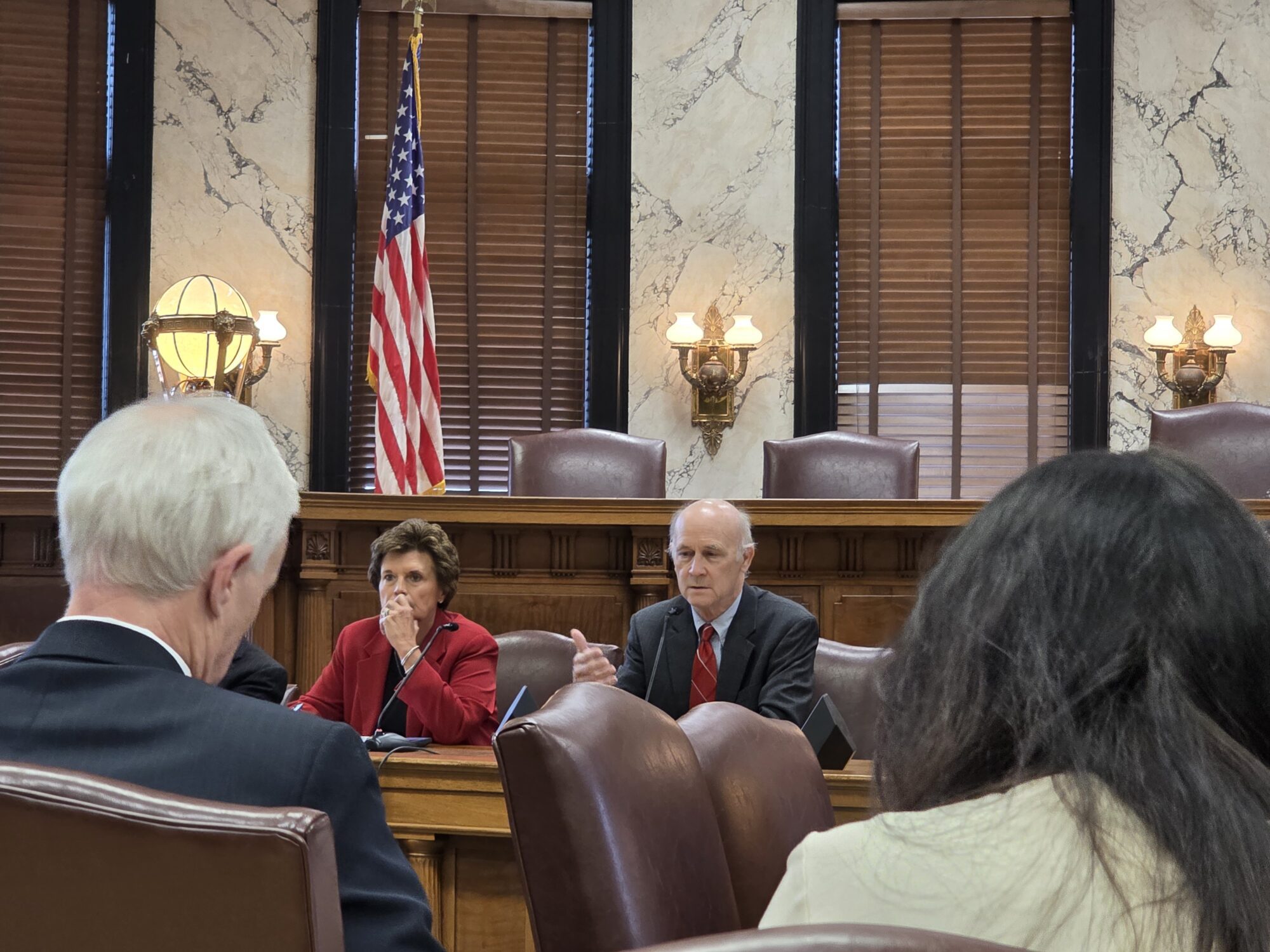
From left, Senators Rita Parks (R) and Hob Bryan (D) discuss bills during the 2026 legislative session. (Photo by Jeremy Pittari | Magnolia Tribune)
- Mississippi has nearly $205 million for the first budget period of a five-year grant through the federal Rural Health Transformation Program established in the One Big Beautiful Bill.
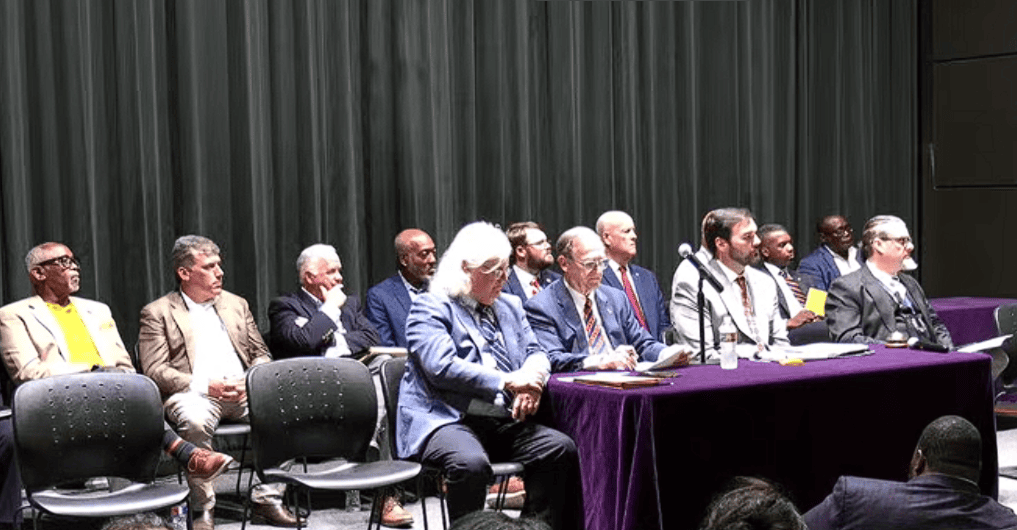
Claims of a lack of transparency in Mississippi’s Rural Health Transformation Program were addressed during a joint meeting held by members of the House and Senate on Thursday.
Last week, the Director of Health Equity for the State Health and Value Strategies at Princeton University told lawmakers that Mississippi was the least transparent of all 50 states during the implementation of the nationwide effort to address rural health disparities. One of the issues noted was the lack of public input during the initial phase of the program.
READ MORE: Joint legislative committee discusses Mississippi’s Rural Health Transformation Program
Mississippi is expected to receive close to $1 billion of federal funding over five years in the program created through the passage of the federal One Big Beautiful Bill in 2025.
This year, Mississippi has nearly $205 million to dole out to qualifying programs. The application process to approve those programs is now open, with only a few short months to identify and approve the submissions.
On Thursday, Richard Grimes, Project Director with the Mississippi Rural Health Transformation Office, attempted to give a presentation to a joint committee of state senators and representatives on where the program stands as well as the office’s efforts to distribute this year’s allocation of grants funds provided by the federal government.
State Senator Hob Bryan (D) interjected during Grimes’ remarks, requesting to skip the scripted presentation in favor of gathering more details on the perceived lack of transparency that was noted by the presenters from Princeton.
As previously reported, earlier this year, Governor Tate Reeves (R) vetoed a bill authored by state Senator Hob Bryan (D) – SB 2477 – that sought to require a competitive bidding process for the establishment of a state health information exchange, restricting the use of the state’s emergency purchase procedure. It would have also required every agency that awards grants or funds derived from the Rural Health Transformation Program to submit quarterly spending reports to the Legislature.
Governor Reeves said that while no doubt well intentioned, SB 2477 would have significantly slowed down the awarding of RHTP federal funds “by imposing redundant and unnecessary requirements on subgrants thereby putting $205.9 million in already-approved funding at immediate risk of clawback.”
In Thursday’s hearing, Senator Bryan described his personal experiences with issues in finding information on the program, such as on the web portal established in July 2025 to gather information from stakeholders within each county. Bryan said the portal was found to only receive responses from half of the state’s 82 counties, in part due to a lack of sufficient public notices of the portal’s presence.
“That means half the counties in the state, whom I assume are rural under any circumstance, had no input at all into this July 2025 portal,” the senator said.
He also described the unintuitive nature of the current RHTP website when he was seeking information about a future public meeting to be held in Pearl.
“If you know the secret code you can find it on the website, and I think that’s a metaphor for where we are,” Bryan said of his experience trying to navigate the web portal.
The senator also lamented the private, invitation only, nature of a meeting held in Flowood by Governor Reeves during the initial formation of Mississippi’s program.
“If you were invited to the meeting in Flowood, where there was no public access, you could find out information,” Bryan said.
Grimes, for his part, said he only recently became involved in the program, starting in his current position in May, a month after a budget was officially established. As such, Grimes said he could not speak about the issues with the portal or “invitation only” meetings.
He did add that the Centers for Medicare and Medicaid Services (CMS) has restrictions on when some information can be disseminated to the public, namely details concerning the amount of funding allocated to a particular initiative. Grimes said that is to ensure that the best and lowest bids are received.
“Letting all respondents know we got $100 for this project, they’re going to bid $100,” Grimes explained.
Totals for all awarded projects will be made public after they are awarded, he added.
State Rep. Samuel Creekmore said that while Reeves vetoed Bryan’s bill, the governor has indicated he intends to use portions of the bill in the ongoing implementation to ensure the public is up to date. He then asked Grimes how he plans to increase transparency.
“I can tell you is that we’re under the terms and conditions of a cooperative agreement and when CMS approves that we’ll turn it over to the Legislature as fast as we can,” Grimes explained.
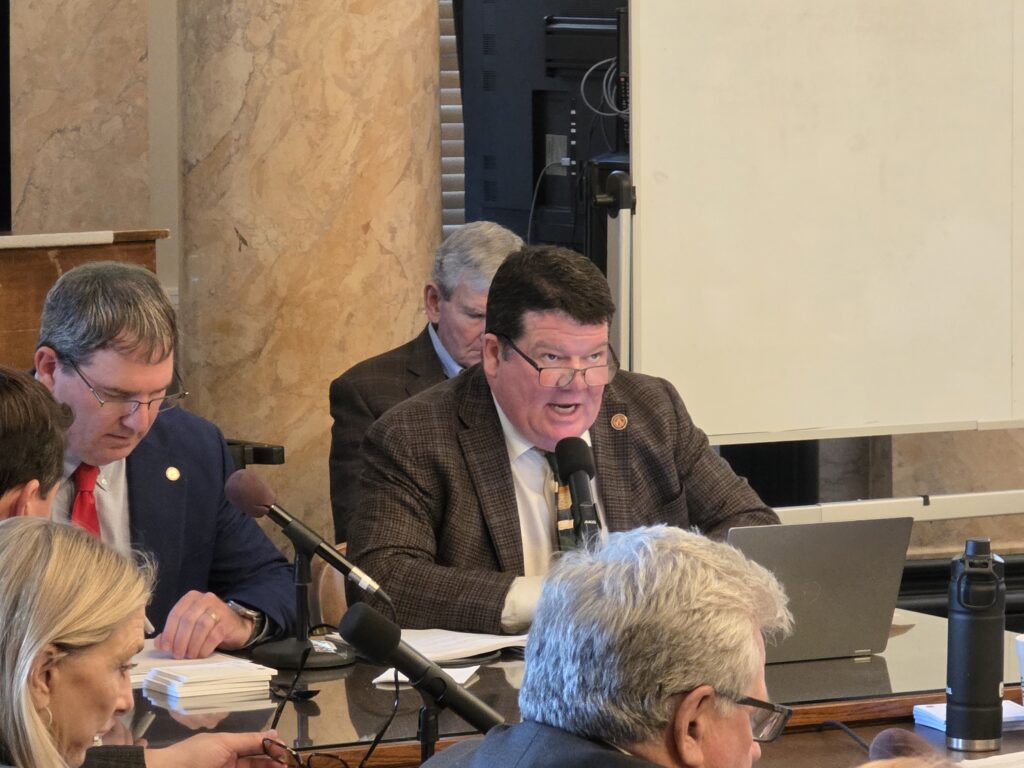
Creekmore also pressed for Grimes’ take on the claims made during last week’s meeting.
“Now, it’s our understanding that we’re one of two states that this program’s run by the executive branch, is that your understanding?” Creekmore asked.
Grimes said the claim is “semantics,” citing the map provided in the Princeton presentation which shows a majority of states set the program up under executive branches.
“I’d say probably three quarters are run by the Department of Health, the Department of Medicaid, which are executive branches,” Grimes said.
When asked about how much of the funding will go to staffing, Grimes explained he is currently the only employee within the Mississippi Rural Health Transformation Program Office, but he has been told he can hire an accounting clerk and a part-time attorney.
However, Grimes said he will not be the sole decision maker on who gets the funding. The aim is to have a competitive bidding process where people can submit ideas to address healthcare roadblocks in rural areas.
Nearly every provider in the state is eligible to receive funding, but applications do have restrictions. For instance, the money cannot be used to build new facilities or pay for care that is currently covered under Medicaid or Medicare. Funding will be provided on a reimbursement basis, meaning there must be a demonstration of expenses incurred to receive the monies.
Additionally, approved programs must demonstrate long-term sustainability once federal funding ends.
“Sustainability is part of every dollar that’s supposed to be granted. How we measure that right now is still in the works but there is a sustainability component and this program is not to plug holes, it’s to transform care,” Grimes added.
With workforce development being an aspect of the program’s plan, Rep. Creekmore asked if a program offered through Blue Mountain College to produce nurses within a year would be eligible.
Grimes said workforce initiatives have not been determined as of yet but told lawmakers that AccelerateMS is currently in the process of collecting survey information to assist moving forward.
“It’s a short survey asking what are the issues in keeping and retaining people, finding people, education levels, those kinds of things,” Grimes said.
To learn more about the RHTP or applying for funding, visit here.

Jeremy Pittari