- The Windsor ruins remained in the family until 1974, when the 2.1 acres containing the skeletal classic architecture were donated to the state of Mississippi.
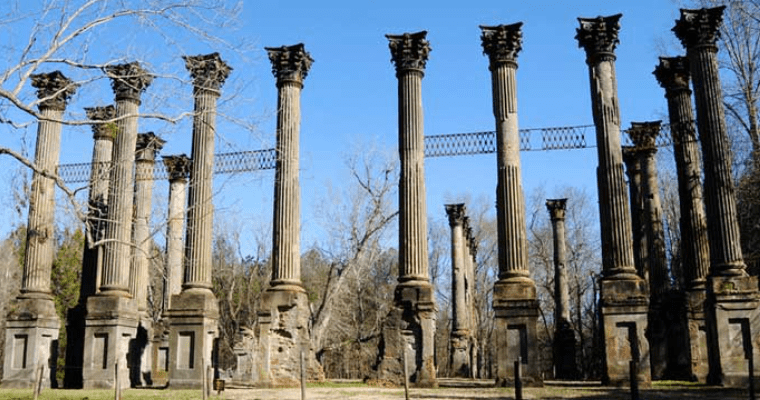
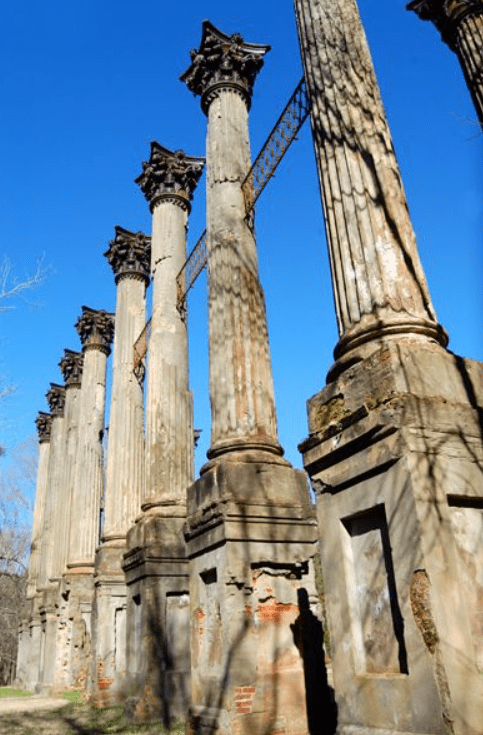
Like a lonely outcast or the final scene in a tragic movie, the towering, decaying columns of Mississippi’s once grand Windsor mansion cast their shadows across a deserted landscape populated by huge Live Oaks, Cedars, and Magnolia trees.
The 23 remaining columns stand proudly and stoically year after year, as tourists stop by to catch a glimpse and are captivated by the haunting story behind the ruins. Located 12 miles from Port Gibson on Highway 552, the picturesque site is listed on the National Register of Historic Places and is maintained by the Mississippi Department of Archives and History.
Smith Coffee Daniel II, the man who envisioned Windsor, had become a wealthy cotton planter by the time he was 30. During the decade preceding the Civil War, he owned extensive acreage of prime farmland in Mississippi, Louisiana, and Arkansas. He also owned more than 200 slaves.
In 1859, he spared no expense in building a palatial mansion for his wife, Catherine, and their seven children. The site overlooked the Mississippi River in the distance. With a rooftop observatory, Daniel could watch the river traffic—the equivalent of the busiest interstate in the country today. The home had four stories, 17,000 square feet, and 25 rooms, each with a marble fireplace fronted by marble mantels. There were eight chimneys. The home also featured bathrooms, which were unheard of at the time, supplied with water from a tank installed in the attic.
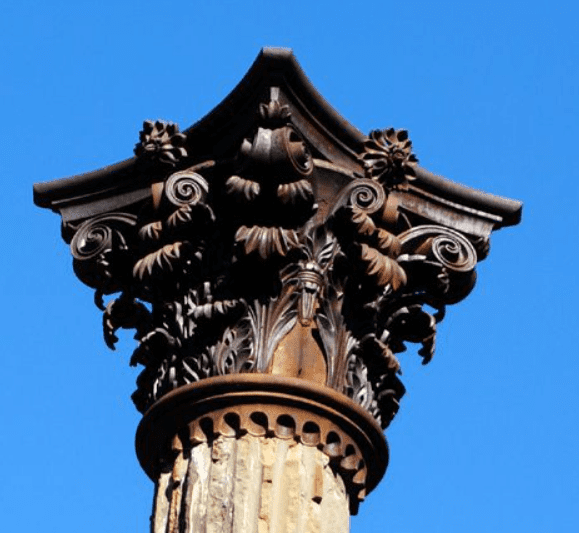
Local architect David Shroder designed and supervised the two-year project. He brought in craftsmen from New England and Europe who fashioned exquisite woodwork and elaborate masonry. The bricks for the 29 45-foot fluted Greek columns were formed and fired in kilns on the property by slave labor. The columns were then covered with mortar and plaster. They sat atop 10-foot-tall square stone bases and were adorned with ornate capitals just below the third-story roofline. The ground floor, considered the basement, housed a school room, doctor’s office, dairy, commissary, and storage rooms. Four cast-iron stairways led from the ground to the second-floor verandas, which were actually the family living space. The staircases were manufactured in St. Louis and shipped down the river to Bruinsberg, a once-flourishing port in Claiborne County that disappeared completely after the Civil War.
The total cost of the mansion was $175,000 in 1861. Today’s comps would exceed $6,000,000.
Mr. Smith Coffee Daniel II lived in his dream home for one week. He contracted Yellow Fever from a mosquito bite and died on April 12, 1861, the very day the Battle of Fort Sumter marked the official start of the Civil War. Daniel was 34, and his beloved Catherine was pregnant with their seventh child.
The war did not immediately impact the family at Windsor. Confederate officers in and around Port Gibson frequently used the Windsor observatory to monitor Union ships along the river and to signal alerts to troops further up the river. It was not until Ulysses S. Grant’s stealthy strategic plan to approach Vicksburg, the “Gibraltar of the Confederacy,” from the South that Windsor saw Union troops on its doorsteps.
Catherine exemplified remarkable resilience, maintaining her family and her late husband’s plantations despite adversity. Whether through strength or denial, she continued to host social dinners and potlucks. The observatory became a hub for signaling neighbors to join these gatherings.
Over time, Union soldiers became aware of the communications from Catherine Daniel’s observatory.
On one festive evening, amidst singing, dancing, and in the presence of several Confederate officers, a servant admitted a few strangers into the parlor. The strangers were Union soldiers in plain clothes who promptly arrested three Confederates and marched them off to the garrison, but not before being attacked viciously by fists and fingernails of the Southern ladies at the party.
After that evening, Ulysses Grant placed Union soldiers at Windsor Plantation as permanent guards. The Yanks now had complete control of the observatory and were able to use it to their advantage in their advance toward Vicksburg.
Whether it was due to Catherine Daniel’s charisma or a measure of grace on the part of the Yankees, I do not know, but the Daniel family was allowed to stay at Windsor even as it was occupied by Union troops. Catherine and her children lived a fairly normal existence on the third floor for the rest of the war.
During the Battle of Port Gibson in May 1863, the basement served briefly as a hospital for Union soldiers. After a Union soldier was killed in the mansion doorway, General Grant, angered by the incident, ordered the mansion to be burned. Catherine intervened, pleading with the soldiers to spare her home and reminding them of her care for their comrades. Her efforts saved Windsor from destruction.
The regal mansion survived the war. As General Grant’s and General Sherman’s troops ravaged many of Mississippi’s beautiful homes, Windsor — perhaps the finest of all — was spared.
Catherine Daniell survived it all, too. Long after the Yankees had departed and the South was licking its wounds, Catherine was still holding on to her role as the quintessential Southern matriarch and mistress of the plantation.
On a chilly February day in 1890, Catherine was making preparations for a dinner party that evening. She was also making a few overdue repairs to Windsor. The stories of what happened differ. Whether it was a careless workman or a house guest, the result was the same. Catherine returned from a morning trip to the post office to find her beautiful home in flames. She watched for hours as her splendid legacy evaporated before her eyes.
All of its magnificent furniture and costly heirlooms were destroyed, and the newspaper reported that there was no insurance on anything.
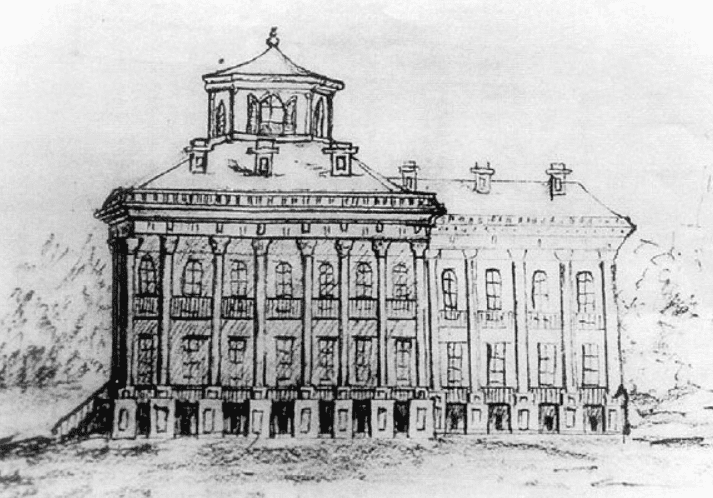
For years, there were no renderings—no photos—of the mansion. Everyone who came to visit the ruins could only imagine its grandeur through legend and the massive columns that hinted at what had once been. In 1993, a sketch was discovered in a Union soldier’s diary in the Ohio Archives in Columbus. Lieutenant Henry Otis Dwight had stopped to sketch the mansion as he passed by in the spring of 1863. His 130-year-old drawing became a much-appreciated, long-overdue answer to many questions about the Windsor mansion.
The Windsor ruins remained in the family until 1974, when the 2.1 acres containing the skeletal classic architecture were donated to the state of Mississippi. The site served as a backdrop in two popular movies: Raintree County (1957) starring Elizabeth Taylor and Ghosts of Mississippi (1996) starring Alec Baldwin, Whoopi Goldberg, and James Woods.

Marilyn Tinnin