- Important state and national stories, market and business news, sports and entertainment, delivered in quick-hit fashion to start your day informed.
In Mississippi
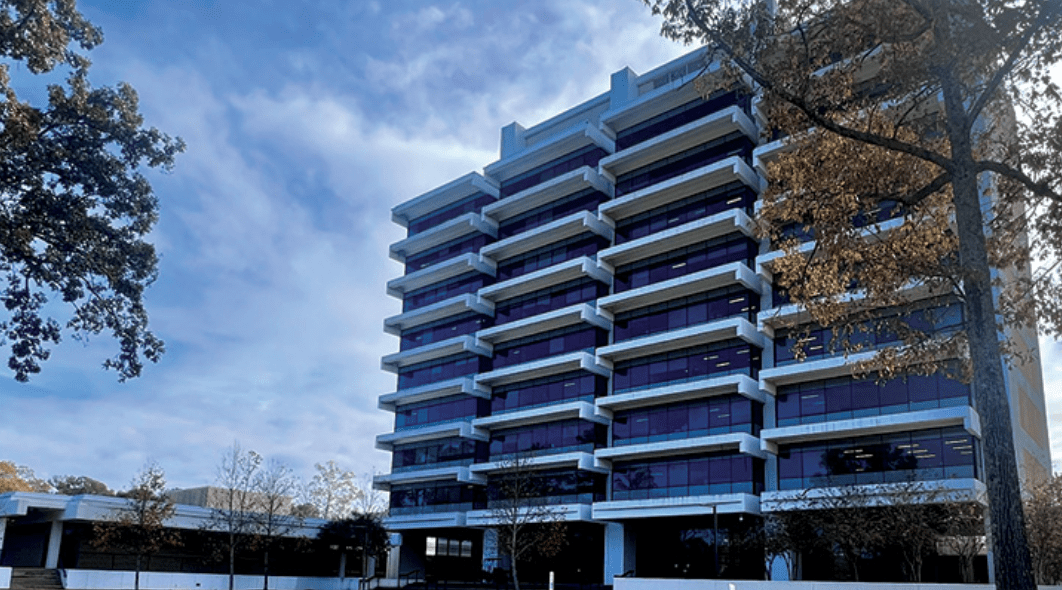
Southern Miss drives $1.3 billion economic impact

The University of Southern Mississippi generated an estimated $1.3 billion in total economic impact in fiscal year 2025, according to a newly released study, reinforcing its role as a key contributor to Mississippi’s economy.
The report outlines the university’s economic contributions through operations, student and visitor spending, capital investment and alumni outcomes. Altogether, these activities supported approximately 10,245 jobs statewide and generated $438 million in labor income.
“Southern Miss is transforming lives through education while strengthening Mississippi’s economy in tangible and lasting ways,” said Southern Miss President Dr. Joe Paul. “This report highlights the impact our university has on communities throughout the state and reflects the collective contributions of our students, faculty, staff and alumni.”
Conducted by the Trent Lott National Center for Economic Development and Entrepreneurship, the study highlights the university’s role as both a major employer and a catalyst for sustained economic growth. Southern Miss directly employs 4,469 faculty and staff, providing stable, high-quality careers that support families and communities across the region.
National News & Foreign Policy
1. Polls still favor Democrats ahead of House midterm elections

According to The Hill, “Democrats are still in the driver’s seat toward winning back control of the House, despite suffering a major blow in Virginia on Friday and at least three GOP-controlled Southern states scrambling to redraw their midterm maps.”
“Democrats have led in the generic congressional ballot for months, and their lead has gotten somewhat more comfortable recently. They currently lead Republicans in the Decision Desk HQ (DDHQ) polling average by more than 5 points, a slight drop from the 6-point lead they had a week ago,” The Hill reported. “An analysis from The New York Times found Democrats would need to win the popular vote by at least 2.5 points in November to win a House majority. If the southern states of Alabama, Louisiana and South Carolina go forward with redrawing their congressional lines to eliminate Democratic-held seats, that would increase to 3.9 points.”
The Hill continued, “The median district likely to determine the House majority is currently rated a toss-up in Cook Political Report’s breakdown of the contests.”
2. Senators urge Trump to move forward on Taiwan arms sale
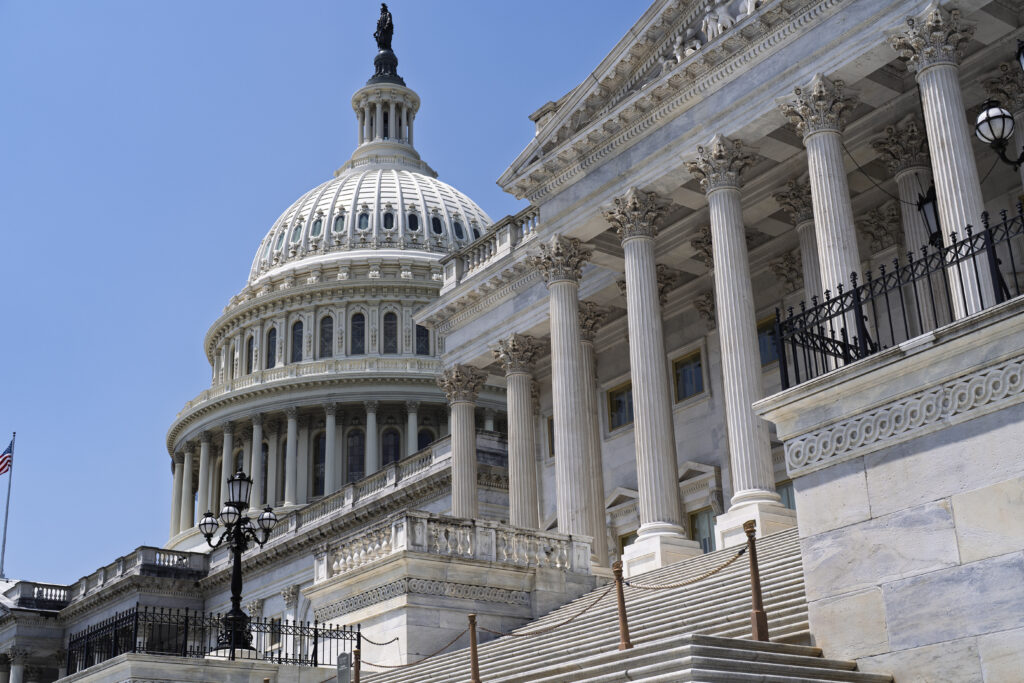
The New York Times reports that a bipartisan group of senators “is pressing President Trump to move ahead with a long-delayed $14 billion weapons package for Taiwan, a critical test of the administration’s commitment to the island ahead of Mr. Trump’s meeting with President Xi Jinping of China later this week.”
“In a letter sent on Friday, the lawmakers urged the president to formally notify Congress of the arms package and argued that Taipei’s recent approval of a new military spending plan removed any remaining rationale for delay,” NYT reported. “Senior lawmakers offered early approval to the package in January, but it has stalled in the State Department for months, raising broader questions about the administration’s approach to Taiwan and its effort to recalibrate relations with Beijing.”
NYT further reported, “Administration officials have told some involved in the approval of the sale that the White House directed the hold to ensure that Mr. Trump had a successful meeting with Mr. Xi.”
Sports
Mixed bag for Big 3 over weekend

No. 11 Mississippi State, No. 12 Southern Miss and No. 20 Ole Miss are winding down the college baseball regular season. This past weekend was a mixed bag for the state’s Big 3. Here is a roundup of the weekend games:
- Mississippi State lost 2 out of 3 to No. 6 Auburn. The Bulldogs (38-14) won the Thursday game before dropping the next two on Friday and Saturday. Mississippi State now heads to Texas A&M this week to close out the regular season.
- Southern Miss swept James Madison in Virginia. The Golden Eagles (37-14) return to action for their final series of the regular season on Thursday at home against Georgia Southern.
- Ole Miss won 2 out of 3 over No. 9 Texas A&M in Oxford. The Rebels (33-18) won the Friday game and then dropped the first of two games on Saturday before bouncing back Saturday night. Ole Miss hosts UT-Martin on Tuesday and then plays at Alabama to end the regular season this coming weekend.
Markets & Business
1. Futures ‘relatively unchanged’ to open week

CNBC reports that stock futures were “relatively unchanged on Monday, following a winning week on Wall Street, as oil prices jumped after President Donald Trump rejected Iran’s latest proposal to end the war.”
“Futures tied to the Dow Jones Industrial Average fell 63 points, or 0.1%. S&P 500 futures hovered around the flatline, while Nasdaq 100 futures rose 0.1%, supported by a rise in Micron Technology shares as well as fellow chip stock Advanced Micro Devices as the memory chip rally continues,” CNBC reported. “Sunday’s moves come after the S&P 500 and Nasdaq Composite rallied more than 2% and 4%, respectively, last week. Both indexes recorded their sixth-straight winning weeks — a first for each since 2024.”
CNBC noted, “The Dow rose 0.2% for the week, notching its fifth week of gains out of the last six.”
2. Produce prices rising as oil costs rise

As the Wall Street Journal reports, “Produce costs were already heading north when the Strait of Hormuz’s closure in March sent a shock through energy markets. Prices of fruits and vegetables rose more than 2% during February and March after ticking up less than 1% throughout 2025.”
“The March producer-price index, which measures the costs that food makers pay, indicated that fuel prices might be starting to eat into wholesalers’ margins,” WSJ reported. “Michigan State University food economist David Ortega said fruits and vegetables tend to feel some of the earliest effects of surges in fuel prices since they often have to travel long distances in a hurry, in temperature-controlled environments.”
WSJ added, “Energy, storage and transportation costs make up roughly 12% of the price of a vegetable, for example, compared with less than 8% for snacks and bakery products.”