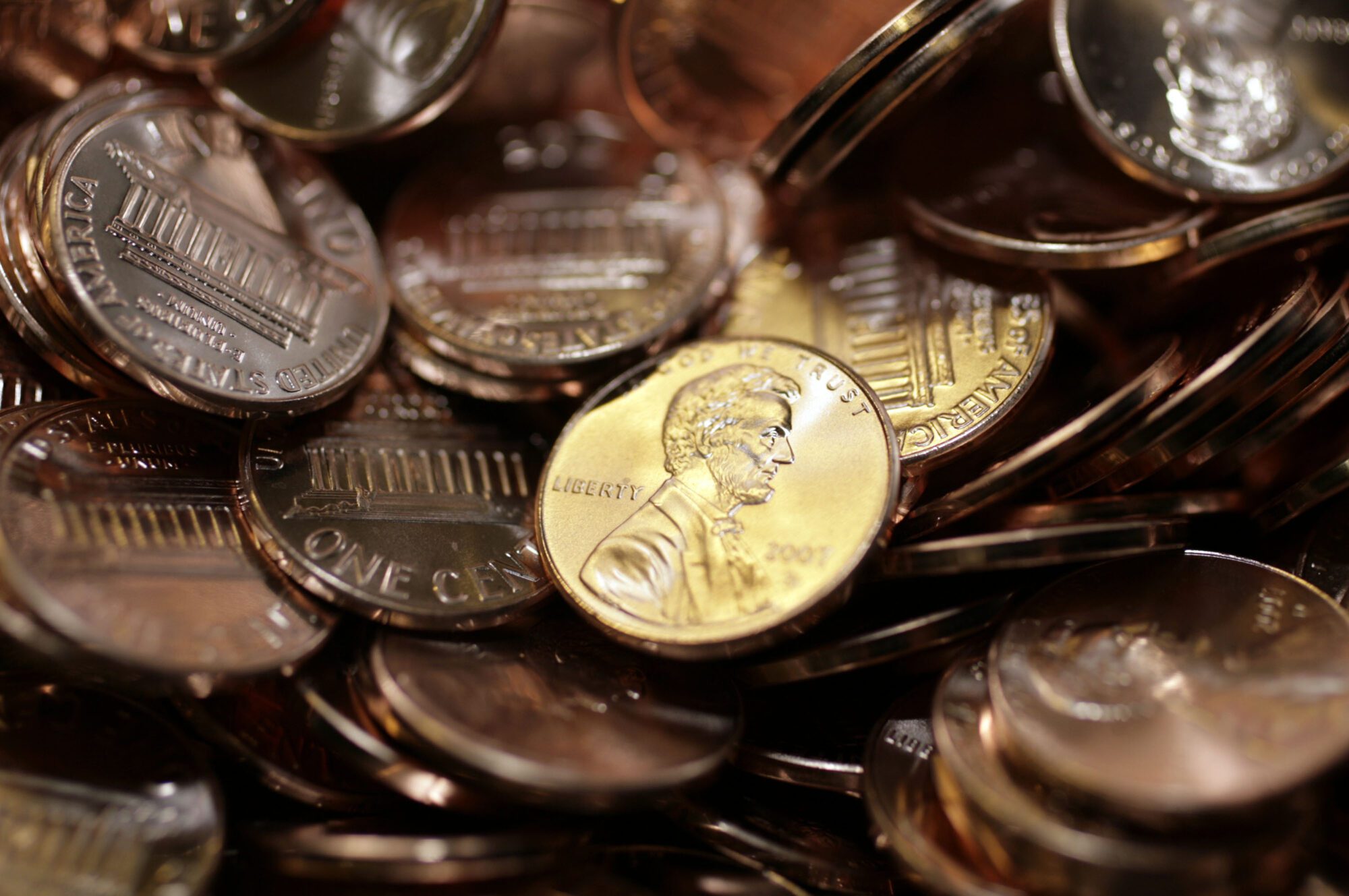
FILE - Freshly-made pennies sit in a bin at the U.S. Mint in Denver on Aug. 15, 2007. (AP Photo/David Zalubowski, File)
- With the penny no longer in production, State Senator Johnny DuPree has filed a bill to outline how cash transactions should be handled.
The U.S. Mint ceased production of pennies in November 2025 after an order from President Donald Trump (R) to do so. Trump said the 1-cent coin was “wasteful” as it costs more than double its value to produce.
Since then, signs across Mississippi have popped up in retail stores notifying cash customers that they will be rounding to the nearest increment of five cents.
Critics have questioned the rounding by retailers, as they say it equates to higher prices even if by a few cents. Yet retailers say they are left with little direction otherwise given the shortage of pennies.
In Mississippi, newly seated State Senator Johnny DuPree (D) has filed a bill in hopes of providing such guidance.
SB 2680, authored by DuPree, outlines how cash customers and retailers are to round to the nearest five cents:
- If the resulting sum ends in One Cent (1¢), Two Cents (2¢), Six Cents (6¢) or Seven Cents (7¢), the total should be rounded down to the nearest amount divisible by five (5) for
those individuals seeking to pay with legal tender.
- If the resulting sum ends in Three Cents (3¢), Four Cents (4¢), Eight Cents (8¢) or Nine Cents (9¢), the total should be rounded up to the nearest amount divisible by five (5) for those individuals seeking to pay with legal tender.
The legislation notes that this rounding is solely for cash transactions and would not affect payments made “by any demand or negotiable instrument, electronic fund transfer, money order, credit card, debit card, electronic payment or other like instrument.”
In addition, any tax imposed by state or municipal taxing authorities would not be affected “by gains or losses resulting from rounding.”

DuPree’s legislation has been referred to the Senate Business and Financial Institutions Committee for consideration. If passed, the measure would go into effect July 1.
As previously reported, by ending the production of the penny, the U.S. Mint projects that in the 2026 fiscal year it would save $66 million as well as allow for “identifying process improvements and cost reductions across other spending categories” such as telecommunications, contract services, and printing, among others.
Ceasing penny production has long been bantered about in Washington D.C. Former President Barrack Obama even noted the waste from producing the 1-cent coin during his time in the White House.
Globally, other countries such as Canada, Australia, and Sweden have also stopped minting the coins.

Frank Corder