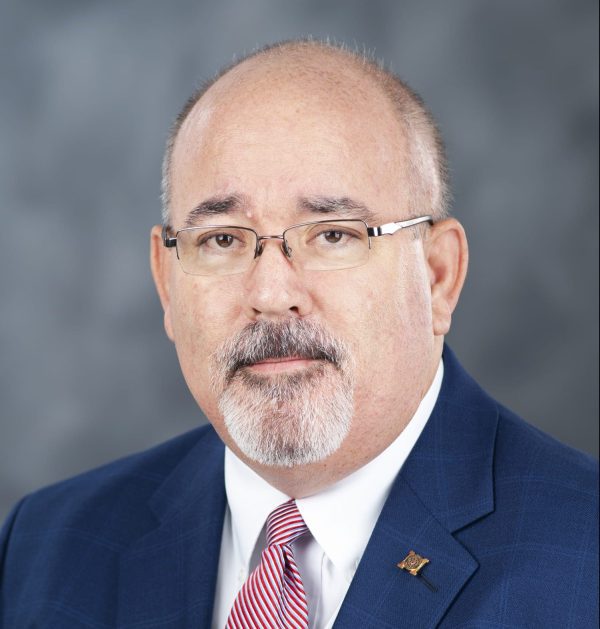
Ole Miss Chancellor Glenn Boyce
Listen to the audio version of this article (generated by AI).
- Boyce argues that Stokes’ own admissions of personal disruption, following her inflammatory anti-Charlie Kirk post, prove that the University acted within its legal rights to terminate her and avoid similar disruptions to students and faculty.
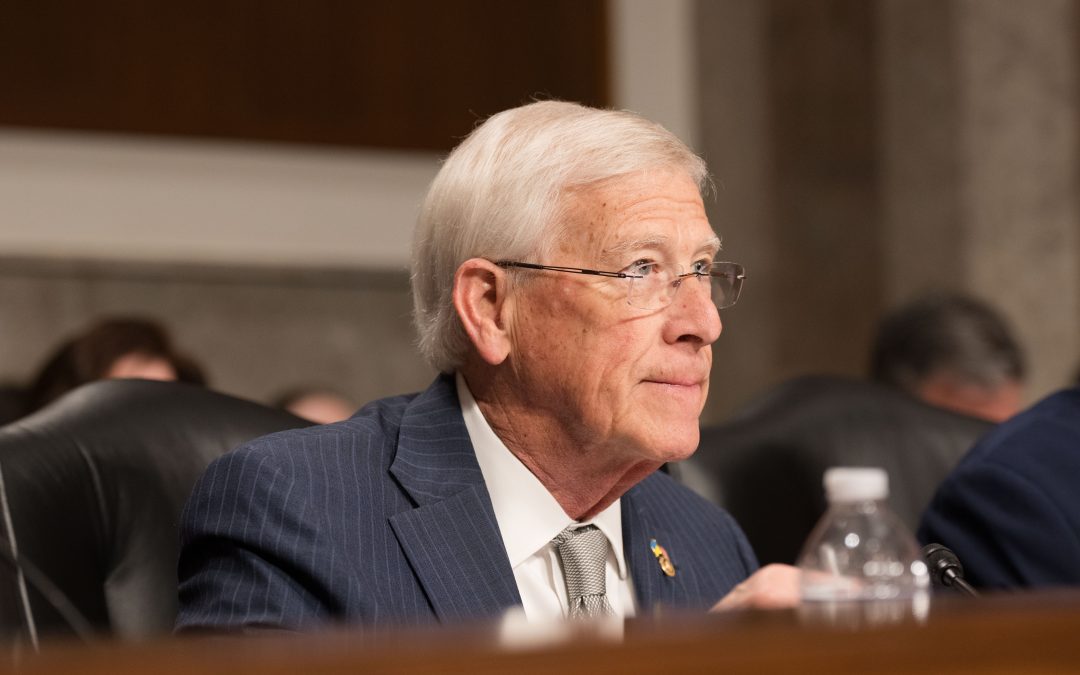
On Wednesday, University of Mississippi Chancellor Glenn Boyce, who was sued in his official and personal capacities, responded to Lauren Stokes’ First Amendment violation claims. Stokes filed suit against Boyce after she was dismissed from University employment for resharing a social media post that compared slain conservative commentator Charlie Kirk to a white supremacists and reimagined member of the KKK. The same post expressed a lack of remorse over his death.
Boyce is seeking dismissal of the case at the “pleading stage,” a remedy available when a lawsuit, taken with every inference available in the plaintiff’s favor, still fails to state a claim upon which relief can be granted. (Copy of Memorandum supporting the Motion to Dismiss attached below).
It is a high and hard standard to reach, legally speaking. In these type of First Amendment cases, which turn on a balancing test between a government employee’s right to speak on matters of public concern versus a government employer’s right to efficiency in its operation, it is rare, but not impossible, for dismissals to occur this early.
The Law at Play
Those who happened to read my October column on this case start ahead of the game, but as a refresher:
Stokes’ operative complaint accurately cites one part of the law that will be at play in the Court’s decision. Typically speaking, a government employee is afforded protection for speech conducted in their private capacity — not as a part of official duties — on matters of public concern. But this is only one part of the equation.
What Stokes’ operative complaint largely glossed over is the second part of the legal analysis at play. The U.S. Supreme Court has enunciated what is often referred to as the Pickering-Connick balancing test, named from two prominent cases, Pickering v. Board of Education (1968) and Connick v. Myers (1983). The test permits a government employer to fire an employee for private speech on matters of public concern if that speech disrupts or impairs the function of the workplace.
Chancellor Boyce is Focused on the Second Part of the Balancing Test
Boyce’s attorneys, Cal Mayo and Paul Watkins, argue a point I mentioned in the October column — namely that Stokes’ own lawsuit makes the University’s case that her speech represented a sizable disruption to its operation.
The column explained: “In this sense, Stokes acknowledgement of the significant disruption to her own life could, perhaps unwittingly, serve as evidence of why the University was justified in viewing her speech as disruptive to its function and operation. The ire Stokes complains of receiving for what she said would have been heaped on the University, in equal measure, had it failed to act.”
The motion to dismiss highlights that Stokes’ own complaint alleges considerable impact from the post the night before the University’s decision, including a decision by Stokes to delete the post and apologize after she was inundated with hateful responses. Stokes’ shared post went viral, sparking a firestorm that spread nationally, with millions of views on social media.
The original post that outed Stokes on September 10th received over 2.6 million views alone. Similar social media threads about Stokes drew equally large numbers of views. Outrage was directed at both Stokes and the University of Mississippi.
Boyce’s motion also notes that Stokes’ complaint acknowledges that she “sought guidance” on her safety from both the University’s HR and Police Department first thing the next morning, prior to her dismissal. It further recounts Stokes’ own allegations about threats to her, her family and her restaurant — threats that required her to leave town, to hire security, and to close the restaurant for two weeks.
The University is correct that the law does not require it to wait until the same disruption is unleashed on its operation. The law permits reasonable predictions by a government employer.
The question at this stage is whether Stokes’ own admissions in the operative complaint are self-defeating and allow for an early dismissal of her case, or whether she is entitled to discover more factual predicate that could strengthen her allegations?
Lagniappe Consideration
It is notable that even once the University released a statement, shortly before 1 o’clock the day after Stokes’ post, it did not identify her by name. The backlash against her, much of which preceded her dismissal, was a result of already being outed on social media.
This is also intuitive. The people who were mad enough to harass Stokes did so because of vehement disagreement with her viewpoint, not because she was terminated. Indeed, those people angry enough to make threats were almost certainly pleased she was terminated.
In other words, the disruption to Stokes’ own life was a byproduct of her conduct and not the University’s decision.
Editor’s Note: Magnolia Tribune was the first outlet to cover the controversy generated by Stokes action, as well as the first to cover each stage of this litigation. Watch for other outlets “breaking” this story a couple hours or days after we do.

Russ Latino