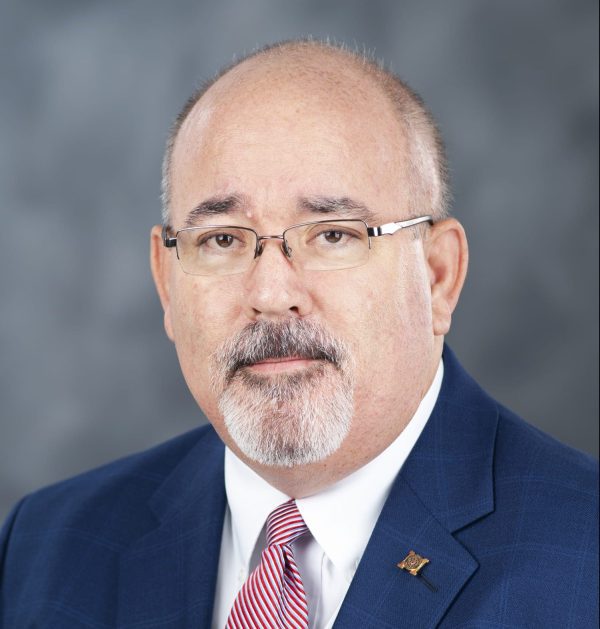
Sid Salter
- Mississippi is not simply participating in the national defense conversation. For the moment, it is helping write the agenda.
President Donald Trump’s appointment of Mississippi State University alumnus and former Thad Cochran adviser Adam Telle as Acting Secretary of the Army carries significance well beyond his personal achievements. For the first time in years, Mississippi finds itself positioned near the center of America’s national defense establishment, with influence extending across military policy, defense spending and executive leadership.
The most appropriate comparison is former Mississippi Gov. Ray Mabus, whom President Barack Obama appointed Secretary of the Navy in 2009. During nearly eight years in that post, Mabus served as the Navy’s top civilian leader, overseeing both the Navy and the Marine Corps, and became one of the most recognizable figures in the Pentagon. Telle’s path to the Pentagon was considerably different.
Rather than rising through elective office, he built his career on Capitol Hill. After graduating from Mississippi State University – serving as student body president, Telle spent more than a decade in Cochran’s Senate office as one of Cochran’s key advisers on national security, disaster recovery and appropriations matters. He later served as Trump’s chief Senate liaison at the White House and most recently held the Senate-confirmed position of Assistant Secretary of the Army for Civil Works.
The distinction between Mabus and Telle matters. Mabus was nominated by a president and confirmed by the Senate to serve permanently. Telle currently serves in an acting capacity following the resignation of Army Secretary Dan Driscoll. Yet that difference should not obscure the larger political reality. Mississippi now has a seat at virtually every major table where defense decisions are made.
Sen. Roger Wicker serves as chairman of the Senate Armed Services Committee, arguably Congress’s most important defense panel. The committee writes the National Defense Authorization Act and helps shape military policy, planning and procurement.
At the same time, following the death of South Carolina Sen. Lindsey Graham and a subsequent committee reorganization, Sen. Cindy Hyde-Smith moved into the leadership role on the Senate Appropriations Subcommittee on Defense. That assignment places a Mississippi senator in the congressional process responsible for funding military operations, weapons systems and defense infrastructure.
In practical terms, Wicker helps determine what defense programs are authorized, while Hyde-Smith helps determine which programs receive funding. One oversees policy. The other helps oversee spending.
Add Telle’s position inside the executive branch, and Mississippi’s presence in national security circles becomes difficult to overstate.
That influence matters because Mississippi’s military and defense footprint is substantial. The state is home to Keesler and Columbus Air Force bases, Camp Shelby, Stennis Space Center, Huntington Ingalls Shipbuilding on the Gulf Coast, and a growing network of military contractors, aerospace firms, and research operations. The Army Corps of Engineers also plays a significant role in Mississippi’s flood-control, navigation and water-resource projects. Telle is well acquainted with those issues through both his congressional work and his leadership of Army Civil Works.
The more intriguing question, however, concerns not today’s appointment but tomorrow’s prospects. At present, Telle is the Acting Secretary of the Army. The acting designation gives the administration time to evaluate its long-term options
That reality makes the 2026 midterm elections especially relevant. If Republicans retain control of the Senate, Telle would appear well-positioned should President Trump decide to nominate him. If Democrats gain control of the Senate, the political landscape changes. Committee leadership would shift, confirmation hearings would be conducted by different chairmen, and administration nominees could face more rigorous scrutiny.
Regardless of how that question is ultimately resolved, Telle’s appointment arrives at a remarkable moment in Mississippi political history. With Wicker shaping defense authorization, Hyde-Smith helping to direct defense appropriations, and Telle serving as the Army’s top civilian official on an interim basis, Mississippi’s voice in national security matters is arguably stronger than at any point since the era of John Stennis, Thad Cochran, and Trent Lott.
For a state that has long relied on seniority, expertise and strategic committee assignments to amplify its influence in Washington, this is a rare convergence of political power. Mississippi is not simply participating in the national defense conversation. For the moment, it is helping write the agenda.

Sid Salter