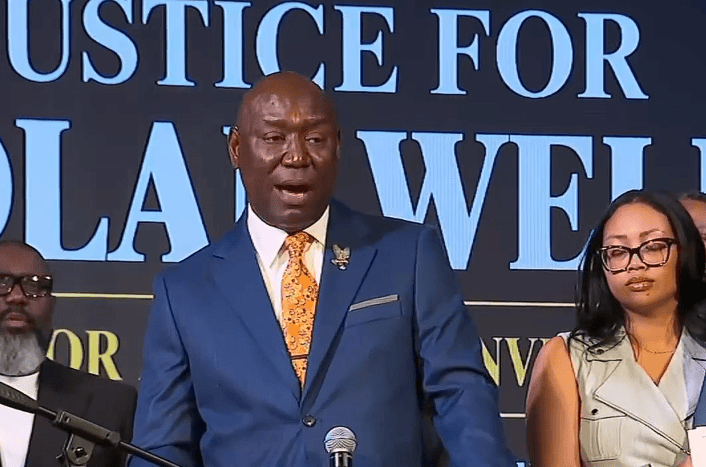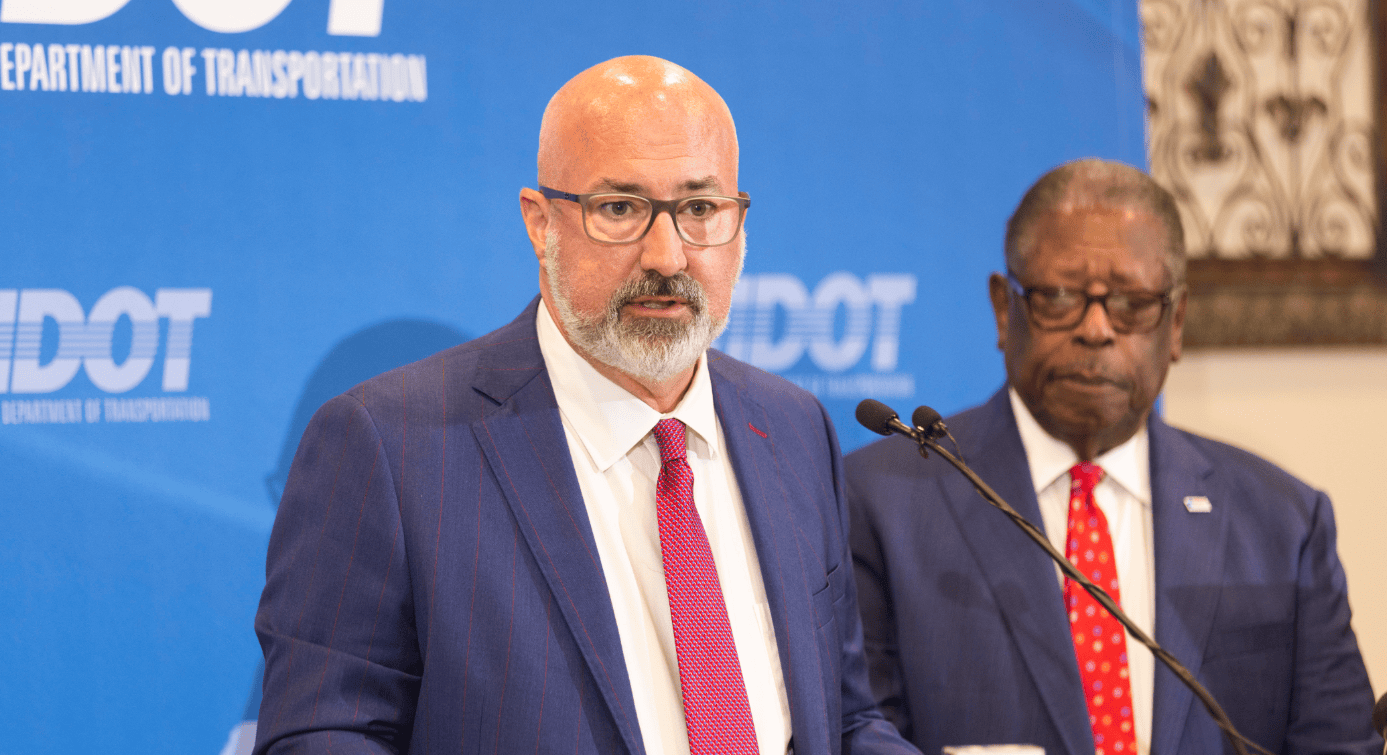
MDOT executive director Brad White speaks alongside Commissioner Willie Simmons (Photo from MDOT)
- The two-and-a-half-year project will include two 45-day periods where traffic along I-20 will be closed during the summers of 2027 and 2028.
A $400 million interstate repair project in the Jackson metro area will require two rounds of 45-day full lane closures along I-20 by the Mississippi Department of Transportation.
Extended closure of traffic along one direction of travel for that 45-day period will help keep the costs and timeline of the project to a minimum, the Mississippi Department of Transportation stated in an announcement released on Tuesday.
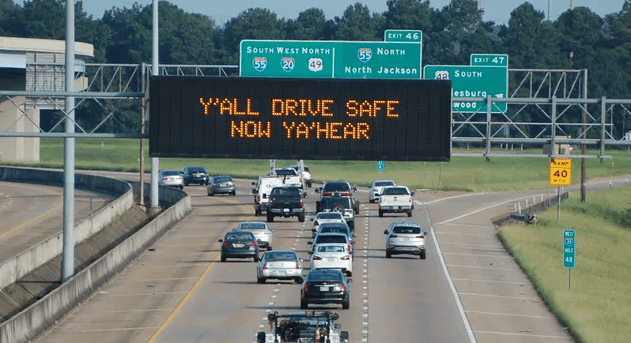
The project, called the I-20/I-55 Freight Corridors Improvement Project, will entail the repair of 36 bridges, resurfacing and repairs to 16 miles of interstate in each direction of travel for a total of 32 miles (or 121 total lane miles), and the addition of digital message signs as part of an Intelligent Transportation System that updates motorists in real time about traffic information.
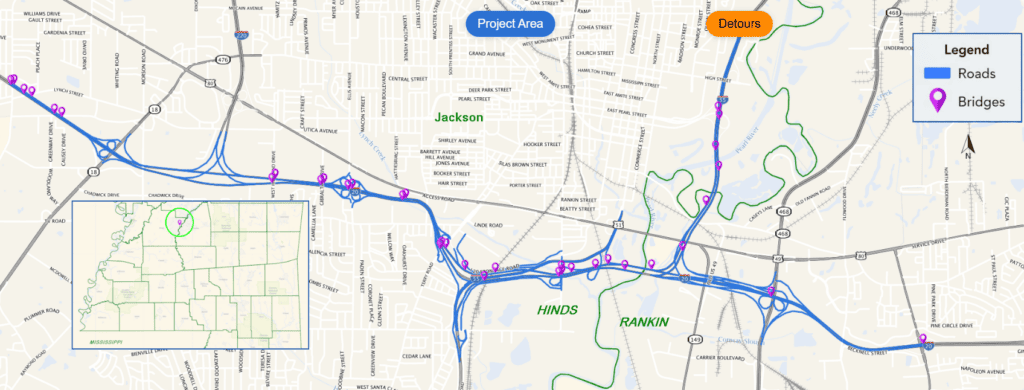
Referred as “The Big Fix,” the project will include work along I-20 from Wiggins Road to east of Pearson Road/SR 468 interchange.
Repairs to the areas of I-55 from McDowell Road to north of the High Street interchange (including the cross streets and ramps), I-220 from I-20 to the Lynch Street bridge, U.S. 51 from I-55 to the end of state maintenance north of U.S. 80 are also included in the scope of the project, MDOT stated.
“This transformative initiative will modernize some of the state’s most heavily-traveled corridors, enhancing safety, improving mobility and extending the life of many interstate bridges throughout the Jackson-metro,” said Mississippi Transportation Commission Chairman Willie Simmons (D). “The Big Fix represents a comprehensive investment in central Mississippi’s network, focusing on the busy I-20/I-55 routes that have served as vital arteries for commuters, commercial traffic and freight movement for over 60 years.”
Total costs for The Big Fix are expected to be $400 million, MDOT estimates.
The project is planned to begin this fall and take about two and a half years to complete. During that time, there will be the need for two 45-day periods where the entire interstate will be closed to traffic in one direction of traffic in certain areas of the project. Those periods will be planned for the summers of 2027 and 2028.
During the summer of 2027, the westbound lane of I-20 will be closed for that period. The eastbound lane of I-20 will be closed for 45 days in the summer of 2028.
“We understand the two 45-day shutdown periods will be a major inconvenience. The alternative, performing this work under lane closures, would mean a timeline of years, not days,” said MDOT Executive Director Brad White. “Without this work, we’d likely be forced to lower weight restrictions or even perform emergency closures that would have a much more severe traffic impact for a longer period. Rest assured, we will provide advance notice, clearly marked detours and extensive public information leading up to the shutdown periods so that drivers, businesses and communities are prepared.”
The need for full lane closures in either direction is necessary to facilitate the extensive work to extend the life of bridges and other major infrastructure in the project area. These repairs will include replacement of end walls, widening of shoulders, full depth removal and replacement of pavement and work to the barriers.
Closures will be scheduled to have the least amount of impact to the traveling public based on traffic data.
“We’ve chosen to address all of these needs at the same time, reduce motorists’ encounters with construction and deliver the improvements much sooner. I look at it as two years instead of two decades,” said White. “This gets us better infrastructure sooner. Fewer years of recurring construction zones. A safer and more reliable metro interstate system. One that is prepared for modern growth and demand. This is what it’s all about.”
Detailed information about when lane closures will occur along with detour routes and other pertinent information will be shared by MDOT through their website as well as through MDOT’s smartphone application and on MDOT’s social media accounts.
As this work takes place, MDOT wants to ensure the safety of drivers and road crews by encouraging motorists to drive safely.
“Unfortunately, distracted driving continues at alarming rates, particularly along these interstate corridors,” White said. “That is why it is imperative we all understand the importance of work zone safety, like staying off cell phones and not speeding, even when traffic is light. I implore you to do your part.”
Repairs include:
- Bridges:
- decks, beams, girder and epoxy joints. Structural work ranges from bridge deck overlays, rail replacement, shoulder widening, vertical clearance corrections, pile encasement and bearing replacement. Other bridge work items include structural steel painting, fiber-reinforced polymer wrap application, along with cap cleaning and undersealing, among other work
- Roadways:
- pavement rehabilitation, concrete punchout repairs, mill and overlay, drainage work, slide repairs, shoulder widening, concrete removal and replacement, guardrail replacement, slope repairs, geometry corrections, barrier replacement and other work items
- ITS and miscellaneous:
- installation of truss and pedestal-mounted Digital Message Signs (DMS), camera installation, fiber extensions, sign truss replacements, safety fencing, tree removal, Smart Work Zone technology and interchange landscaping, upgrading entrances into the City of Jackson at High Street and State Street