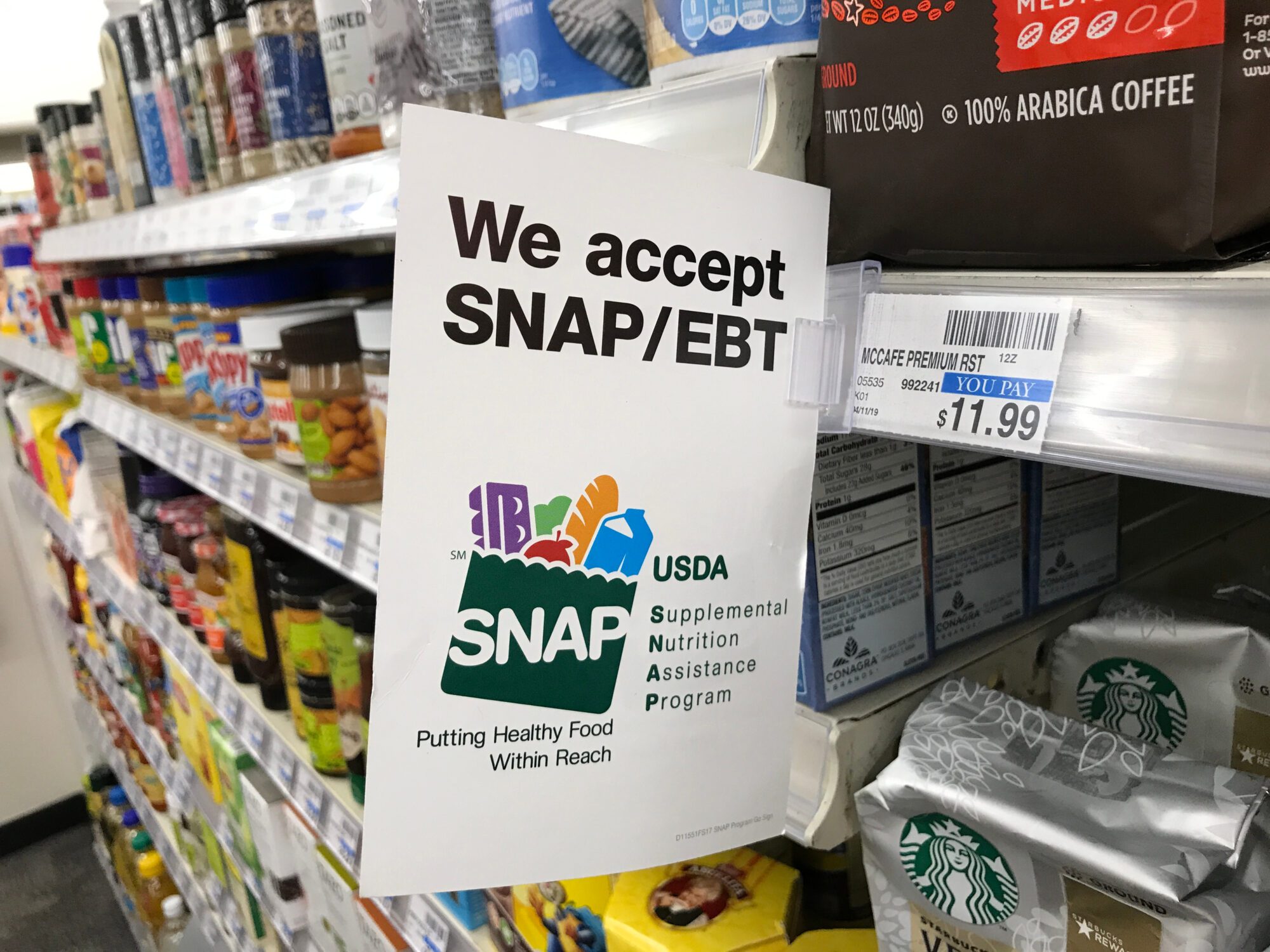
(Photo from Shutterstock)
- The Mississippi Department of Human Services says using the new verification tool will help the agency acquire accurate income information as it seeks to reduce payment errors, streamline case processing and provide accurate benefit allotments.
The Mississippi Department of Human Services announced Thursday that the state agency is implementing a new verification tool that aims to increase the accuracy of client eligibility determination in the Supplemental Nutrition Assistance Program, or SNAP.
The food stamp welfare assistance is a federal program that is operated at a state level through the Mississippi Department of Human Services.
MDHS has been working to reduce the state’s error rate – the percentage of welfare benefits that are incorrectly issued each year, whether that be in overpayments or underpayments – as changes to the program included in the 2025 One Big Beautiful Bill will require states with high error rates to pay a higher share of the cost of the federal program.
As previously reported, under the changes in the One Big Beautiful Bill, a state with an error rate 6% or below would not be required to provide matching funds. An error rate of 6% to 8% would be required put up a 5% cost share while states with an error rate of 8% to 10% would put up 10%. States over a 10% error rate would require a 15% match.
The cost share change was made as the Trump administration seeks to reduce waste, fraud and abuse in federal public assistance programs.
In June 2025, Mississippi’s FY 2024 SNAP error rate was reported at 10.69%. As of May 27 this year, the rate had declined to 8.69%, MDHS reported to Magnolia Tribune.
The new tool being implemented by MDHS called Truv aims to provide the agency with an additional resource to verify income and employment information submitted during the SNAP application and renewal process. Online submissions are already in place but the Truv system is being added to further automate the process.
Acquiring accurate income information will allow MDHS to reduce payment errors, streamline case processing and provide accurate benefit allotments.
“Every improvement we make is centered on providing better service to our clients,” said Shauna Aguilar, MDHS Director of Economic Assistance Eligibility. “By strengthening our verification processes and giving our staff the tools they need, we are creating a more efficient SNAP program that better meets the needs of the individuals and families of the people who rely on it.”
While MDHS said the new tool will assist the agency in verifying income information, it is SNAP recipients who are responsible for providing accurate and complete information about household changes and then reporting those changes as required.
Changes in employment status for those on SNAP should be reported within 10 days. Doing so will help prevent delays in processing and reduce the likelihood of incorrect benefit amounts, MDHS said.
Notably, while most states use what is known as simplified reporting to track and report SNAP recipients, Mississippi still uses changing reporting. Change reporting is the traditional SNAP reporting method where households must immediately report specific changes in income and circumstances to MDHS that could affect eligibility or benefit amounts. Advocates say it is a more controlled, stricter approach to administering the welfare program but as has been noted by detractors, such increased oversight requires significantly more staffing and resources at the state level.
Under simplified reporting, most changes during a 12-month certification period need not be reported and are not considered an error for reporting purposes. Some legislators have called for Mississippi to move to simplified reporting. However, efforts to pass bills to that effect were unsuccessful this year.

Frank Corder

Jeremy Pittari

Takeaways from the historic summit between Trump, Xi and Putin