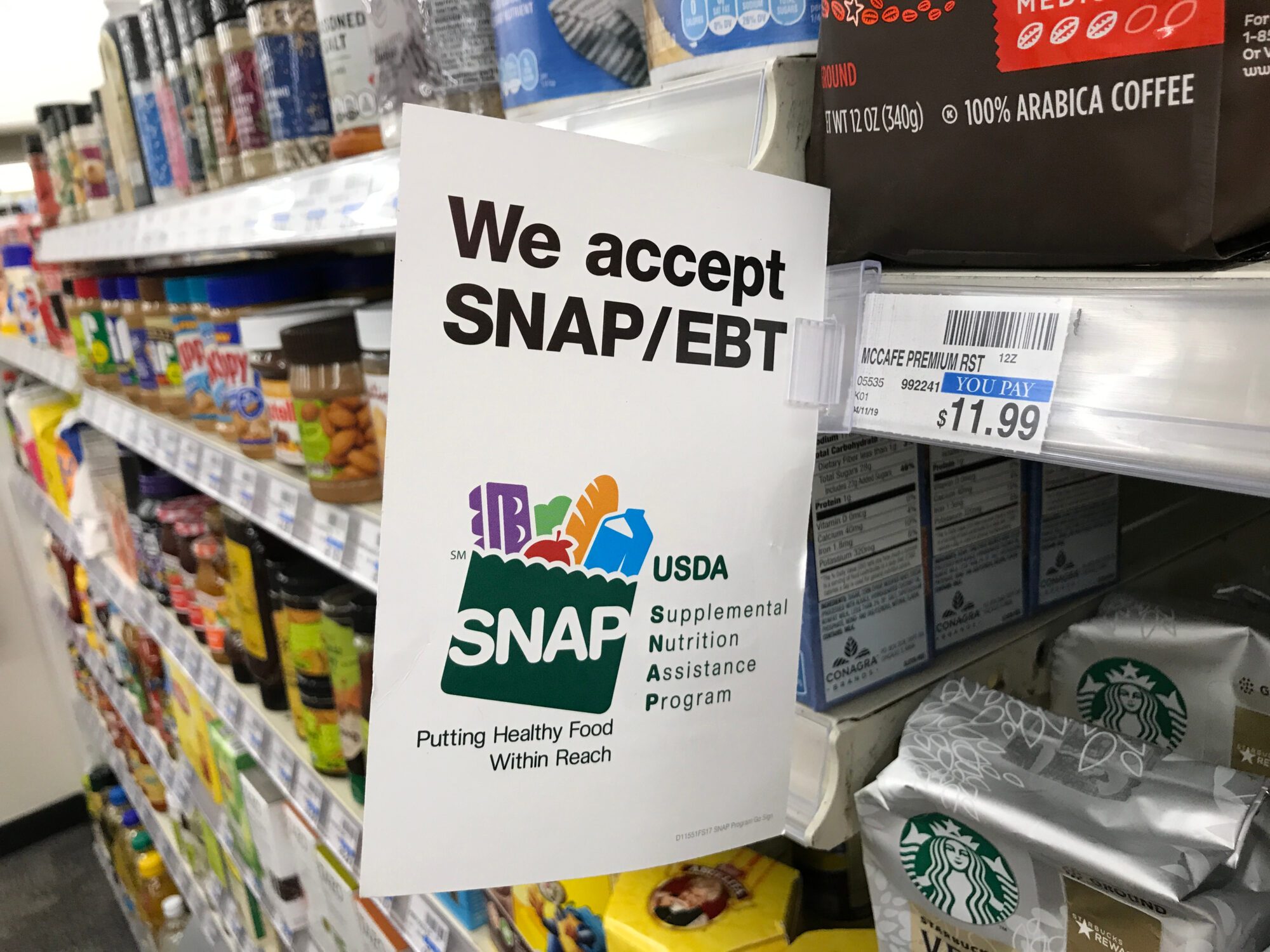
(Photo from Shutterstock)
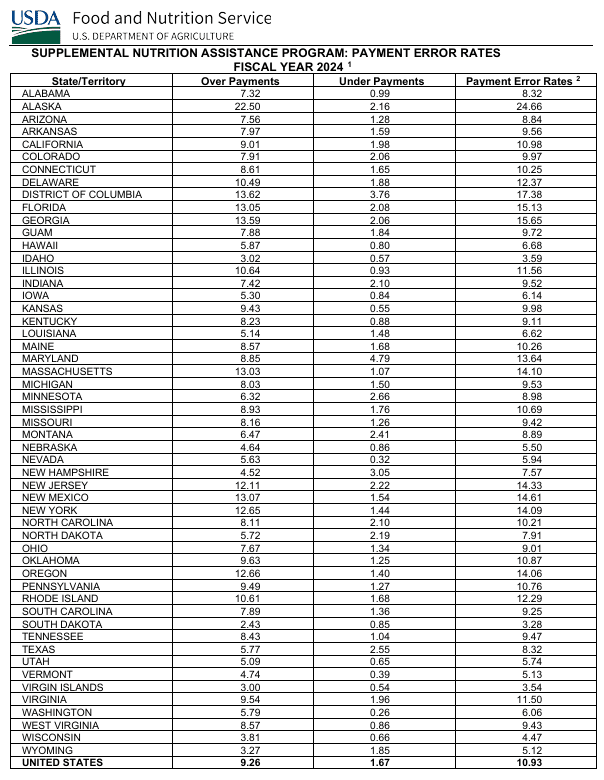
- Under the changes in the One Big Beautiful Bill, a state with an error rate above 6% will be required to provide matching funds. As of May 27th, Mississippi’s SNAP error rate has declined to 8.69%, down from the reported 10.69% last June, per MDHS.
According to recent data provided by the Mississippi Department of Human Services (MDHS), the state’s error rate for the Supplemental Nutrition Assistance Program (SNAP) is on the decline.
However, Mississippi’s error rate remains at a level where the state will likely be required to pay a share of the cost of the federal program due to changes made to SNAP in the One Big Beautiful Bill signed into law by President Donald Trump (R) last summer.
Those changes, set to take effect this October, represents the biggest reshuffling of the federal program since former President Lyndon Johnson (D) signed it into law over 60 years ago.
A SNAP error rate is the percentage of welfare benefits that are incorrectly issued each year, whether that be in overpayments or underpayments.
Under the changes in the One Big Beautiful Bill, a state with an error rate 6% or below would not be required to provide matching funds. An error rate of 6% to 8% would be required put up a 5% cost share while states with an error rate of 8% to 10% would put up 10%. States over a 10% error rate would require a 15% match.
The changes come as the Trump administration seeks to reduce waste, fraud and abuse in federal public assistance programs.
In June 2025, Mississippi’s FY 2024 SNAP error rate was reported at 10.69%. As of May 27th of this year, the rate has declined to 8.69%, the MDHS reported to Magnolia Tribune. A request to MDHS seeking clarification on what led to the reduction in the error rate did not receive an immediate response.
According to Pew, SNAP provides monthly food stipends for nearly 42 million Americans. Over 12% of Mississippians, or nearly 363,000, received the federal welfare program in 2024.
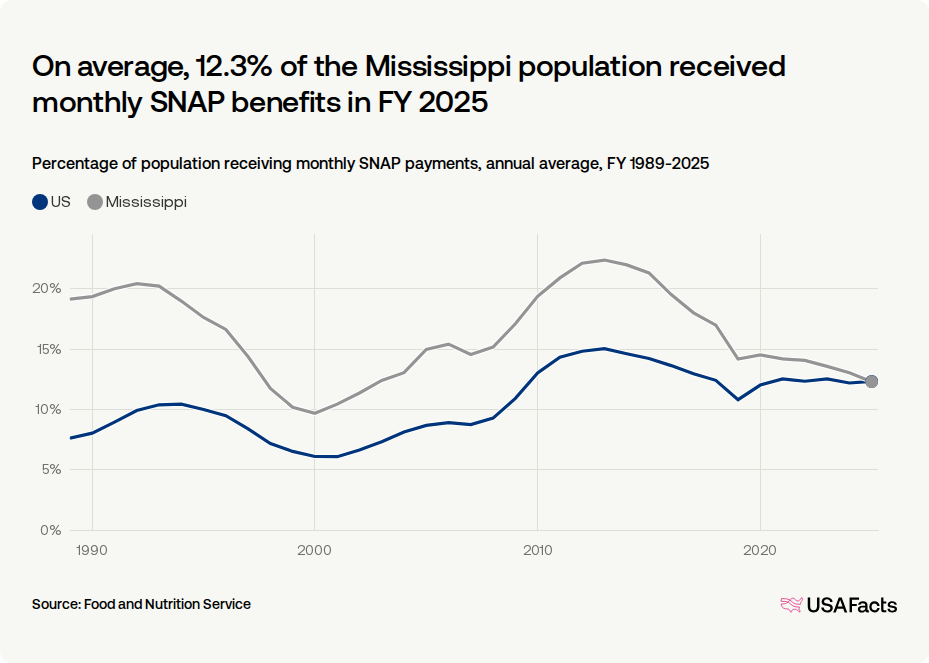
One study noted by Pew estimates that states’ collective SNAP costs could rise to $15 billion annually once the new provisions are fully phased in under the One Big Beautiful Bill. Meanwhile, new eligibility rules are also expected to decrease SNAP enrollment.
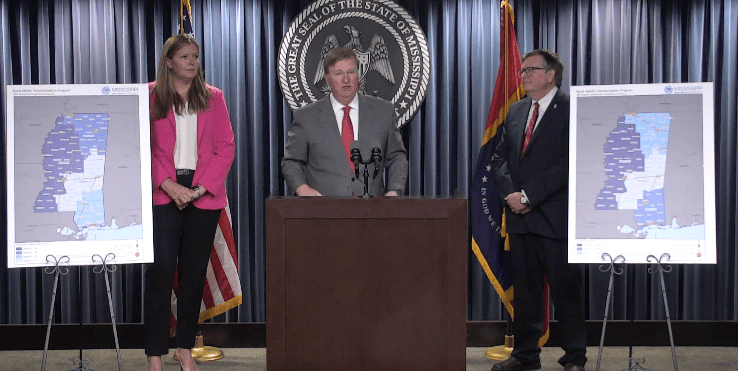
In anticipation of the changes, MDHS requested additional funding from the Legislature during the 2026 session, which was approved by both chambers and Governor Tate Reeves (R). State Senator Daniel Sparks (R) has been outspoken about the millions of dollars in potential match Mississippi could be required to fund unless the state addresses the matter.
“Well, I’m certainly excited [the error rate] appears to be going down because that’s the direction we want it to go. And if that is based on some of the software and some of the funding that we did, that’s a good thing.” Sparks told Magnolia Tribune. “My concern is obviously anything above 6% is still in the penalty phase. Unfortunately, when we’re over 8%, that’s still roughly $80 million. If we get it below 8%, between 6% and 8%, it’s about $40 million.”
Mississippi is one of a few states in the nation that still uses what is referred to as change reporting. Change reporting is the traditional SNAP reporting method where households must immediately report specific changes in income and circumstances to MDHS that could affect eligibility or benefit amounts. Advocates say it is a more controlled, stricter approach to administering the welfare program but as has been noted by detractors, such increased oversight requires significantly more staffing and resources at the state level.
The other option for states is simplified reporting. Simplified reporting, which was made more widely available as part of the 2002 Farm Bill, reduces requirements and extends certification periods to ease administrative burden and improve access to benefits. The vast majority of states now utilize simplified reporting. Under simplified reporting, most changes during a 12-month certification period need not be reported and are not considered an error for reporting purposes.
Some legislators have called for Mississippi to move to simplified reporting. However, efforts to pass bills to that effect were unsuccessful this year. Senator Sparks was one of the lawmakers who proposed moving away from change reporting. He hopes the federal government will ultimately provide at least one more year before the changes take effect to allow states to reduce their financial liability.
“You know, because we do have the more stringent reporting requirements. I’m all for accuracy and certainly not for folks receiving benefits they’re not entitled to receive,” Sparks said.
There is also a question of how error rates are to be calculated. As Pew noted, states conduct monthly reviews of select cases to track errors and make adjustments. That work is done in Mississippi by the MDHS SNAP Quality Control division in the Office of Compliance. The U.S. Department of Agriculture’s Food and Nutrition Service then reviews a subset of those cases each October and typically publishes state and national error rates the following June.
Because of the lag in the publishing schedule, Pew adds that states’ required payments under the new changes will be based on rates from three years prior, though in the first year, states can opt to apply their rates from 2025 instead of 2026.
A request for clarification from MDHS on which rate it will seek to use was not returned by press time.
Senator Sparks also wants to know what lawmakers can expect come October.
“We know that a sample size could be a good draw or a bad draw. I guess my question to the agency would be, is the 8.69% [error rate] that you’re utilizing, is that from your most recent sample size internally, or is that what you say is across-the-board? Then, how does that translate when the feds come in and actually take a sample size?” Sparks said.
Below is a full listing of error rates by state for FY 2024 from the USDA.