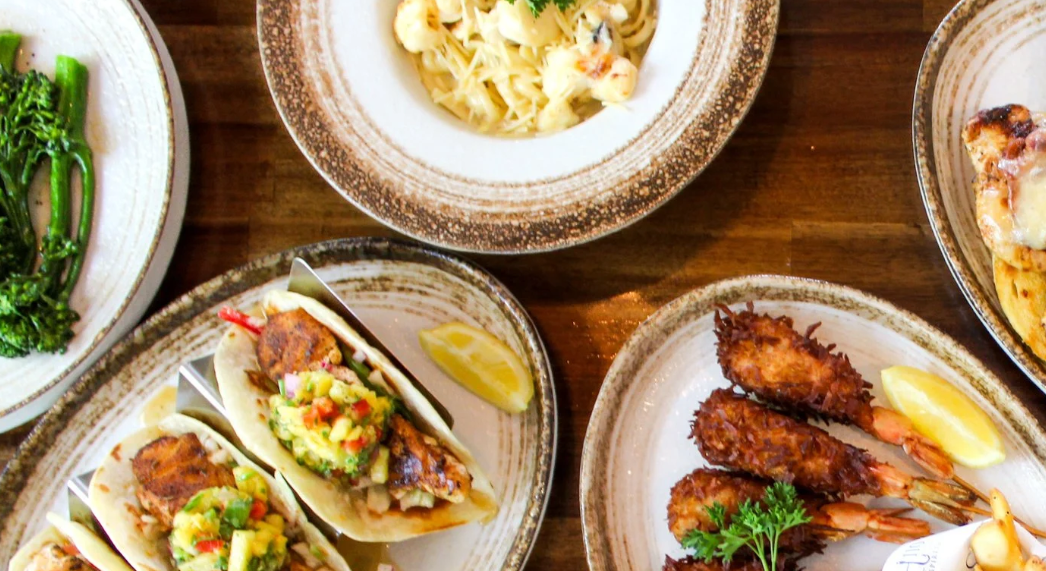
(Photo from website of Catch 100 restaurant in Biloxi)
- Research provided by SeaD Consulting shows deceptive practices continue to undermine consumer trust and harm American shrimpers in a third of restaurants tested.
A recent study on genetic testing reveals what researchers say is meaningful progress in the fight against restaurant menu mislabeling along the Mississippi Gulf Coast.
SeaD Consulting’s latest report in April shows that increased awareness, public pressure, and continued testing are driving change in the labeling of seafood.
According to the report, 64% of restaurants, or 14 out of the 22, tested on the Coast, are now serving American Wild-Caught (AWC) shrimp. Of that, 41% (9 of 22) were consistently serving authentic shrimp across both the December 2024 and April 2026 testing periods, and 23% (5 of 22) corrected previous mislabeling practices and are now serving AWC shrimp.
The group’s research found in December 2024 that 82% of restaurants tested were misleading customers, often substituting imported shrimp while marketing dishes as fresh, local Gulf seafood.
“This data shows that transparency efforts are making an impact,” said Erin Williams, COO of SeaD Consulting. “More restaurants are doing the right thing—but there is still work to be done.”
However, the research also showed that deceptive practices continue to undermine consumer trust and harm American shrimpers, with a third still mislabeling the seafood they sell. Of the 36% of restaurants (8 of 22) found to be serving imported or farm-raised shrimp, 63% (5 of 8) were said to have misled customers by suggesting the shrimp was local or wild-caught and only 37% (3 of 8) were transparent about serving imported products.
Three restaurants misrepresented shrimp in both testing periods, the study noted.
The study comes nearly a year after House Bill 602 was enacted, which sought to enhance seafood transparency and empower consumers across Mississippi to make informed choices about the seafood they purchase. The law, which went into effect July 1, 2025, requires clear labeling of seafood and crawfish as either “Domestic” or “Imported.” the law aims to build consumer trust and support the U.S. seafood industry. All grocery stores, markets, restaurants, and food trucks must comply with the labeling standards.
The Mississippi Department of Marine Resources and the Mississippi Department of Agriculture and Commerce are tasked with overseeing the law’s enforcement.
As outlined by DMR, violators of the seafood labeling law are subject to civil and misdemeanor criminal penalties, with civil penalties assessed as follows:
- 1st Violation: $500-$1000
- 2nd Violation: $1000-$2000
- 3rd Violation: $3000-$5000
- 4th and Subsequent Violation: not less than $10,000
DMR notes that a first-time violator will be notified in writing and given three days to correct the violation. No civil penalties will apply to a first-time violator that corrects the violation within three days from the date of notification. The failure to correct the first violation within three days of notification will subject the violator to the civil penalties.
If convicted of a misdemeanor, a violator is subject to a fine of not more than $10,000 or by imprisonment in the county jail for not more than six months, or by both.
Commissioner of Agriculture and Commerce Andy Gipson (R) said Mississippi is proud of its rich seafood heritage “and the hardworking men and women who harvest and produce food right here at home.”
“At the end of the day, consumers deserve to know where their food comes from. When they can trust that they’re getting fresh, local seafood from our Gulf waters, it not only strengthens confidence at the table, it also directly supports our local fishermen, farmers and coastal communities,” Gipson said. “Our agency will continue working with the Mississippi Department of Marine Resources to educate establishments subject to the state’s labeling requirements and conduct seafood labeling inspections, ensuring what is advertised is being served and sold.”
Gulf Coast shrimpers welcomed the law, and continue to press for further oversight and enforcement.
“What we’re seeing is unfair competition that’s strangling our industry,” said Leann Bosarge of Bosarge Boats. “Restaurants trying to make money off the backs of U.S. fishermen while selling imported shrimp should be ashamed. If laws and regulations were actually enforced to level the playing field, American shrimpers would win every time. Our product is higher quality, better regulated, and it simply tastes better—buyer beware.”
SeaD Consulting encourages consumers to remain vigilant, ask questions about where shrimp is sourced, and request proof when seafood is marketed as local. They also urge consumers to support restaurants that demonstrate transparency.

Frank Corder