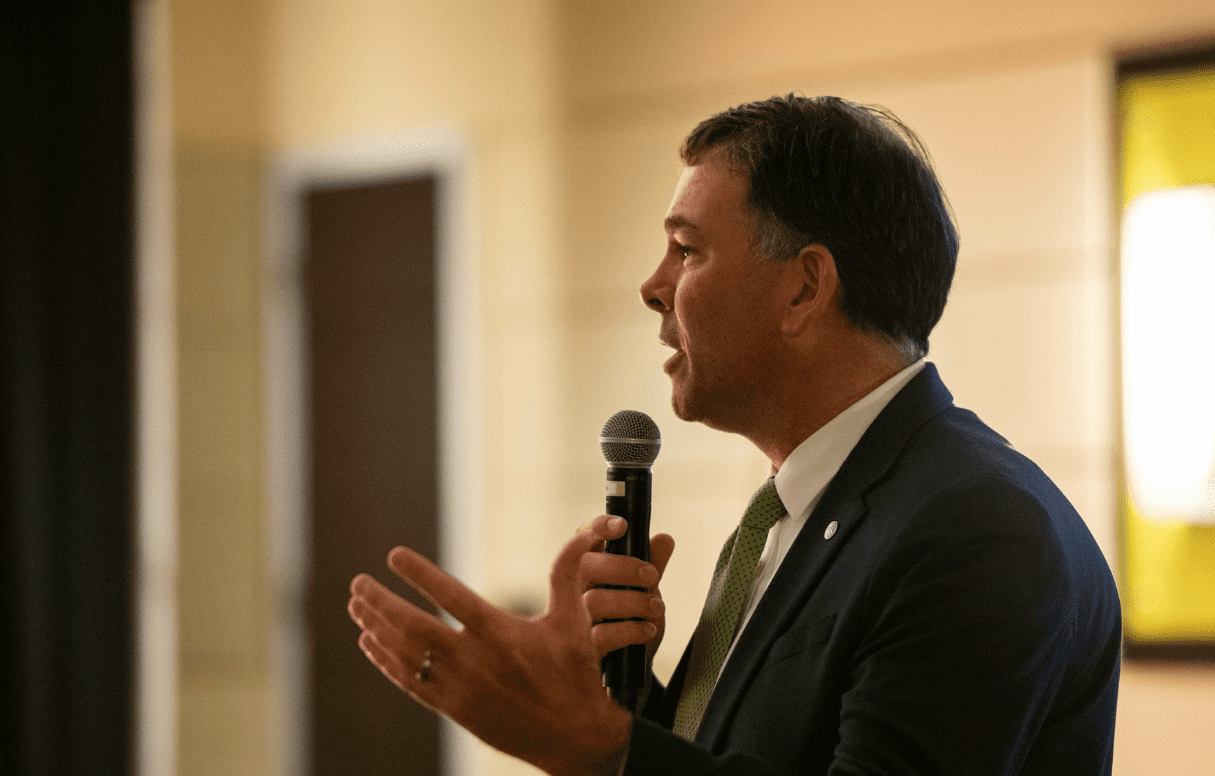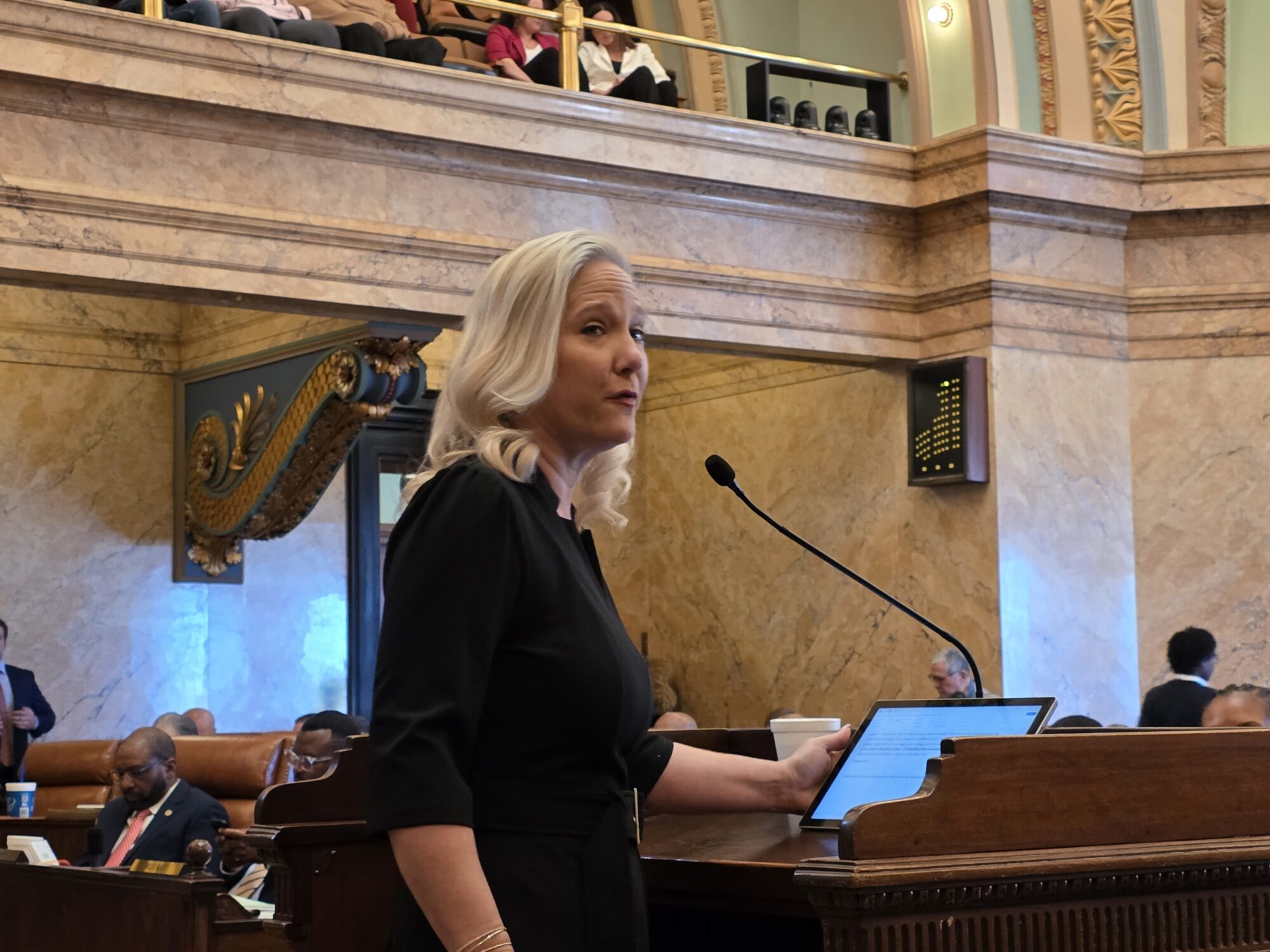
State Rep. Celeste Hurst (R) speaks in support of HB 2 earlier in the 2026 legislative session. Wednesady, she introduced an amendment to include abortion inducing drugs to HB 1613, which was adopted. (Photo by Jeremy Pittari | Magnolia Tribune)
- State Rep. Celeste Hurst introduced the measure in February, amending legislation on drug trafficking to include language outlawing the dispensing or shipping of abortion-inducing drugs in the Magnolia State.
A measure that criminalizes the shipping or dispensing of abortion-inducing drugs has passed the Mississippi Legislature largely along party lines, with Republicans supporting the bill and Democrats voting in opposition.
The bill now heads to the governor’s desk where it is believed that Governor Tate Reeves (R) will sign it into law given his strong pro-life stance.
The conference report for HB 1613 states that it is unlawful for any person to knowingly
or intentionally create, sell, barter, transfer, manufacture, distribute, dispense, prescribe or possess with knowledge or intent to create, sell, barter, transfer, manufacture, distribute, dispense or prescribe an “abortion-inducing drug.”
Such a drug is defined in the bill as a medicine, drug or any other substance prescribed or dispensed with the intent of terminating the clinically diagnosable pregnancy of a woman to cause the death of the unborn child, except as otherwise provided by the laws of the State of
Mississippi.
Use of such drugs to induce abortion is also known as “medical abortion.”
State Rep. Celeste Hurst (R) introduced the measure in February, amending legislation on drug trafficking to include the language outlawing the dispensing or shipping of abortion-inducing drugs. At the time, Hurst said her amendment sought to protect women from harm by not allowing the drugs to be directly shipped to them.
“Because it is damaging to women when not under the care of a physician,” Hurst said. “Those drugs are now being shipped into our state without any doctor oversight. And in Mississippi, it is illegal to give those drugs to a patient without physician oversight.”
Hurst added that the measure does not relate to drugs known as “Plan B” medications, which are used by women to prevent a pregnancy after unprotected sex.
Democrats in opposition to the bill contend that it will have negative effects on women’s health, calling the measure unnecessary and “ridiculous.”
Violators of the legislation could face imprisonment of not less than one year but not more than ten years if convicted.
In addition, the Attorney General could bring a civil suit in the name of the State of Mississippi to enjoin any violation the law “related to abortion-inducing drugs, to obtain declaratory or injunctive relief, and to recover civil penalties and costs.” The measure notes that civil actions are cumulative and do not preclude criminal prosecution.
Mississippi’s abortion ban went into effect following the 2022 U.S. Supreme Court ruling overturning Roe v. Wade. It outlaws abortion in the state with exceptions for protecting the life of the mother in cases where rape or incest is reported to law enforcement.

Frank Corder