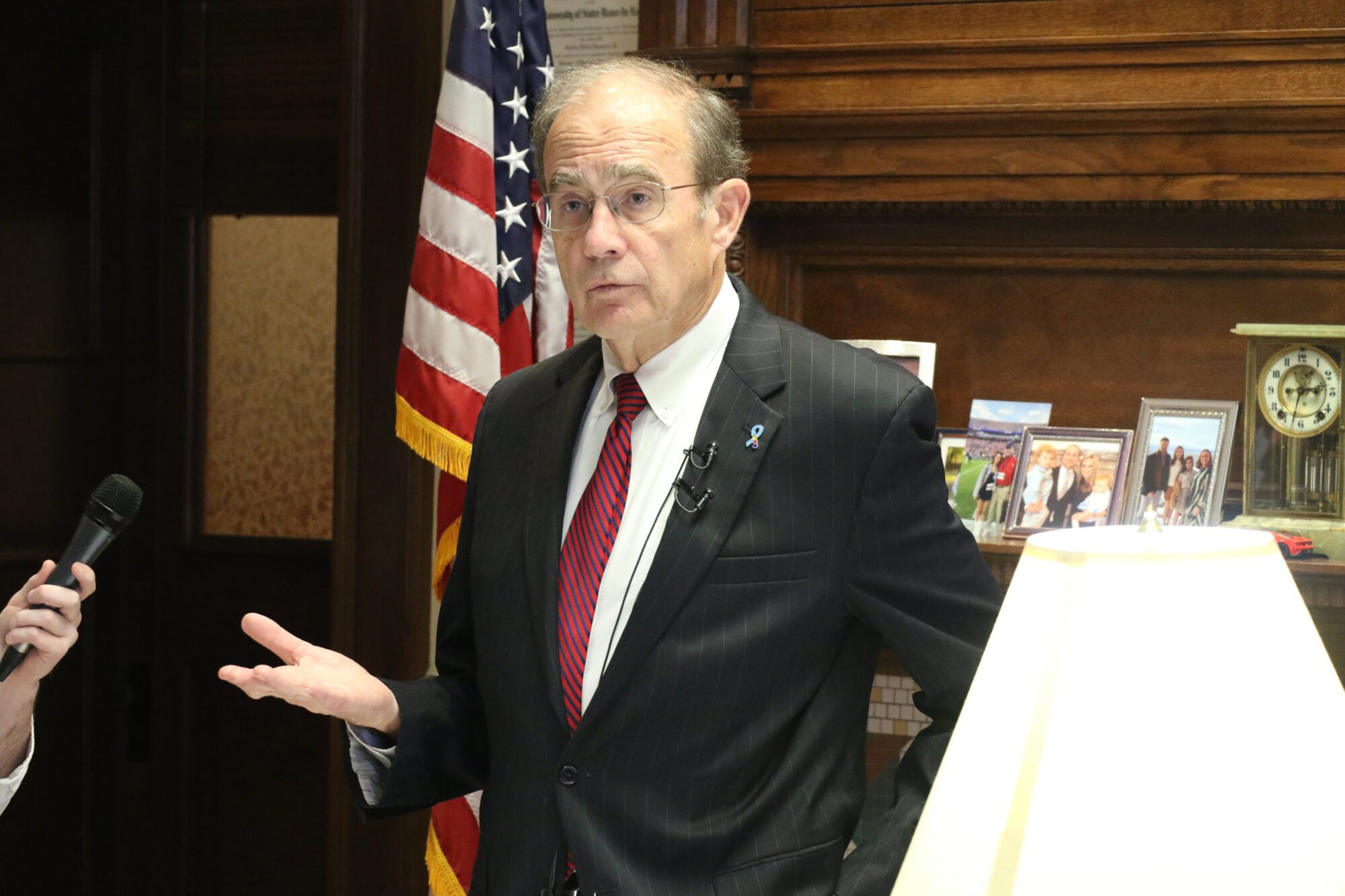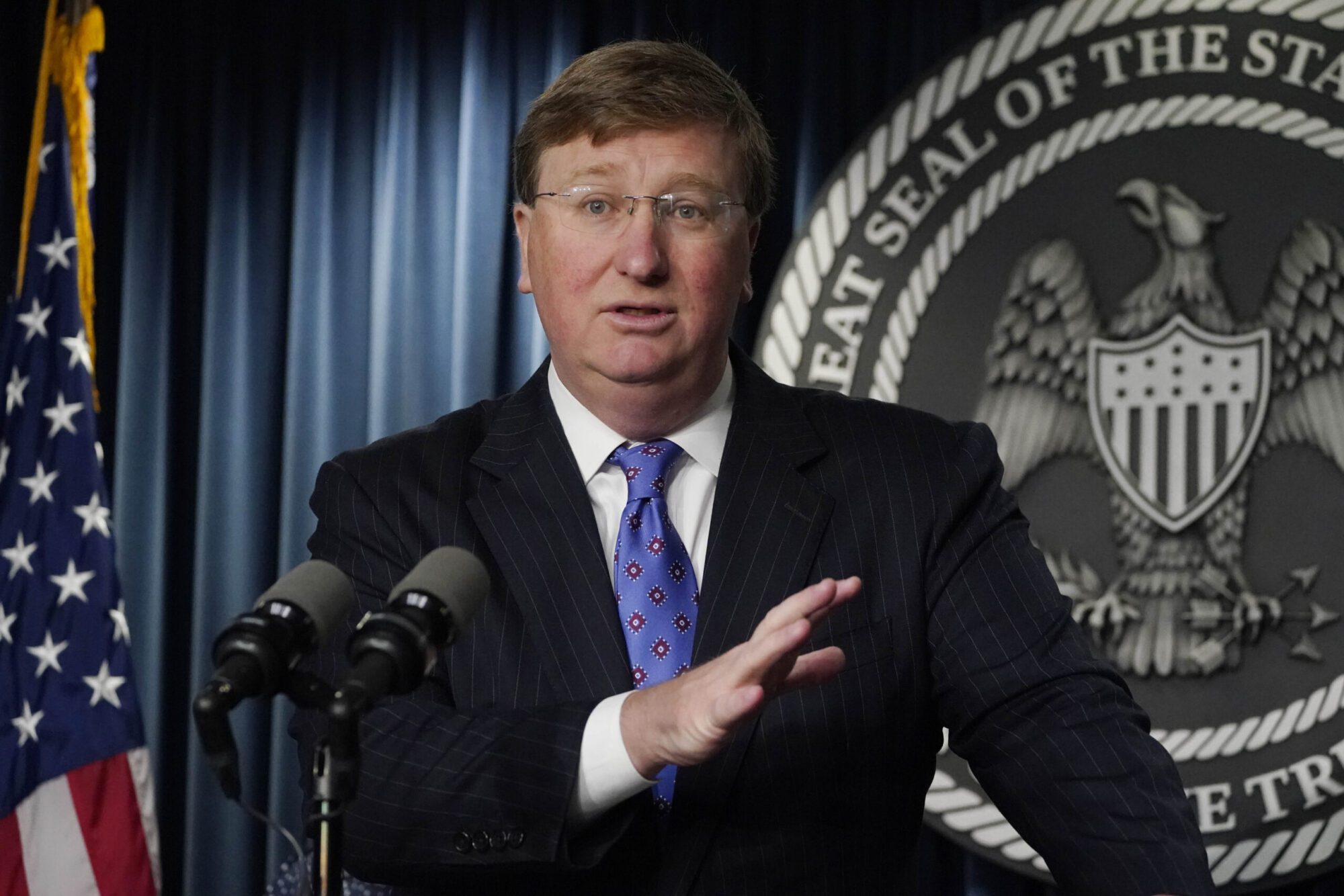
Governor Tate Reeves and Treasurer David McRae
- Governor Reeves and Treasurer McRae say the state’s pro-growth policies have helped restore confidence among credit rating agencies.
Mississippi generated a record-breaking $1 billion in interest income over the last six years.
That was the word Monday morning from Governor Tate Reeves and State Treasurer David McRae.
The two state leaders jointly announced that S&P Global Credit Ratings has improved the Mississippi’s outlook from “negative” to “stable,” signaling that Mississippi’s fiscal foundation is strong and that the state is well positioned for continued long-term growth.
In the five years before Reeves became Governor and McRae became Treasurer, Mississippi averaged $39 million annually in investment earnings. They attribute the improvement to conservative, results-driven financial management.
Governor Reeves, a former two-term State Treasurer, said in a statement that this “is more great news for Mississippi and it proves our hard work is paying off.”
“Since I’ve been governor, we’ve finalized a record-breaking $70 billion in new capital investment in our state – that’s going to generate millions in new tax revenue for Mississippi. Economic growth and population growth trends are strong and actually growing stronger,” Reeves said. “When you factor in the work we’re doing to strengthen PERS, the fact we are in the best fiscal and financial shape in history, and our declining overall debt burden, it really should come as no surprise that the outlook improved.”
McRae agreed, adding that “by managing taxpayer dollars responsibly and making smart investments, we are strengthening our state’s balance sheet and building momentum for long-term economic growth.”
“I want to thank Governor Reeves for his financial leadership,” McRae said. “Throughout his tenure, Mississippi has proven that disciplined leadership and fiscal responsibility lead to real results.”
Reeves and McRae say the state’s pro-growth policies have helped restore confidence among credit rating agencies, and in turn, should translate into lower borrowing costs for the state, helping stretch taxpayer dollars further and allowing Mississippi to invest more in the priorities that strengthen the state’s economy.
Editor’s Note: This article has been updated to reflect information gathered Tuesday regarding the interest earned on the state’s special and general funds.

Frank Corder