House committee aims to allow clinical trials of psychedelic drug to treat PTSD, addiction withdrawals
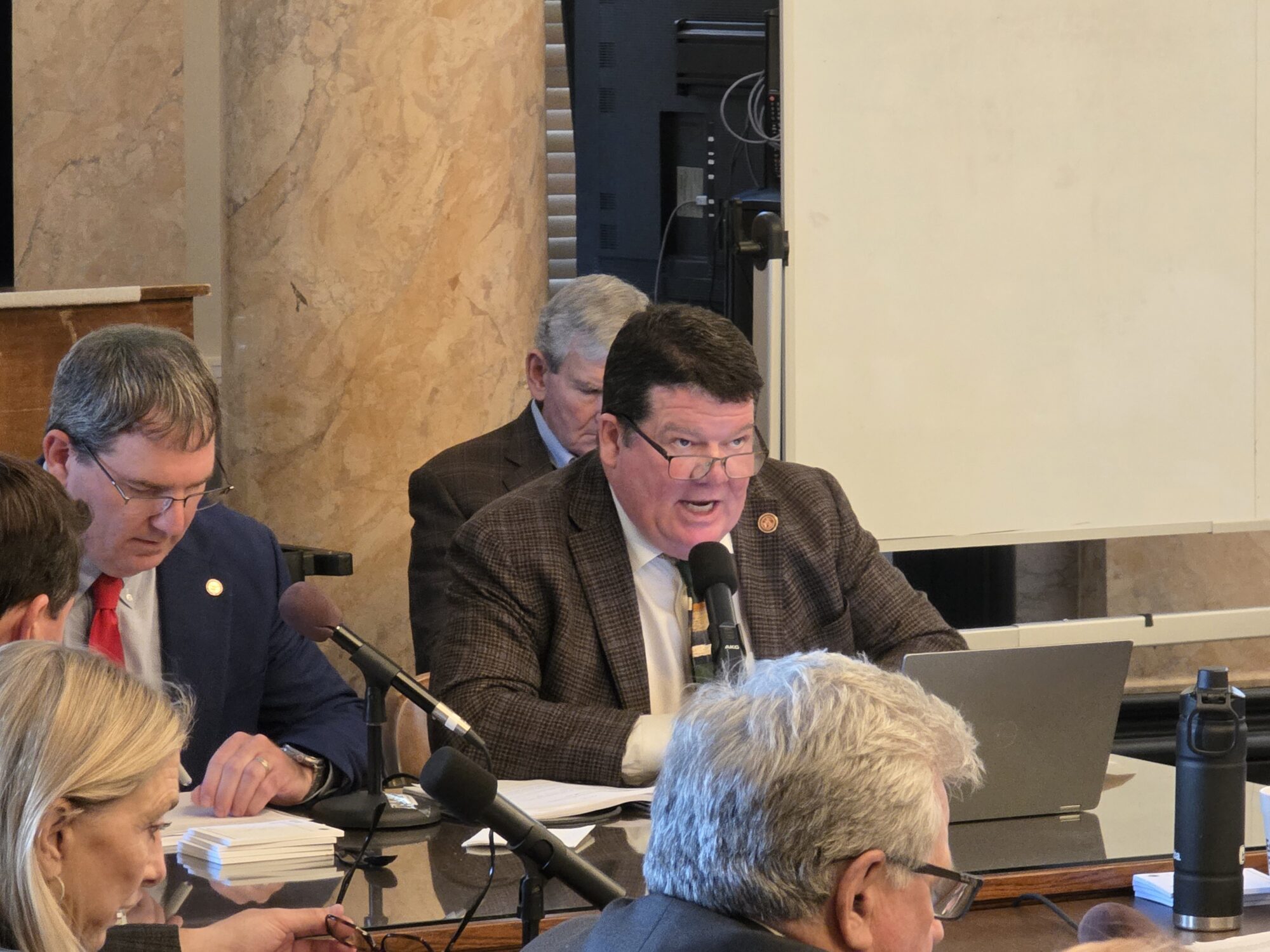
Rep. Samuel Creekmore (R), Chair of the House's Public Health and Human Services Committee, heads a meeting held Tuesday afternoon where five bills passed out of the committee. (Photo by Jeremy Pittari | Magnolia Tribune)
- The drug is currently classified as a Schedule I controlled substance in the United States, leading those seeking treatment to seek care out of the country.
Lawmakers on the Mississippi House Public Health and Human Services Committee got down to work Tuesday afternoon, passing five bills out of committee for full consideration by their chamber.
One of the bills, HB 314, would allow clinical trials of a psychedelic drug called Ibogaine. Committee Chair State Rep. Samuel Creekmore (R) said the drug has shown promise in treating people who are dealing with PTSD, namely veterans, and those with opioid withdrawals.
The drug is currently classified as a Schedule I controlled substance in the United States, leading those seeking treatment to seek care out of the country.
Creekmore said the drug is typically administered in a clinical setting under the care of a physician because it poses a health risk. As such, each patient has to undergo tests before being approved for treatment.
“There are some drawbacks to the treatment. One, it’s done in a clinical setting. It is administered by doctors and nurses,” Creekmore said. “The same thing would be done here, but you have to have a strong healthy heart to do this.”
Most of those seeking treatment must travel to Mexico. If the bill were to pass, it would allow those individuals to undergo clinical trials in Mississippi.
“Our trials would be in Mississippi. Our veterans are currently traveling out of the country to receive treatment,” Creekmore explained.
No state in the U.S. is conducting trials at this time. However, Texas has passed a similar bill to HB 3. Creekmore said the goal is to work with Texas in the clinical trials to pair with their provider and pool data that can be used to determine the medical viability of the treatment.
Typically, patients who seek this procedure find relief in one treatment, Creekmore said.
“It’s not just used for PTSD but for addiction, too, for people who have no more options,” Creekmore added.
Dr. Tom Recore, Medical Director for the Department of Mental Health, said the treatment has shown promise in helping overcome acute opioid withdrawals.
If the bill passes both bodies and becomes law, Creekmore said the clinical trials would take place over the course of 12 months.
Other Committee Actions
The House committee also passed four other measures onto the floor.
HB 3 deals with an exemption of a Certificate of Need for the University of Mississippi Medical Center (UMMC) pertaining to psychiatric treatments.
HB 345 looks to provide an alternate method of transporting people who are dealing with a mental health crisis to receive care or a waiting bed at the proper facility, negating the need for law enforcement to get involved. The bill looks to utilize $1 million in funding to create pilot programs in three areas of the state. That funding would be equally split between the three participating regions, and a 25 percent match would be required for participation in the pilot program.
HB 534 would create an information exchange between hospitals and Community Mental Health Clinics to provide real time information pertaining to mental health matters or matters dealing with infant mortality. That information could include the number of available beds, the types of drugs prescribed during a hospital or emergency room visit, and the health of infant brought into hospitals.
HB 431 would allow dental hygienists employed by the State Department of Health, public school districts, or who are performing procedures for educational purposes to perform those procedures under the supervision of licensed dentists without the need to meet the state’s other requirements.
UPDATE:
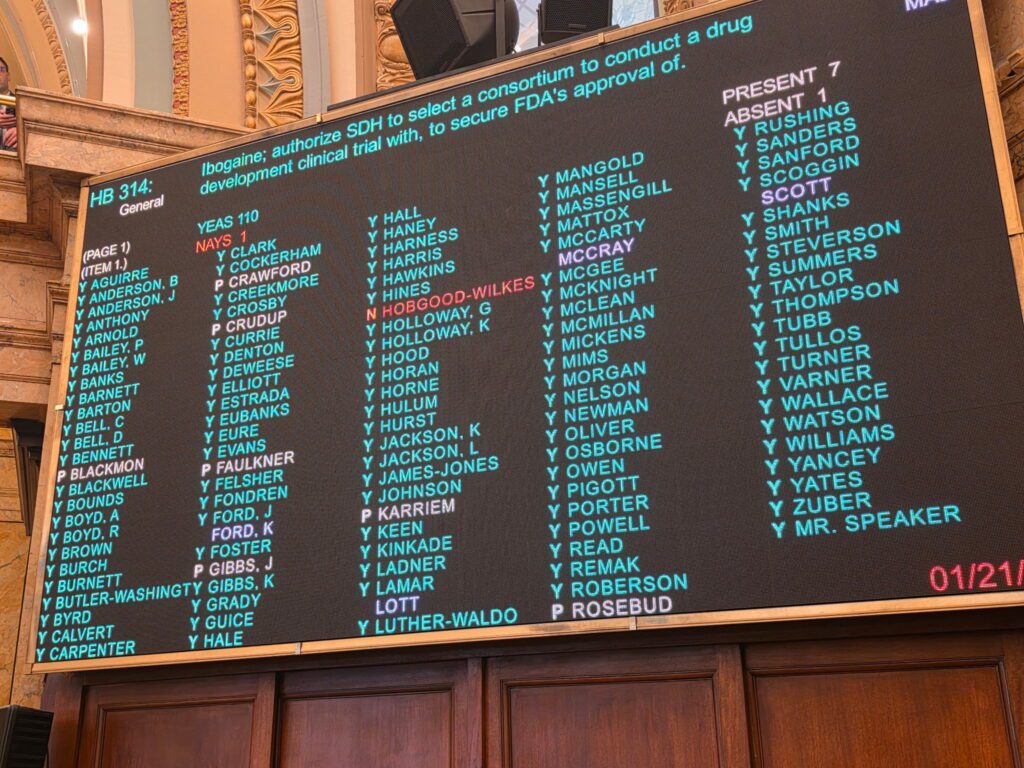
Four of the five bills discussed during the Public Health and Human Services Committee meeting on Tuesday passed on the floor of the House of Representatives on Wednesday.
During discussion of HB 314 on the floor, Rep. Creekmore said that there is the option to share data with Texas, the only other state that has considered and passed legislation that allows clinical trials of Ibogaine treatment. His thought is that the state would invest about $5 million into the trials, and any participating pharmaceutical company would kick in another $5 million. Any funding approved for the program by the Mississippi Legislature would stay within this state.
The measure passed off the floor with a vote of 110-1
For HB 534, Creekmore explained that there is an existing system utilized by about 90 percent of the state’s hospitals, but not all. The bill would mandate all hospitals use the same system, with clinics being able to opt in. Any information shared between medical providers or hospitals would be protected under existing HIPPA laws, and the company providing access to the data would be legally unable to sell that information. In addition, any company that would win the statewide bid to provide the service would be obligated to demonstrate a proven track record of success and security. The bill also allows the patient to opt out of sharing their medical data with other providers.
An amendment offered by State Rep. Lawrence Blackmon (D) to adjust the language in the bill from “opt out” to “opt in” failed on the floor. The bill passed with a 96-18 vote but was held on a motion to reconsider.
HB 41, which aims to reinsert language inadvertently deleted last year, passed with a vote of 120-0, while the bill concerning Certificate of Need exemptions for UMMC and other CON changes passed by a vote of 118-0.