Study probes how step trackers, health apps relate to exercise levels
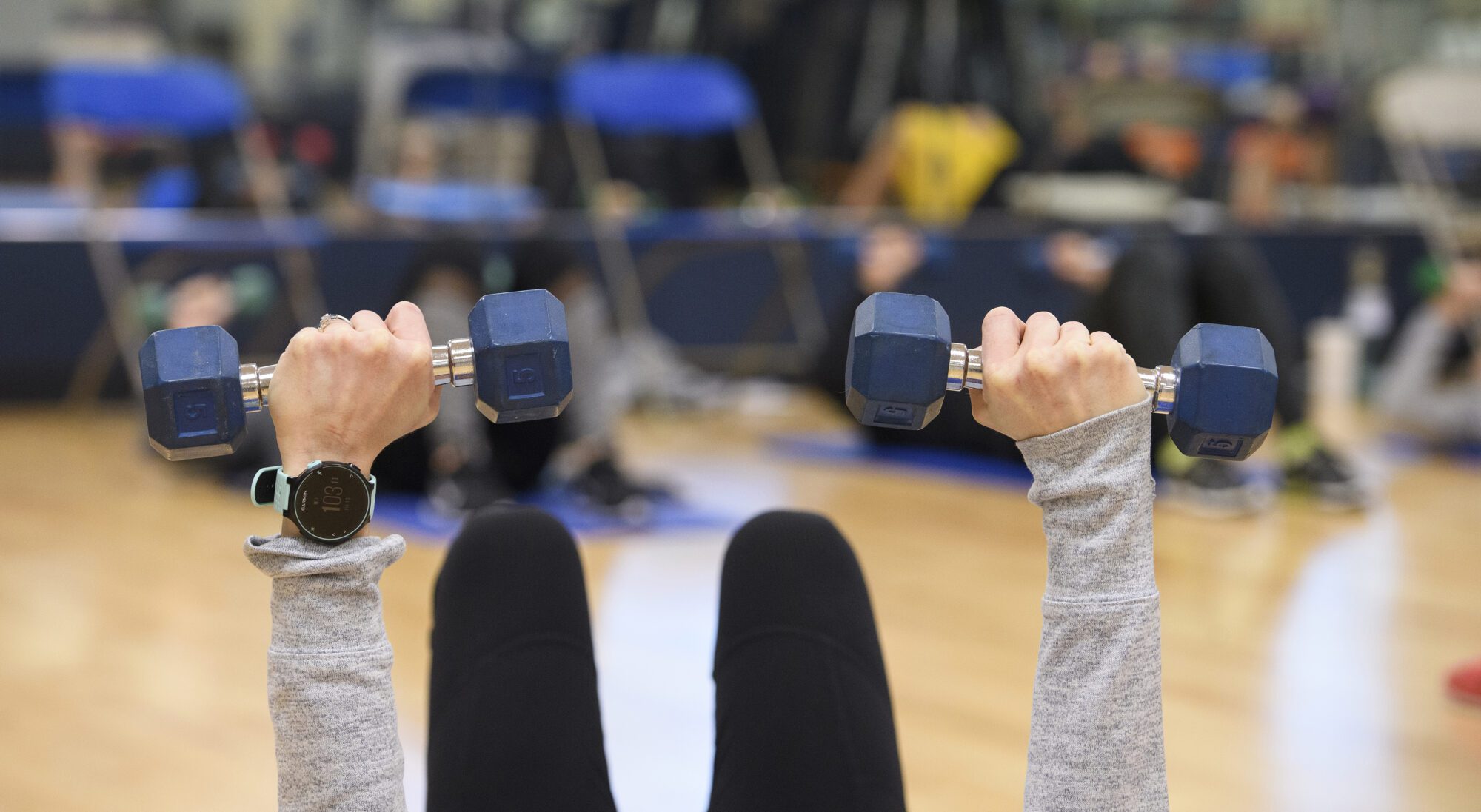
A University of Mississippi study examined what digital health tools Americans use and how the use of certain technologies affects adherence to federal fitness guidelines for aerobic and strength exercise. People who used both wearable fitness trackers and digital health tools were found to be mostly likely to meet both goals. Photo by Thomas Graning/Ole Miss Digital Imaging Services
- People who use multiple digital health tools more likely to meet physical activity recommendations, Ole Miss study says.
A new University of Mississippi study examined whether people who used modern fitness tools such as step counters, heart rate monitors and health apps are more likely to meet federal physical activity guidelines.
Getting the recommended amount of physical activity each week is associated with reduced chronic disease risk, but the Centers for Disease Control and Prevention reports that less than a quarter of the population is meeting the weekly physical activity target for both aerobic and muscle-strengthening activity.
A study published in Frontiers in Physiology identified which Americans were most likely to meet those goals each week through the lens of the digital health tools they used.
“Think about two people you know: One wears a smartwatch and checks their step count every day, and the other has never owned a fitness tracker but regularly uses a patient portal to check lab results or communicate with a doctor,” said Ju-Pil Choe, an Ole Miss doctoral student in sport analytics and co-author of the study. “Both are using digital health tools, but in very different ways.”
The researchers wanted to learn how people use different digital health tools as part of their daily routines and whether those patterns of use were related to meeting physical activity guidelines, Choe said.
“Ultimately, our goal is to better understand health behaviors and identify opportunities to promote healthier lifestyles,” he said.
Heejun Kim, a doctoral student in sport analytics and lead author of the study, worked with Choe and their adviser, Minsoo Kang, professor in the Department of Kinesiology and Sport and director of the sport analytics programs, to analyze data from the 2024 Health Information National Trends Survey.
The researchers examined which digital health tools people used and whether they met physical activity guidelines. The survey included more than 5,000 U.S. adults.
Federal guidelines recommend at least 150 minutes of moderate aerobic activity each week, along with muscle-strengthening activities at least twice a week.
About 1 in 3 people who used a variety of health tools – such as both a wearable fitness tracker and a patient portal – met both the aerobic and strength guidelines. The same was true of people who mainly used wearable activity trackers.
Among people who primarily used patient portals and among those with limited engagement with digital health tools, only about 1 in 5 met both guidelines.
“Even after accounting for factors such as age, income and education, people in the first two groups were more likely to meet both guidelines than those who rarely used digital health tools,” Kim said.
A person who uses a smartwatch may be more able to monitor daily activity, whereas a health app may help users set goals or plan workouts, he said. But the study cannot show whether the technology itself makes a person more physically active.
“The opposite may also be true: people who are already physically active may be more interested in using these technologies,” Kim said. “Our study shows a relationship between digital health engagement and physical activity, but it does not prove that using these tools causes people to become more active.
“Understanding that relationship is an important next step.”
The findings also highlight a potential challenge for health programs that rely on technology, Choe said.
“One important finding was that people who used the fewest digital health tools were also the least likely to meet both physical activity guidelines,” he said. “This group included a greater proportion of older adults and people with lower incomes.
“That raises an important public health concern. If we rely too heavily on apps and wearable devices to promote physical activity, we may unintentionally leave behind people who could benefit from additional support.”
The results could also help fitness trainers and healthcare providers tailor physical activity guidance to the individual’s needs, Kang said.
“One important message from our study is that using more digital health tools doesn’t necessarily mean being more physically active,” he said. “What matters is how people engage with these tools and how they fit into their daily routines.
“Our goal is to better understand these differences so we can find more practical and inclusive ways to help people stay active and healthy.”
This article is republished courtesy of Ole Miss.