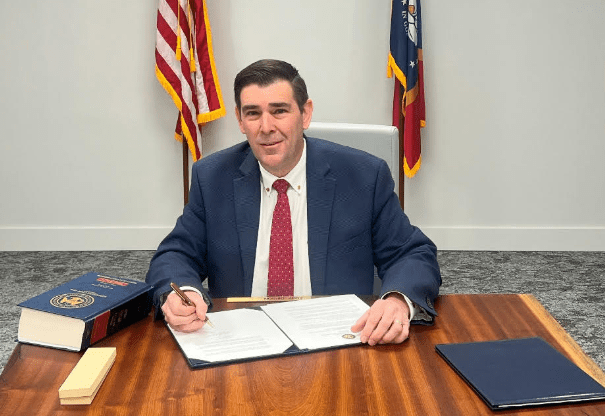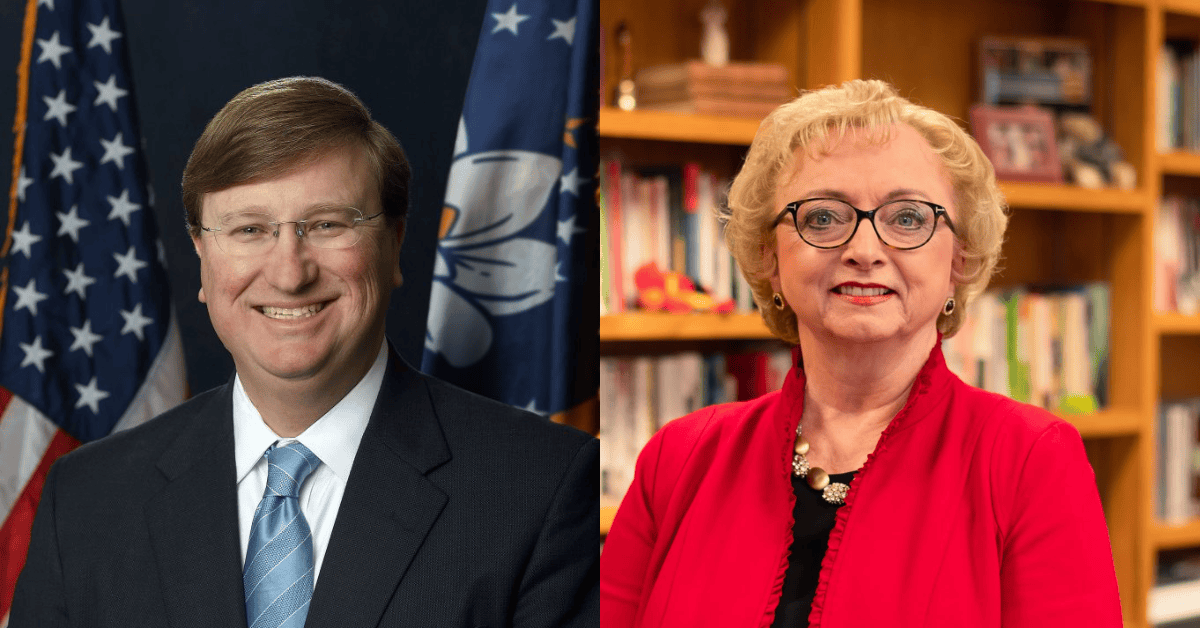
Governor Tate Reeves and Dr. Carey Wright
- The book, Do What Works, features a chapter by Governor Tate Reeves and Dr. Carey Wright, the former Mississippi Superintendent of Education, that centers on the “Mississippi Miracle” and how the state achieved its nationally celebrated education gains.
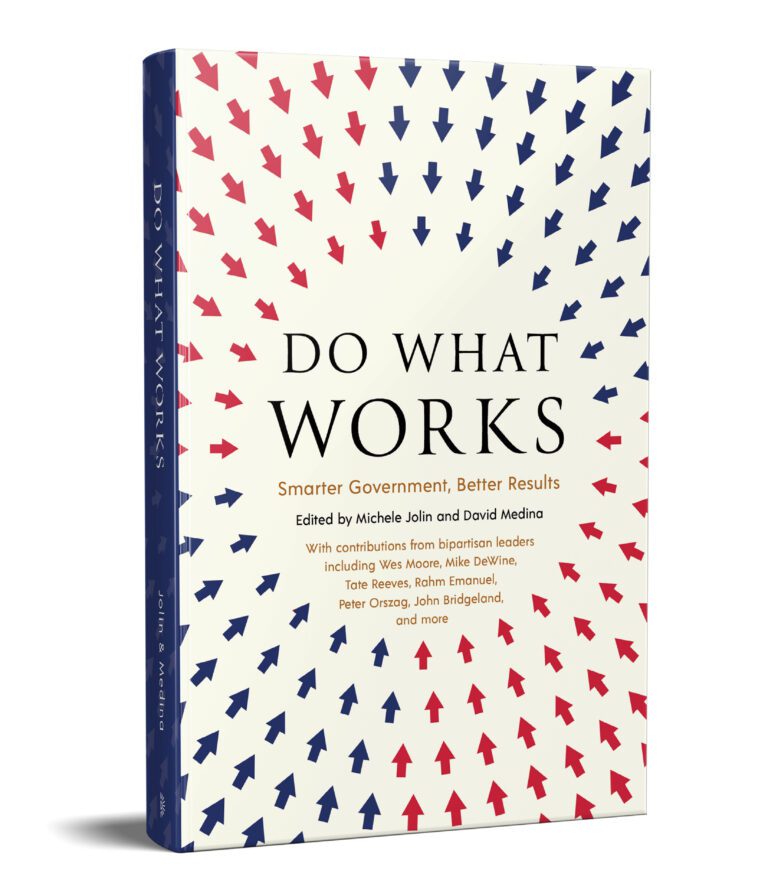
Mississippi’s education success story is prominently featured in a new book sharing how governors, mayors, legislators, and other leaders of both political parties are implementing effective solutions to some of America’s toughest challenges.
The book, Do What Works, is edited by Michele Jolin and David Medina, the Co-Founders of Results for America, a national nonprofit that helps governments across the country shift billions of dollars to more effective solutions. It presents a collection of essays as a blueprint for how governments across the nation can improve results, invest taxpayer dollars more effectively, and rebuild public trust.
A chapter by Governor Tate Reeves and Dr. Carey Wright, the former Mississippi Superintendent of Education, centers on the “Mississippi Miracle” and how the state achieved its nationally celebrated education gains.
Magnolia Tribune received an advance copy of the chapter from the publisher.
In their chapter, Reeves and Wright, who now runs Maryland’s public schools, highlight how Mississippi went from 49th in the nation in 4th grade reading to a top ten state. The two share the reforms adopted by lawmakers and how they followed a research-based approach to improve reading and overall student achievement. Reeves and Wright also share lessons for other states that are now adopting similar Mississippi’s reforms.
“While our nation-leading education gains are often called the Mississippi Miracle, it really wasn’t inexplicable at all,” wrote Reeves. “It was the result of a deliberate and intentional effort to get Mississippi off the bad lists and onto the good lists in education through effective public policy reforms and implementation. It started more than a decade ago and the results have been worth it.
Reeves outlines the work in the Legislature while he was Lt. Governor that led to the policy changes as state officials sought to improve its struggling education system.
“One of the biggest misconceptions about the Mississippi Miracle is that it is a result of one decision. It is not. It stems from a series of reforms that we passed and implemented,” the governor said.
For her part, Wright writes that as far as she was concerned, “there was nothing wrong with kids in Mississippi.”
“They were just as bright and full of God-given talent as anyone else’s kids. They just needed the right strategies in place to help them grow and learn,” she said. “But I was also well aware of the size of the challenge.”
Wright said she and her staff set six main goals: proficiency growth, high-school graduation, early childhood education, professional development for teachers, world-class data systems, and making sure every single school in every single district was meeting a basic bar.
“Working around those six goals, we developed a simple strategic plan and explained—politely!—to everyone at the department that this was going to be how things worked going forward. Not everybody liked it, and not everybody stuck around to help implement it,” she said. “But that was okay.”
The former state superintendent writes that she and Reeves developed a really positive relationship. Wright recalled the day the 2019 NAEP scores were released, showing that Mississippi was number one in the nation in reading gains.
“The lieutenant governor was in Chicago that day, but we spoke on the phone as we were both looking at the front-page news,” she said. “It deeply touched both of us to see the Magnolia State ranked first in the nation at something to do with education.”
“We both believe that success begets success, and even though Carey has moved on to run the schools in Maryland (where they’re moving forward on similar reforms), we’re both confident that Mississippi’s “Miracle” is just getting underway,” Reeves said.
Other Political Leaders and Stories in the Book
Do What Works shares stories of impact from across the country.
For example: Denver, Colorado set an ambitious goal of getting one thousand unhoused residents off the streets and achieved it in less than a year. Birmingham, Alabama borrowed a promising early literacy program from Providence, Rhode Island, and tripled the chances its youngest kids would be ready for kindergarten. Dallas, Texas united around shared goals and reduced child poverty faster than any major U.S. city. Ohio invested in its workers and became the No. 1 state in the country to do business.
Other governors, political figures and non-profit leaders featured in the book include:
- Wes Moore (D-Maryland)
- Governor Mike DeWine (R-Ohio)
- Congressman Greg Landsman (D-Ohio)
- Congressman Rudy Yakym (R-Indiana)
- Peter Orszag, former Director of the White House Office of Management and Budget (Obama)
- John Bridgeland, former Director of the White House Domestic Policy Council (G.W. Bush)
- Ambassador and former Mayor Rahm Emanuel (D-Chicago)
- Mayor Mike Johnston (D-Denver)
- Mayor Randall Woodfin (D-Birmingham)
- Mayor Monroe Nichols (D-Tulsa)
- Former Mayor G.T. Bynum (R-Tulsa)
- Mayor Matt Mahan (D-San José)
- Tennessee Commissioner of Education Lizzette Reynolds
- Assemblymember Amanda Septimo (D-New York)
- Commissioner Leslie Meyer (R-Audrain County, Missouri)
- Lisa Morrison Butler, former Commissioner of the Chicago Department of Family and Support Services, and Executive Vice President and Chief Impact Officer at Results for America
- Rosanne Haggerty, President and CEO of Community Solutions
- Jennifer Blatz, CEO of StriveTogether
- Alan Cohen, Founder and CEO of the Child Poverty Action Lab
- Todd Williams, Chairman and CEO of the Commit Partnership
- Plinio Ayala, CEO of Per Scholas
The book will be featured at bipartisan events at the Obama Presidential Center, the George W. Bush Presidential Center, and elsewhere this fall, the publisher said. To order a copy, visit here.